
Introduction
It is the middle of summer, the factory temperature has climbed, and a warehouse worker has already spent nine hours walking on concrete floors. By the end of the shift, his socks are damp, the inside of his work shoes feels hot, and when he takes them off, there is an obvious smell.
This is a very common problem.
The question is:
What should I do if my shoes smell bad in summer?
For workers who wear safety shoes, the issue can be more noticeable because protective footwear is often heavier, more enclosed, and constructed with multiple layers such as toe caps, midsoles, linings, foam padding, waterproof membranes, and durable outsoles.
The smell itself usually comes from a combination of sweat, moisture, and bacteria, rather than sweat alone. The NHS notes that smelly feet are commonly caused by a build-up of sweat and bacteria, while hot weather, exercise, and standing all day can increase sweating.
For industrial workers, this is more than a comfort issue.
Excess moisture inside safety footwear can contribute to:
- Unpleasant odor
- Damp socks
- Skin irritation
- Reduced comfort during long shifts
- Faster lining deterioration
- Footbed breakdown
- Longer drying times
- Potential fungal problems
The correct solution is not simply to spray perfume inside the shoe.
A better approach is to control moisture at every stage: foot hygiene, socks, footwear design, drying, rotation, cleaning, storage, and product selection.
This guide explains how to reduce odor in protective work shoes, how to choose breathable safety footwear for hot weather, which materials perform better in summer, what maintenance methods help, and what B2B buyers should consider when developing industrial safety shoes for warm climates.
Why Do Safety Shoes Smell More in Summer?
Summer creates ideal conditions for footwear odor because the inside of a shoe becomes warm and humid.
Your feet naturally sweat.
That moisture is absorbed by:
- Socks
- Footbeds
- Linings
- Foam
- Leather
- Textile layers
If the shoe cannot dry completely before it is worn again, moisture begins accumulating.
Bacteria thrive in warm, damp environments and break down substances present in sweat and on the skin, producing the compounds responsible for unpleasant odor.
The NHS identifies sweat and bacteria as major causes of foot odor and recommends keeping feet clean and dry, allowing shoes to dry before wearing them again, and avoiding wearing the same shoes on consecutive days where possible.
For workers using safety footwear eight to twelve hours a day, this advice becomes particularly relevant.
Why Safety Footwear Can Trap More Heat
Safety footwear often includes extra protective structures that ordinary sneakers do not have.
These can include:
- Steel toe caps
- Composite toe caps
- Penetration-resistant midsoles
- Waterproof membranes
- Thick leather uppers
- Foam collars
- Reinforced heel counters
- Multi-layer insoles
These components improve protection, but they can also reduce airflow depending on the design.
A heavy waterproof leather boot intended for outdoor construction may therefore feel much warmer than a lightweight mesh protective work shoe designed for indoor warehousing.
This does not mean one type is better.
It means footwear should be matched to the workplace.
What Should I Do If My Shoes Smell Bad in Summer?
The most effective strategy is to deal with the source of the odor rather than trying to cover it.
1. Wash and Dry Your Feet Properly
Start with the feet themselves.
The NHS recommends washing feet at least once a day and drying them carefully, including between the toes.
For workers in hot environments, this may be especially important after long shifts.
Good hygiene helps reduce:
- Sweat residue
- Bacterial build-up
- Skin contamination
After washing, make sure the feet are fully dry before putting on clean socks.
Putting damp feet directly into a work boot simply recreates the same humid environment.
2. Change Socks Every Day
Never underestimate the importance of socks.
A clean pair of work shoes can quickly become unpleasant if worn with damp or heavily used socks.
The NHS specifically advises against wearing the same socks for two consecutive days and notes that people with excessive sweating may need to change socks more frequently.
For industrial workers, a practical summer routine can be:
- Fresh socks before work
- Spare pair in the locker
- Change halfway through the shift if feet become saturated
This is particularly useful for:
- Construction workers
- Warehouse pickers
- Foundry employees
- Outdoor crews
- Food-processing workers
3. Choose Moisture-Managing Socks
Thick cotton socks are not always the best option for every worker.
Good work socks should help manage moisture while remaining compatible with the safety shoe.
Materials may include:
- Performance synthetic fibers
- Wool blends
- Moisture-wicking textiles
- Specialized antibacterial fabrics
The goal is to move moisture away from the skin and reduce prolonged dampness.
Avoid socks that are so thick that they make the shoe excessively tight.
A tight shoe can reduce air circulation and increase discomfort.
4. Remove the Footbed After Work
If the insole or footbed is removable, take it out after the shift.
This allows air to reach:
- The bottom of the footbed
- The interior cavity
- The lining beneath it
A removable footbed often dries faster outside the shoe than inside it.
This simple habit can significantly improve overnight drying.
Check the footwear manufacturer’s instructions first, especially with certified PPE footwear, because unauthorized replacement of components may affect fit or performance.
5. Open the Shoe Fully
After work:
- Loosen the laces
- Open zippers
- Pull the tongue forward
- Open hook-and-loop straps
- Remove removable insoles
Do not leave tightly laced boots sitting in a closed locker.
A closed boot traps moisture.
An open boot allows much more air movement.
6. Let the Shoes Dry Completely
This is one of the most important steps.
The NHS recommends allowing shoes to dry before wearing them again.
Dry footwear in:
- A ventilated room
- A shaded area
- A dry locker with airflow
- A footwear drying rack
Avoid excessive direct heat unless specifically approved by the manufacturer.
Very high heat can damage:
- Leather
- Adhesives
- Waterproof membranes
- PU materials
- Foam components
Drying is important, but aggressive drying can shorten the shoe’s service life.
7. Rotate Between Two Pairs of Safety Shoes
For workers who sweat heavily or work in humid environments, one of the most effective solutions is footwear rotation.
Instead of wearing the same pair every day:
Day 1: Pair A
Day 2: Pair B
Day 3: Pair A
This gives each pair much more time to dry completely.
It is particularly useful for:
- Hot climates
- Tropical workplaces
- Outdoor construction
- Wet processing facilities
- Workers on long shifts
For employers, supplying or subsidizing a second pair may sometimes improve comfort and potentially extend the life of both pairs.
8. Use Foot Powder or Antiperspirant Where Appropriate
The NHS lists foot powders and antiperspirants among common self-care measures for sweaty or smelly feet.
These can help manage moisture.
Follow the product instructions and avoid applying materials that could damage the footwear.
For persistent sweating, speak with a pharmacist or healthcare professional rather than continually increasing the amount of deodorizing product used.
9. Clean the Inside of the Footwear Carefully
Depending on the product design, interior cleaning may help remove accumulated sweat and odor.
However, do not soak certified safety footwear unless the manufacturer allows it.
A practical cleaning method may involve:
- Removing the footbed
- Wiping the lining
- Cleaning the footbed separately
- Allowing all components to dry fully
Avoid harsh chemicals that may degrade foam, adhesives, leather, membranes, or antimicrobial treatments.
10. Do Not Simply Spray Fragrance Into the Shoe
A strong fragrance may cover the smell temporarily.
It does not solve the underlying problem.
If sweat and moisture remain trapped inside the footwear, the odor will return.
The correct sequence is:
Clean → dry → control moisture → improve ventilation → rotate footwear.
Odor spray should be secondary, not the main solution.
When Shoe Odor May Be More Than a Footwear Problem
Most summer shoe odor is manageable with hygiene and drying.
However, persistent odor may sometimes be associated with:
- Excessive sweating
- Athlete’s foot
- Other fungal infections
- Skin conditions
The NHS advises seeking medical advice if persistent smelly feet do not improve with self-care or significantly affect daily life.
Workers should also look for symptoms such as:
- Itching
- Cracking
- Peeling skin
- Persistent redness
- Pain
- Rash
A safety shoe cannot fix a medical condition.
If the footwear is clean and dry but the problem continues, professional advice may be appropriate.
What Are Safety Shoes and Why Are They Important?
While summer comfort matters, workers should not solve odor by switching to footwear that no longer provides required protection.
Safety shoes are workplace PPE designed to address specific hazards.
They may provide:
- Impact protection
- Compression resistance
- Penetration protection
- Slip resistance
- Electrical protection
- Water resistance
- Heat-related outsole performance
OSHA requires protective footwear where employees face hazards from falling or rolling objects, objects capable of piercing the sole, or certain electrical hazards.
Therefore, an employee should not simply replace a hot steel toe boot with a breathable casual sneaker if safety footwear is mandatory.
The better solution is to select more breathable safety footwear that still meets the required protection standard.
Different Types of Safety Shoes for Summer
Steel Toe Safety Shoes
Steel toe safety footwear remains widely used in:
- Construction
- Manufacturing
- Warehousing
- Mining
- Engineering
Steel toe caps offer reliable impact and compression protection when incorporated into appropriately certified footwear.
Summer considerations
Steel toe footwear does not automatically cause odor.
The bigger factors are:
- Upper material
- Lining
- footbed
- ventilation
- fit
- moisture management
A well-designed steel toe safety sneaker can feel cooler than a poorly ventilated composite toe boot.
Composite Toe Safety Shoes
Composite toe caps may be made from:
- Fiberglass
- Carbon-based materials
- Engineered polymer
These can help reduce footwear weight.
OSHA’s long-standing interpretation of protective footwear requirements makes clear that toe protection does not have to be steel; the protective performance against the hazard is what matters.
Composite toe footwear is often popular in hot-weather safety shoe designs because it can be combined with:
- Mesh uppers
- Lightweight EVA midsoles
- Breathable linings
- Athletic construction
This can be attractive for warehouse and logistics workers.
Slip Resistant Safety Shoes
Summer workplaces may include:
- Sweat
- Rain
- Water
- Oil
- Condensation
Slip resistance therefore remains important.
Good slip resistant safety shoes should use outsole compounds and tread designs appropriate to the workplace surface.
Do not sacrifice traction simply to gain ventilation.
Waterproof Safety Shoes
Waterproof footwear creates a different design challenge.
A waterproof membrane helps keep external water out, but it can make heat and moisture management more demanding than in open mesh footwear.
For outdoor workers, waterproof protection may still be essential.
The solution is to select:
- Breathable waterproof membranes
- Moisture-wicking linings
- Suitable socks
- Removable footbeds
Do not choose a non-waterproof shoe simply because it feels cooler if the job requires genuine waterproof protection.
Which Upper Materials Are Best for Hot Weather Safety Shoes?
Mesh
Mesh offers excellent airflow.
Advantages include:
- High breathability
- Low weight
- Flexible construction
- Sports-shoe feel
It is particularly suitable for:
- Warehouses
- Logistics
- Light manufacturing
- Indoor maintenance
However, open mesh may not be ideal where workers face:
- Heavy abrasion
- Water
- Chemicals
- Sparks
- Sharp materials
Knitted Textiles
Engineered knitted uppers can provide:
- Breathability
- Flexibility
- Lightweight construction
- Modern appearance
They are popular in athletic-style comfortable work shoes.
Reinforcement may be added in high-wear zones such as:
- Toe
- Heel
- Eyestay
Leather
Leather is less open than mesh, but good leather safety footwear can still be comfortable in summer.
Advantages include:
- Abrasion resistance
- Durability
- Structure
- Good industrial appearance
For demanding work, breathable linings and appropriate leather thickness become important.
Full-grain or nubuck safety boots are often a better choice for rough construction than lightweight mesh—even during summer.
Microfiber
Modern microfiber can provide a useful balance between:
- Lower weight
- Durability
- Easy cleaning
- Consistency
Depending on construction, it can be suitable for industrial or food-service applications.
Breathability varies, so buyers should evaluate the complete upper system rather than material name alone.
The Importance of Safety Shoe Linings in Summer
Many buyers focus on the upper and outsole but ignore the lining.
That is a mistake.
The lining is the material directly surrounding the foot.
A good summer safety-shoe lining should help:
- Transport moisture
- Reduce friction
- Improve airflow
- Dry relatively quickly
Common options include:
- Mesh lining
- Moisture-wicking textile
- Technical synthetic lining
Thick, low-breathability linings can make a shoe feel considerably hotter.
For B2B product development, lining selection should be treated as an important performance decision rather than a cosmetic detail.
Footbeds and Odor Control
The footbed absorbs a large amount of sweat because it sits directly beneath the foot.
A good footbed for summer industrial safety shoes may include:
- Open-cell PU
- Breathable mesh cover
- Perforations
- Moisture-management fabric
Removable footbeds are especially practical because they can be removed for drying.
Some suppliers offer antimicrobial or odor-control treatments, but buyers should treat these as supplementary features.
No antimicrobial treatment can compensate for footwear that stays wet continuously.
How to Choose the Right Safety Shoes for Hot Weather
1. Start With Workplace Hazards
Never select footwear based on temperature alone.
Identify whether the worker needs:
- Steel toe
- Composite toe
- Penetration resistance
- Slip resistance
- Water resistance
- Electrical protection
- Heat-resistant outsole
OSHA emphasizes that PPE selection should be based on workplace hazard assessment.
Once mandatory protection is established, optimize comfort within that specification.
2. Choose the Lightest Suitable Construction
This does not mean buying the lightest shoe available.
It means avoiding unnecessary mass.
For example:
Warehouse worker: lightweight mesh/composite toe construction may be suitable.
Construction worker: durable leather with stronger reinforcement may be more appropriate.
Mining worker: a heavy-duty safety boot may still be necessary.
The correct balance depends on the job.
3. Prioritize Breathable Linings
Ask suppliers what lining is used.
Do not accept a generic answer such as “comfortable fabric.”
You should know whether it is:
- Mesh
- Polyester
- Spacer fabric
- Moisture-managing technical textile
This matters especially for long shifts.
4. Consider Wider Fits Where Appropriate
Tight footwear can increase heat and friction.
A good safety shoe should provide sufficient room around the foot while maintaining stability.
OSHA’s PPE selection guidance requires employers to select properly fitting PPE.
For B2B buyers, offering adequate width options can improve worker comfort considerably.
5. Check Cushioning and Shock Absorption
Hot weather often increases fatigue.
Comfort systems can include:
- EVA midsoles
- PU footbeds
- Shock-absorbing heel structures
- Dual-density sole construction
A breathable shoe with poor cushioning will still become uncomfortable during a twelve-hour shift.
Common Mistakes That Make Safety Shoe Odor Worse
Mistake 1: Wearing the Same Pair Every Day
If the shoes remain damp overnight, odor builds quickly.
Better approach
Rotate two pairs when possible and let each pair dry completely.
Mistake 2: Leaving Shoes in a Closed Locker
Warm, damp, enclosed storage creates ideal conditions for odor.
Better approach
Store footwear where air can circulate.
Mistake 3: Wearing Dirty Socks
Even freshly cleaned shoes can become unpleasant quickly when paired with damp or reused socks.
Better approach
Wear fresh socks daily and change during the shift if necessary.
Mistake 4: Using Too Much Deodorant Spray
Spray may hide the smell but does not remove the moisture causing it.
Better approach
Focus on drying and hygiene first.
Mistake 5: Drying Shoes With Extreme Heat
Workers sometimes place boots close to heaters or industrial equipment.
This can damage:
- Leather
- Glue
- PU
- Waterproof membranes
Better approach
Use controlled airflow and moderate-temperature drying.
Mistake 6: Buying Waterproof Boots for a Dry Indoor Job
Full waterproof construction may be unnecessary for a warehouse employee who never works outdoors.
Better approach
Match footwear to actual conditions.
A more breathable upper may improve summer comfort.
Safety Shoes Materials and Technologies for Better Summer Comfort
EVA Midsoles
EVA is widely used in lightweight safety footwear because it can provide:
- Cushioning
- Low weight
- Flexibility
EVA/rubber outsole systems are especially common in athletic-style safety shoes.
PU Midsoles
Polyurethane can offer:
- Good cushioning
- Durability
- Shock absorption
Dual-density PU designs can combine a softer midsole with a harder outer layer.
Rubber Outsoles
Rubber is commonly used where:
- Slip resistance
- Abrasion resistance
- Heat-related performance
are priorities.
A rubber outsole may add some weight, so manufacturers often combine it with lightweight EVA or PU midsoles.
Steel Toe vs Composite Toe in Summer
| Factor | Steel Toe | Composite Toe |
|---|---|---|
| Impact/compression protection | Excellent when certified | Excellent when certified |
| Weight | Usually heavier | Often lighter |
| Heat conductivity | Higher | Lower |
| Metal-free | No | Often yes |
| Athletic design | Possible | Very common |
| Hot-weather use | Suitable with good construction | Often attractive |
The toe cap is only one part of the comfort equation.
Upper, lining, outsole, footbed, fit, and ventilation may have an even bigger impact on how hot the shoe feels.
Benefits of Investing in Better Summer Safety Shoes
For businesses, summer footwear is not just an employee comfort issue.
Better Worker Comfort
Hot, wet feet can become distracting over a long shift.
More breathable footwear can improve overall comfort.
Better PPE Acceptance
Workers are more likely to wear required PPE correctly when it is comfortable.
If safety boots feel excessively hot, workers may be tempted to:
- Loosen them too much
- Remove insoles
- Alter the footwear
- Switch to non-approved shoes
Better product selection helps reduce these problems.
Potentially Better Productivity
Workers who are uncomfortable may lose focus.
A better combination of cushioning, fit, and ventilation can support long-shift performance.
Longer Footwear Service Life
Moisture can accelerate deterioration of:
- Linings
- Foam
- Footbeds
- Adhesives
Better drying and rotation may help extend useful footwear life.
Fewer Employee Complaints
For companies with hundreds of workers, repeated complaints about hot, smelly boots can become a significant HR and PPE-management issue.
Choosing better-suited footwear can reduce this friction.
How to Maintain Safety Shoes for a Longer Lifespan in Summer
Summer care should become a routine.
Daily
After each shift:
- Remove dirt
- Loosen laces
- Open zippers
- Remove removable footbeds
- Air the footwear
- Dry socks separately
Weekly
Inspect:
- Lining
- Footbed
- Outsole
- Stitching
- Toe area
Clean the interior according to manufacturer instructions.
Periodically
Check for:
- Persistent odor
- Mold or mildew
- Sole separation
- Cracking
- Excessive tread wear
- Damaged waterproof lining
If odor remains severe even after proper drying and cleaning, the interior materials may have become permanently contaminated or deteriorated.
Replacement may be more practical.
When Should Smelly Safety Shoes Be Replaced?
Odor alone does not automatically mean the shoe must be discarded.
Try:
- Cleaning
- Drying
- Footbed removal
- Foot hygiene
- Sock changes
- Rotation
first.
Replacement becomes more appropriate when odor is combined with:
- Permanent wetness
- Damaged lining
- Crumbling footbed
- Severe contamination
- Mold
- Sole separation
- Structural wear
A work shoe should still be evaluated primarily as PPE.
Do not continue wearing it simply because the toe cap remains intact.
Safety Shoes Buying Guide for Businesses in Hot Markets
For distributors, importers, PPE brands, and companies buying for warm climates, comfort should be designed into the product from the beginning.
Specify the Climate
Tell the manufacturer whether the product is intended for:
- Australia
- Southern Europe
- Middle East
- Southeast Asia
- Latin America
- Indoor factories without strong cooling
The same footwear specification may not suit Scandinavia and Dubai equally well.
Define the Worker Activity
Ask:
- How far do workers walk?
- How many hours is a typical shift?
- Are they indoors or outdoors?
- Is the environment humid?
- Is waterproofing necessary?
- Are they exposed to sparks or sharp materials?
This helps determine whether the upper should be:
- Mesh
- Leather
- Microfiber
- Waterproof
Ask About the Lining
A supplier should be able to specify:
- Material
- Weight
- Structure
- Breathability
- Moisture behavior
This is especially important for comfortable work shoes.
Ask About the Footbed
Look for:
- Removable design
- Breathable surface
- Cushioning
- Moisture management
The footbed is a small component with a large effect on summer comfort.
Consider Two Product Tiers
For a PPE range, consider offering:
Heavy-duty option: leather safety boot for construction and harsh environments.
Lightweight option: breathable sport-style safety shoe for warehousing and logistics.
This allows buyers to select footwear based on application rather than forcing one model into every industry.
Conduct Wear Trials
Before bulk purchasing, test the shoes in real summer conditions.
Ask workers to rate:
- Heat
- Sweating
- Cushioning
- Fit
- Weight
- Odor
- Drying speed
A laboratory sample may look excellent but still perform poorly during ten hours on a hot warehouse floor.
Frequently Asked Questions About Smelly Safety Shoes
1. Why do my safety shoes smell worse in summer?
Higher temperatures increase sweating. When moisture remains trapped in socks, linings, and footbeds, bacteria can multiply and produce odor. Hot weather and standing all day are both factors associated with increased sweating.
2. Can I wash safety shoes in a washing machine?
Only if the manufacturer specifically permits it. Many safety shoes contain adhesives, leather, membranes, and protective components that may be damaged by machine washing.
3. Should I wear the same safety shoes every day?
If possible, rotating two pairs can help each pair dry completely. The NHS advises letting shoes dry before wearing them again and avoiding consecutive-day use where practical.
4. Are mesh safety shoes better for summer?
Mesh safety shoes can provide excellent breathability and lower weight, making them attractive for warehousing and light industry. They may not be suitable for heavy abrasion, water, sparks, or harsh outdoor conditions.
5. Are composite toe shoes cooler than steel toe shoes?
Composite toe caps generally conduct less heat than steel and often appear in lightweight designs, but overall temperature depends on the entire footwear construction. A breathable steel toe shoe can still be very comfortable.
6. Can waterproof safety shoes make feet sweat more?
Waterproof designs can retain more heat than open mesh footwear, depending on the membrane and overall construction. If waterproofing is not needed for the job, a more breathable design may be preferable.
7. How can I dry safety shoes quickly?
Open the footwear fully, remove removable footbeds, and place the shoes in a well-ventilated area. Avoid excessive direct heat unless permitted by the manufacturer.
8. When should I seek professional help for foot odor?
If odor continues despite good hygiene and footwear care, or if there are symptoms such as itching, cracking, or persistent skin irritation, consult a pharmacist or healthcare professional. The NHS recommends medical advice when persistent smelly feet do not improve with self-care.
How Employers Can Reduce Summer Footwear Complaints
For employers, footwear odor may seem like a personal issue, but repeated complaints can reveal a product-selection problem.
If dozens of workers report that the same model becomes extremely hot and damp, review:
- Upper material
- Lining
- Footbed
- Fit
- Waterproof requirement
- Worker activity level
A footwear program should not focus only on certification.
Safety, comfort, and usability need to work together.
OSHA’s PPE framework requires employers to assess workplace hazards, select suitable PPE, communicate selection decisions, and select PPE that properly fits workers.
Although odor itself is not a safety classification, footwear that workers find excessively uncomfortable can undermine proper PPE use.
What Should You Do If Your Safety Shoes Smell Bad in Summer?
If your safety shoes smell bad in summer, the most effective solution is not simply to spray them with fragrance.
Start by controlling moisture.
Wash and dry your feet carefully. Wear clean, moisture-managing socks. Remove removable footbeds. Open the footwear fully after work. Let it dry completely. Rotate between two pairs if possible.
At the same time, consider whether the footwear itself is suitable for the environment.
A heavy waterproof leather boot may be essential on a wet construction site but unnecessary inside a dry warehouse. Lightweight protective work shoes with breathable mesh uppers, moisture-managing linings, and composite toe protection may provide a better balance for workers walking long distances indoors.
The most important rule is:
Never sacrifice required workplace protection simply to make a shoe cooler.
Choose safety footwear that meets the necessary safety standard while also considering:
- Breathability
- Fit
- Cushioning
- Weight
- Moisture management
- Drying speed
For employers and B2B buyers, this is especially important.
Better-designed industrial safety shoes can improve worker comfort, PPE acceptance, and potentially footwear service life while reducing complaints during hot-weather shifts.
Quality safety footwear is not simply about how much impact a toe cap can withstand.
It is about making sure workers can safely and comfortably wear the product for the entire shift.
Looking for Breathable Safety Shoes for Hot-Weather Workplaces?
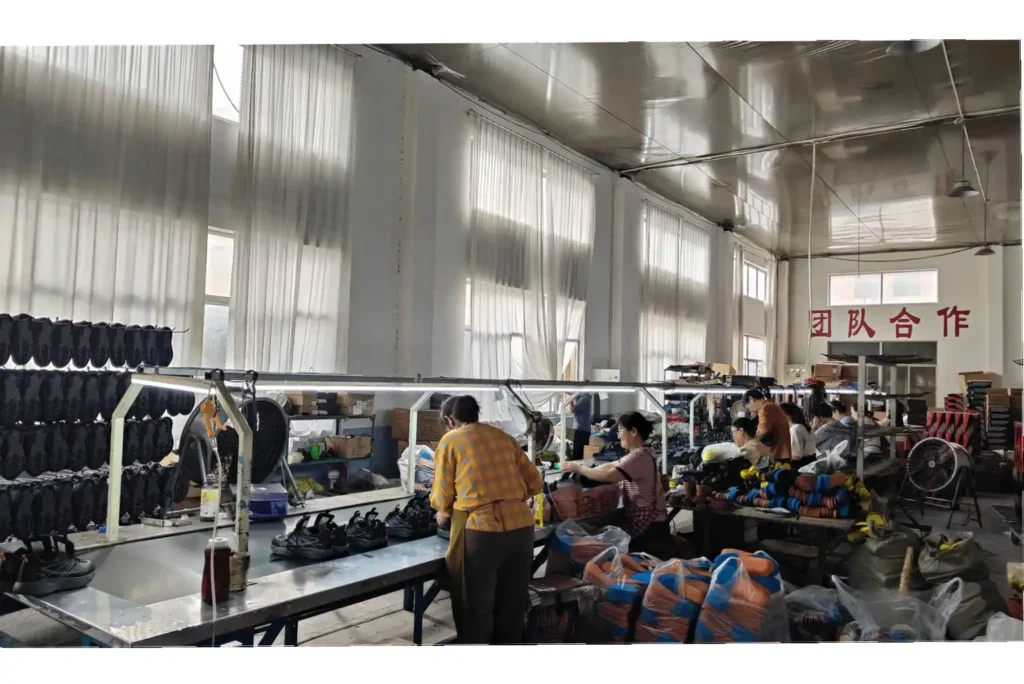
Ocean Safety Shoes is a professional safety footwear manufacturer providing OEM and ODM solutions for PPE brands, wholesalers, importers, distributors, and industrial buyers.
For hot-weather applications, safety footwear can be developed around the needs of the target workplace, including lightweight mesh or technical textile uppers, breathable linings, removable PU footbeds, EVA cushioning systems, steel or composite toe protection, slip-resistant outsoles, and other required safety features.
For B2B buyers, choosing the right summer safety shoe should begin with the workplace itself: temperature, humidity, walking distance, protection requirements, and expected daily use.
Looking for breathable, comfortable safety shoes for wholesale, private-label, or workforce applications? Ocean Safety Shoes can support OEM/ODM development and bulk production focused on practical protection, comfort, durability, and summer wearability.