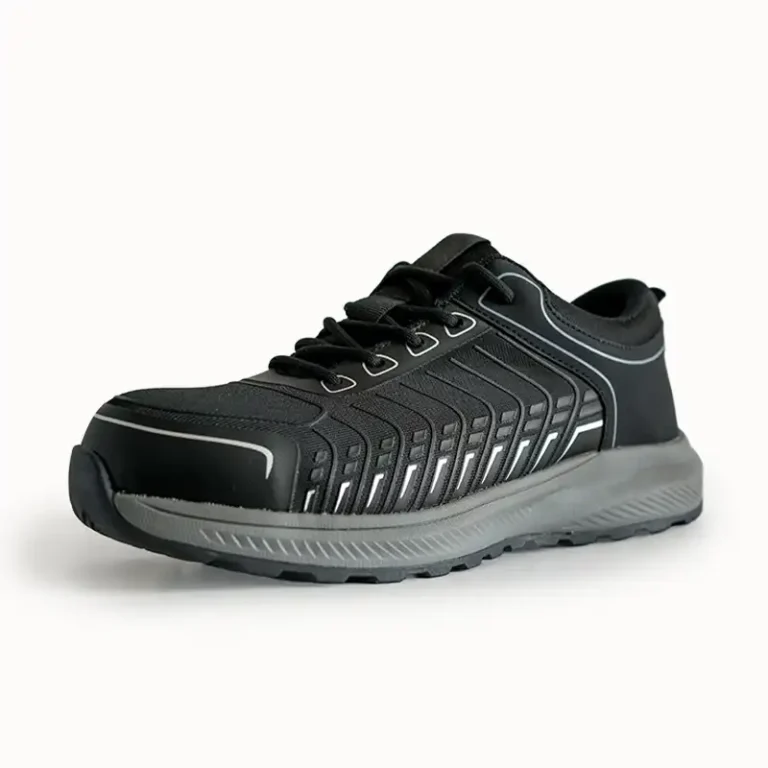
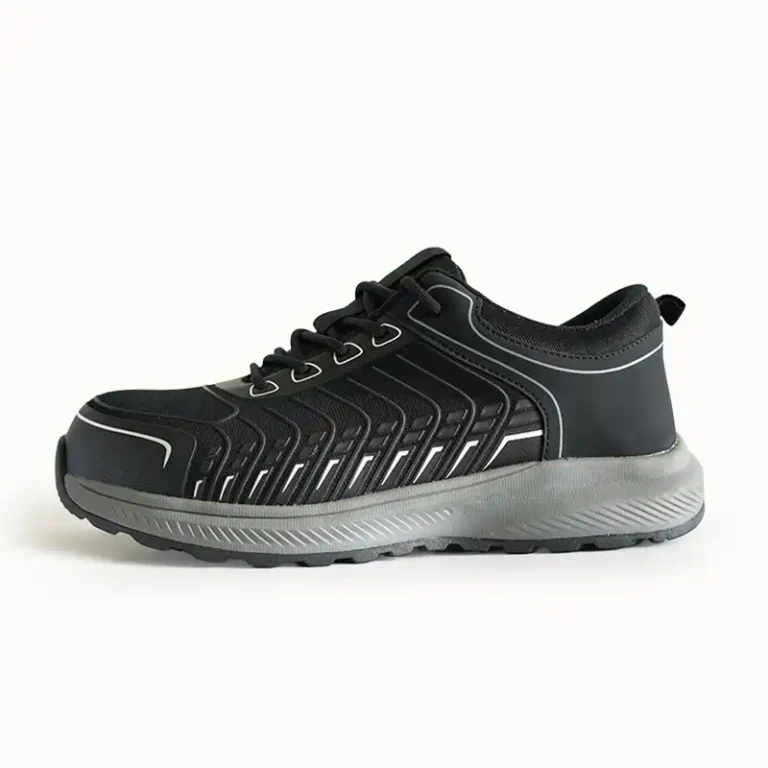
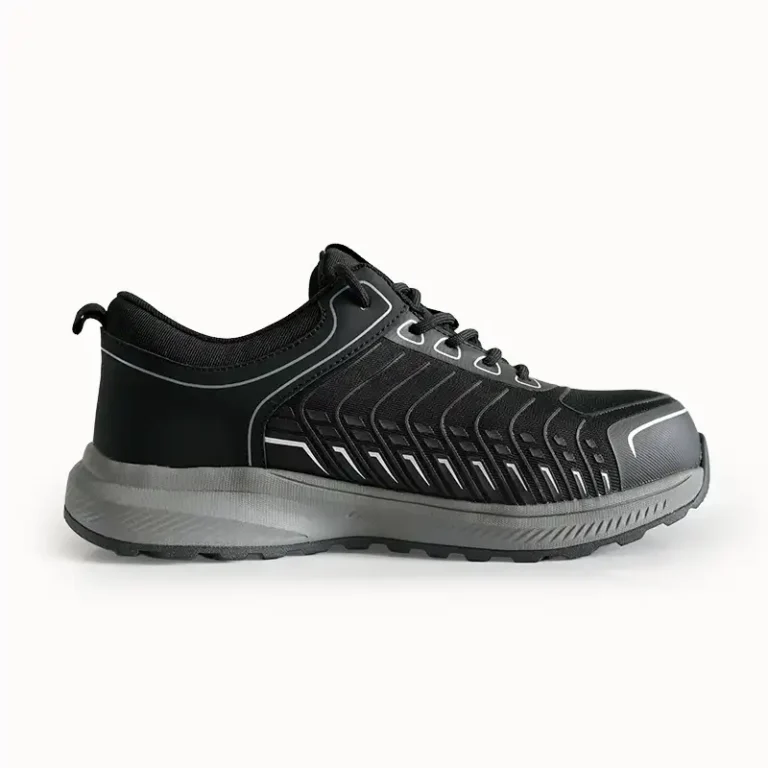
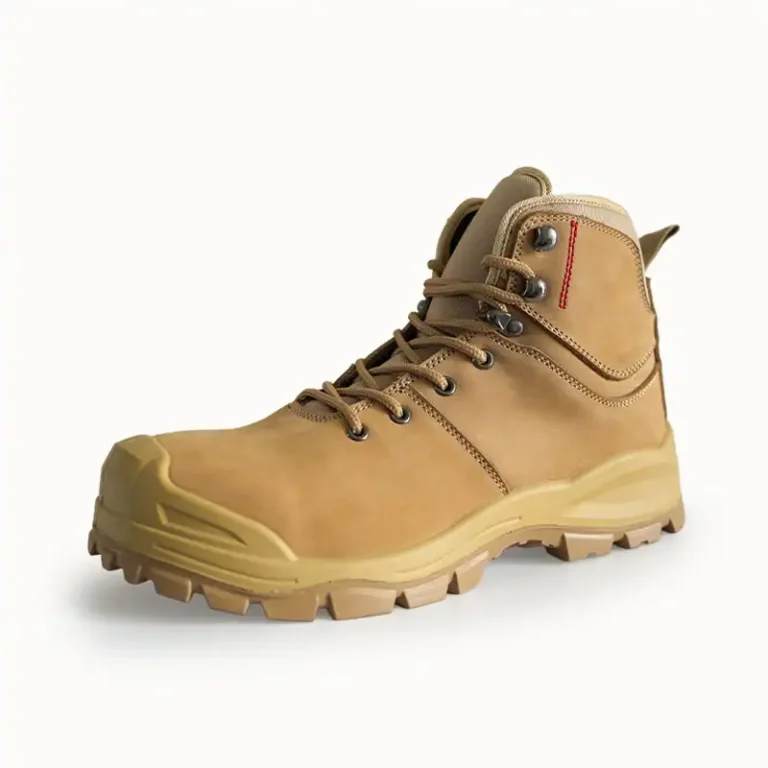
Black Extra Wide Lightweight Composite Toe Safety Shoes
Upper: Black Flyknit Fabric mesh+printing+TPU+Microfiber in the toecap and heel counter
Collar: Padded black oxford fabric+foam
Lining: Black mesh lining
Footbed: Hi-poly+mesh
Outsole: Grey/black color MD EVA+rubber outsole
Standard: S1PL Fiber glass+Kevlar
Inquiry NowCollar: Padded black oxford fabric+foam
Lining: Black mesh lining
Footbed: Hi-poly+mesh
Outsole: Grey/black color MD EVA+rubber outsole
Standard: S1PL Fiber glass+Kevlar
Workers with wider feet often face a compromise: choose protective footwear that feels restrictive around the forefoot, or move up a size and end up with unnecessary extra length. Our Composite Toe Safety Shoes are developed around a different approach—a roomier sport-style fit combined with lightweight S1PL protection.
The all-black Flyknit upper, streamlined overlays and grey/black athletic outsole create the appearance of a modern training shoe rather than a traditional industrial boot. Inside, a fiberglass safety toe and flexible Kevlar penetration-resistant midsole provide non-metallic protection.
This combination is particularly suited to warehouse, logistics, assembly, light manufacturing, maintenance and other active workplaces where employees may walk and stand for much of the shift.
Extra-Wide Design with More Forefoot Space
An extra-wide safety shoe is not simply a standard shoe made one size larger. The shape of the last, internal toe area and forefoot volume all influence how the shoe fits.
This model is designed with additional room across the forefoot, helping reduce the cramped feeling that workers with wider feet can experience inside conventional safety footwear.
The lightweight Flyknit construction complements this design because the textile upper is more flexible than a heavy, rigid upper. At the same time, the lacing system helps secure the instep and heel so that extra forefoot space does not mean an unnecessarily loose shoe.
For OEM projects, Ocean Safety Shoes can also discuss last dimensions and fitting requirements according to the customer’s target market.
Lightweight Fiberglass Toe Protection
Instead of a traditional steel toecap, these shoes use a fiberglass safety toe.
Fiberglass is a non-metallic protective material that can provide the required impact and compression performance when incorporated into properly tested safety footwear. It is generally lighter than steel, making it particularly well suited to athletic-style work shoes.
Reducing weight at the front of the shoe can be valuable for employees who repeatedly walk, bend, climb stairs or move between workstations.
Fiberglass also transfers heat and cold less readily than steel. Most importantly, however, protective performance should always be judged according to the certification of the complete finished shoe, rather than the toe-cap material alone.
S1PL with Flexible Kevlar Penetration Protection
Underfoot, a Kevlar penetration-resistant textile insert replaces a conventional steel plate.
Its flexibility works naturally with the sport-inspired construction, allowing the shoe to bend more easily during walking. Together with the fiberglass toe, it creates a lightweight, non-metallic protective package.
This model is specified as S1PL. Under EN ISO 20345:2022, PL identifies non-metallic penetration-resistant inserts tested using the 4.5 mm test nail; this is different from the PS classification, which uses the smaller 3.0 mm nail.
That distinction is useful for professional PPE buyers because the correct S1PL marking communicates more information than simply describing the shoe as having a “Kevlar midsole.”
Breathable Flyknit Upper with Targeted Reinforcement
The black upper combines Flyknit fabric mesh, printed details, TPU components and microfiber reinforcement.
Flyknit keeps the main body of the shoe relatively light and flexible while allowing airflow through the textile structure. Instead of covering the whole shoe with heavier material, reinforcement is concentrated in areas where additional structure is useful.
Microfiber at the toe and heel counter helps reinforce these high-contact areas, while TPU elements create the distinctive ribbed side structure visible in the design.
The result is a safety shoe that maintains a clean, understated black appearance while retaining the visual character of modern athletic footwear.
Cushioned MD EVA and Rubber Outsole
Underneath the shoe is a grey MD EVA midsole combined with a black rubber contact outsole.
The EVA section helps keep overall weight down while providing cushioning for workers walking or standing on hard industrial floors. The rubber bottom supplies the harder-wearing ground-contact layer and provides the tread structure required for workplace movement.
Together, the two materials give the shoe a more responsive, sport-oriented feel than many conventional heavy safety soles.
A Hi-Poly footbed with mesh covering adds another cushioning layer inside the shoe, while the padded black Oxford collar and foam help create a softer fit around the ankle.
Skilled Workers Behind Every Pair at Ocean Safety Shoes
Modern machinery improves efficiency, but producing a good lightweight safety shoe still depends heavily on experienced footwear workers.
At Ocean Safety Shoes, our skilled technicians handle critical operations throughout upper preparation, stitching, lasting, safety-component positioning, sole bonding, finishing and inspection.
For example, the Flyknit, TPU and microfiber sections must be accurately aligned during upper assembly. Stitching needs to follow the intended pattern without distorting the lightweight textile. During lasting, workers must position the fiberglass toe correctly while controlling the upper tension so that sufficient internal toe space is maintained.
The Kevlar insert also needs correct placement within the sole construction. On the cemented production line, experienced operators prepare the bonding surfaces, apply the appropriate treatment and adhesive, control activation conditions, align the EVA/rubber outsole and upper, and complete pressing and stabilization.
These operations may appear small individually, but consistency across hundreds or thousands of pairs depends on workers who understand both the materials and the production process.
Ocean Safety Shoes combines these experienced production teams with modern manufacturing equipment and in-house product development. Our existing sport safety-shoe range already includes Flyknit, fiberglass/Kevlar and cold-cement constructions, while OEM customers can customize upper patterns, materials, colours, branding and packaging.
FAQ
1. Are fiberglass safety toes lighter than steel toes?
Generally, yes. Fiberglass toe caps are typically lighter than traditional steel toe caps, making them particularly suitable for sport-style safety footwear designed for workers who walk frequently.
2. Why is fiberglass suitable for lightweight safety shoes?
Fiberglass provides non-metallic toe protection without the weight associated with a conventional steel cap, helping the finished shoe retain a more athletic feel.
3. Does an extra-wide fit mean the safety shoe will feel loose?
Not necessarily. The additional room is mainly designed around the forefoot and toe area, while the lace-up structure helps maintain a secure fit around the instep and heel.
4. What is the advantage of combining fiberglass with a Kevlar midsole?
The combination eliminates traditional steel protective components and reduces weight and rigidity, while the flexible textile penetration-resistant layer supports more natural movement.
5. Can Ocean Safety Shoes customize this lightweight model?
Yes. Our development and production teams can adjust upper colours, Flyknit patterns, TPU details, branding, fitting requirements and packaging for OEM/ODM customers; selected existing styles can also support smaller trial orders.
Looking for Composite Toe Safety Shoes for your workwear or PPE collection?
Ocean Safety Shoes works with importers, wholesalers, distributors and safety footwear brands to develop lightweight protective footwear combining modern sport styling with practical workplace protection. Contact us to request samples, discuss extra-wide fitting, customize colours and branding, or obtain factory-direct OEM/ODM pricing.