
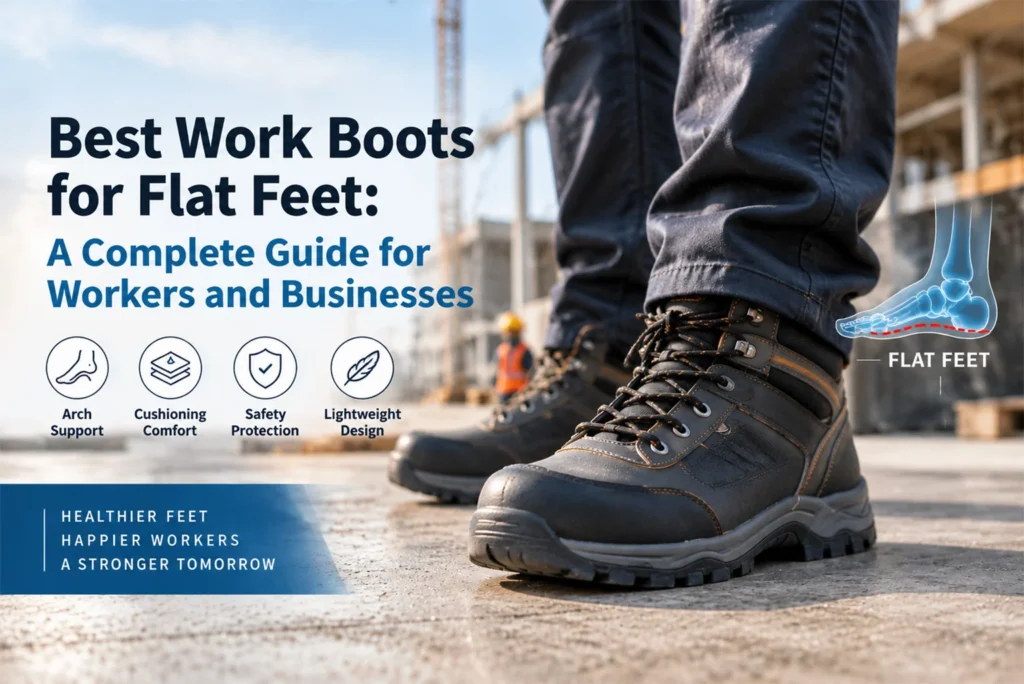
Best Work Boots for Flat Feet: A Complete Guide for Workers and Businesses
Choosing the right work boots is essential for workers who spend long hours standing, walking, and performing physically demanding tasks. For people with flat feet, the wrong footwear can lead to discomfort, fatigue, and reduced comfort during the working day.
The best work boots for flat feet should provide a combination of arch support, cushioning, stability, protection, and proper fit. Whether you work in construction, manufacturing, warehouses, logistics, or outdoor industries, supportive safety footwear can help improve comfort during long shifts.
Flat feet, also known as fallen arches, affect the way weight is distributed across the feet. Without proper support, workers may experience foot fatigue, heel discomfort, and increased pressure on the ankles, knees, and lower body.
For companies purchasing safety footwear in bulk, choosing comfortable and supportive work boots is also important for employee satisfaction and workplace efficiency.
This guide explains how to select suitable work boots for flat feet and what features businesses should consider when purchasing safety footwear.
What Are Flat Feet and Why Do They Matter at Work?
Flat feet occur when the arch of the foot is lower than normal or collapses when standing. The natural arch helps distribute body weight, absorb shock, and maintain balance during movement.
When the arch does not provide enough support, the foot may roll inward excessively, affecting the alignment of the feet, ankles, and legs.
For workers who spend eight to twelve hours on concrete floors or hard surfaces, proper footwear support becomes especially important.
What Causes Flat Feet?
Flat feet can develop due to several factors:
- Genetics and natural foot structure
- Aging
- Previous foot injuries
- Weak foot muscles
- Weight changes
- Long periods of standing or walking
Some people have flat feet throughout their lives, while others develop reduced arch support because of workplace demands.
Workers in industries such as construction, manufacturing, and warehousing often need safety footwear that provides additional stability and comfort.
Common Problems Caused by Flat Feet at Work
Workers with flat feet may experience:
Foot fatigue
Long periods of standing and walking on hard surfaces can create continuous pressure on the feet.
Heel and arch discomfort
Insufficient support may increase pressure around the heel and arch areas.
Ankle and knee stress
Poor foot alignment can affect movement patterns and create additional stress on the lower body.
Reduced workplace comfort
Uncomfortable work boots can make long shifts more difficult.
What Features Make the Best Work Boots for Flat Feet?
The right work boots for flat feet should provide support, protection, and comfort. Simply choosing soft footwear is not enough because flat feet usually require stability and proper structure.
| Feature | Benefits for Flat Feet | Suitable Workers |
|---|---|---|
| Arch Support | Improves pressure distribution and foot stability | Workers with low arches |
| Removable Insoles | Allows replacement with orthotic inserts | Workers needing customized support |
| Stable Heel Counter | Improves heel control and ankle stability | Construction and outdoor workers |
| Shock Absorbing Midsole | Reduces impact from hard surfaces | Warehouse and factory workers |
| Wide Toe Box | Provides better comfort and reduces pressure | Workers wearing safety toe boots |
| Lightweight Materials | Helps reduce fatigue during long shifts | Workers who walk frequently |
Strong Arch Support
Arch support is one of the most important features when choosing work boots for flat feet.
A supportive footbed helps distribute pressure more evenly and improves stability while standing or walking.
Important features include:
- Ergonomic footbeds
- Supportive insoles
- Structured midsoles
- Comfortable internal designs
Good arch support should support the natural shape of the foot without creating unnecessary pressure.
Removable Insoles for Orthotic Support
Removable insoles are especially useful for workers who need additional support.
Many workers with flat feet use orthopedic inserts or customized insoles. Boots with removable insoles allow users to adjust their footwear according to their needs.
Benefits include:
- Better customization
- Easier replacement
- Improved comfort
- Long-term support
Stable Heel Counter
A stable heel counter helps keep the foot properly positioned inside the boot.
Benefits include:
- Improved heel stability
- Reduced foot movement
- Better ankle support
This feature is especially important for workers who walk on uneven surfaces.
Shock Absorbing Midsole
Industrial workers often spend many hours standing on concrete floors.
A shock-absorbing midsole helps reduce impact and improve comfort.
Common cushioning materials include:
- EVA foam
- PU cushioning systems
- Lightweight foam materials
A good work boot should balance cushioning and stability.
Wide Toe Box and Comfortable Fit
A proper fit is essential for workers with flat feet.
A wide toe box allows:
- Natural toe movement
- Reduced pressure
- Better comfort during long shifts
This is especially important for safety footwear with protective toe caps.
Best Types of Work Boots for Flat Feet
Different working environments require different safety footwear solutions.
| Work Boot Type | Main Advantages | Common Applications |
|---|---|---|
| Steel Toe Work Boots | Strong impact protection and durability | Construction, mining, heavy industry |
| Composite Toe Work Boots | Lightweight and comfortable | Warehousing, logistics, manufacturing |
| Waterproof Work Boots | Protection against moisture and weather | Outdoor work, agriculture, utilities |
| Lightweight Work Boots | Reduce fatigue during long shifts | Factories, warehouses, service industries |
Steel Toe Work Boots for Flat Feet
Steel toe work boots are widely used in industries where impact protection is required.
Common applications include:
- Construction
- Manufacturing
- Mining
- Heavy industry
For workers with flat feet, suitable steel toe boots should include:
- Supportive insoles
- Comfortable padding
- Shock absorption
- Balanced weight distribution
Composite Toe Work Boots for Flat Feet
Composite toe work boots use materials such as fiberglass, carbon fiber, or Kevlar.
Advantages include:
- Lightweight construction
- Reduced fatigue
- Better insulation
- Comfortable extended wear
They are often suitable for workers who walk frequently during their shifts.
Waterproof Work Boots for Flat Feet
Waterproof work boots are important for outdoor workers who face changing weather conditions.
Important features include:
- Waterproof materials
- Slip-resistant outsole
- Supportive footbed
- Durable construction
Lightweight Work Boots for Flat Feet
Lightweight work boots help reduce fatigue during long working hours.
They are especially useful for:
- Warehouse employees
- Delivery workers
- Manufacturing workers
- Service professionals
Steel Toe vs Composite Toe Work Boots for Flat Feet
| Comparison | Steel Toe Boots | Composite Toe Boots |
|---|---|---|
| Protection | Excellent impact protection | Excellent impact protection |
| Weight | Usually heavier | Usually lighter |
| Long Shift Comfort | Good with proper design | Often preferred for walking-intensive jobs |
| Temperature Insulation | Lower | Better |
| Best Applications | Heavy industry | Logistics and manufacturing |
How to Choose Work Boots for Flat Feet Based on Your Job
Different jobs require different footwear features. Businesses should select safety boots based on working conditions and employee needs.
Construction Workers
Construction workers need boots that provide:
- Toe protection
- Slip resistance
- Durable outsole performance
- Strong support
Uneven surfaces and heavy workloads make stability especially important.
Warehouse Workers
Warehouse employees often spend most of their shifts standing and walking on concrete floors.
Recommended features include:
- Lightweight construction
- Cushioning
- Breathability
- Removable insoles
Factory Workers
Factory workers require footwear that balances protection and comfort.
Important features include:
- Stable support
- Comfortable fit
- Durable materials
Outdoor Workers
Outdoor workers need boots designed for changing environments.
Important features include:
- Waterproof protection
- Strong traction
- Durable materials
Common Mistakes When Buying Work Boots for Flat Feet
Choosing Soft Boots Without Support
Soft cushioning does not always mean better support.
Workers with flat feet usually need structure and stability.
Ignoring Insoles
Standard insoles may not meet every worker’s requirements.
Removable insoles allow additional customization.
Buying the Wrong Size
Incorrect sizing may cause:
- Heel movement
- Pressure points
- Toe discomfort
Focusing Only on Safety Features
Protection is essential, but comfort is equally important.
The best safety footwear balances:
- Protection
- Comfort
- Durability
- Support
How Safety Footwear Manufacturers Improve Comfort
Professional safety footwear manufacturers continue improving designs to create safer and more comfortable products.
| Design Element | Purpose |
|---|---|
| Ergonomic Footbed | Improves support and pressure distribution |
| Lightweight Materials | Reduces fatigue during long shifts |
| Advanced Sole Technology | Improves grip, cushioning, and durability |
| OEM/ODM Development | Creates customized footwear solutions |
Ergonomic Footbed Design
Manufacturers use ergonomic designs to improve:
- Arch support
- Pressure distribution
- Walking comfort
Lightweight Materials
Modern materials help reduce boot weight while maintaining protection.
Examples include:
- Composite toe caps
- Lightweight midsoles
- Breathable upper materials
Advanced Sole Technology
Modern outsole systems provide:
- Slip resistance
- Shock absorption
- Durability
OEM and ODM Customization
For distributors and industrial buyers, OEM and ODM services allow customized safety footwear based on:
- Industry requirements
- Market demands
- Climate conditions
- Customer preferences
How to Choose a Reliable Safety Footwear Manufacturer
For businesses purchasing safety footwear in bulk, choosing the right manufacturer is an important decision.
| Evaluation Factor | Why It Matters |
|---|---|
| Manufacturing Experience | Ensures stable production and consistent quality |
| Quality Control | Reduces defects in bulk orders |
| OEM/ODM Capability | Allows customized products |
| Material Selection | Influences comfort and durability |
| International Experience | Helps meet different market requirements |
A reliable safety footwear manufacturer should provide consistent quality, professional production capabilities, and customized solutions.
Ocean Safety Shoes specializes in manufacturing professional safety footwear for global customers, including PPE distributors, industrial companies, and workplace safety suppliers.
Frequently Asked Questions About Work Boots for Flat Feet
Are steel toe boots good for flat feet?
Yes. Steel toe boots can be suitable for flat feet when they provide proper support, cushioning, and a comfortable fit.
Do flat feet need arch support in work boots?
Many workers with flat feet benefit from arch support because it improves comfort during long periods of standing.
Can work boots help reduce foot fatigue?
Supportive work boots with proper cushioning and stability can improve comfort during demanding jobs.
Are lightweight work boots better for flat feet?
Lightweight boots can help reduce fatigue for workers who walk frequently.
Should I use orthotic insoles with work boots?
Workers who need additional support can choose boots with removable insoles that allow orthotic inserts.
Final Thoughts on Choosing Work Boots for Flat Feet
Choosing the best work boots for flat feet requires more than selecting soft footwear. The ideal safety boots should provide support, protection, comfort, and durability.
For construction workers, warehouse employees, factory teams, and outdoor professionals, the right footwear can improve comfort during demanding workdays.
For businesses and PPE buyers, working with an experienced safety footwear manufacturer helps ensure access to reliable products designed for real workplace conditions.
Ocean Safety Shoes provides professional safety footwear solutions for global customers seeking quality manufacturing, OEM customization, and durable work boots.