
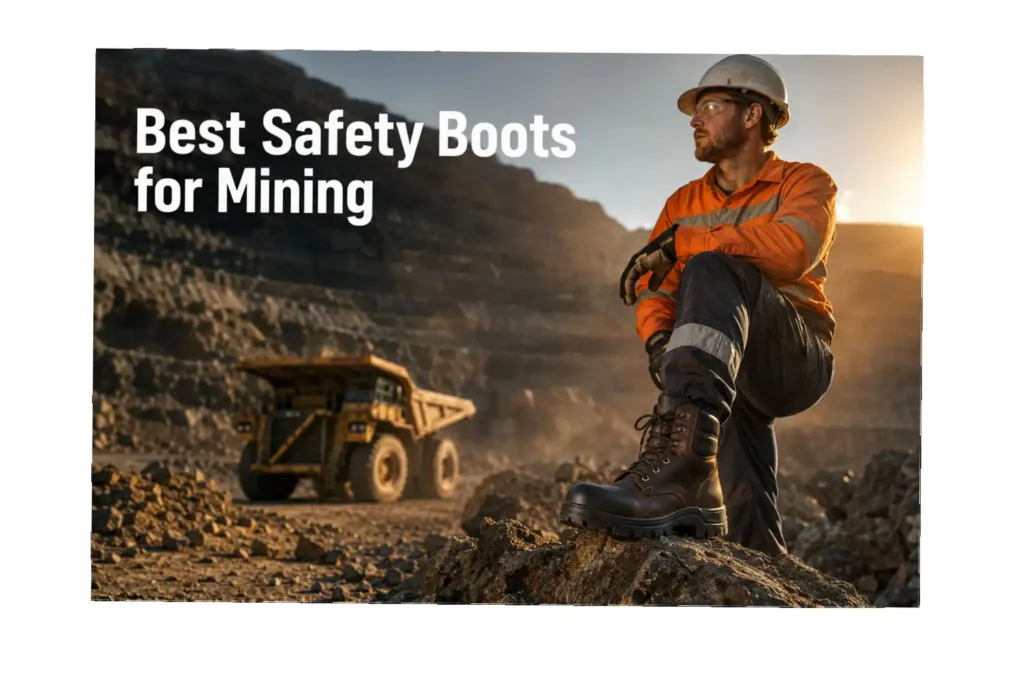
A mining maintenance worker steps down from a haul truck before sunrise. The access ladder is wet, fine mineral dust covers the ground, and a sharp piece of rock lies near the service area. During the same shift, that worker may handle heavy tools, walk over uneven terrain, enter muddy processing areas, and stand beside hot machinery.
In this environment, ordinary work boots are not enough.
The best safety boots for mining must protect against several hazards at the same time: falling rocks, crushing forces, sharp objects, slippery surfaces, water, heat, chemicals, and long hours on rough ground. They must also remain comfortable enough for workers to wear correctly throughout the shift.
Foot protection is sometimes treated as a simple purchasing category. In reality, selecting mining safety shoes is a risk-management decision. The wrong footwear may meet a basic standard yet still perform poorly in the actual workplace. A lightweight warehouse shoe, for example, is unlikely to offer the ankle support, outsole durability, or water protection required in an open-cut mine.
This guide explains the main types of safety footwear used in mining, essential protective features, relevant standards, common purchasing mistakes, material options, maintenance practices, and practical advice for mining companies, PPE distributors, and industrial footwear buyers.
What Are Mining Safety Shoes and Why Are They Important?
Safety shoes are protective work shoes designed and tested to reduce specific occupational foot injuries. Unlike ordinary boots, certified safety footwear may include a protective toe cap, penetration-resistant midsole, tested slip resistance, energy absorption, antistatic properties, water resistance, or protection against heat and electrical hazards.
Mining safety boots are generally more robust than standard industrial safety shoes. Depending on the job, they may use a high-cut or mid-cut construction, deep outsole tread, reinforced toe and heel areas, heavy-duty upper materials, and additional metatarsal protection.
Their role within a PPE program is to help control hazards such as:
- Falling rocks, tools, machine parts, and drill components
- Compression from equipment, materials, or vehicle-related incidents
- Sharp stones, metal fragments, nails, and scrap
- Slips on mud, wet rock, fuel, oil, or mineral dust
- Ankle strain on loose and uneven surfaces
- Water entering the boot during outdoor or wash-down work
- Contact with hot surfaces or hot ground
- Limited exposure to fuels, oils, or industrial chemicals
- Electrical hazards for specifically assessed tasks
Footwear should not be viewed as a substitute for engineering controls, housekeeping, safe operating procedures, or worker training. It is one part of a wider risk-control system.
Mining research also shows why traction deserves serious attention. The US National Institute for Occupational Safety and Health identifies slips, trips, and falls as a major contributor to non-fatal mining injuries and specifically notes footwear and access to mobile equipment as areas of concern. (NIOSH Mining)
Mining Applications That Require Protective Footwear
Mining operations contain many different working conditions. Footwear should therefore be selected by task rather than by using one boot for every employee.
Typical applications include:
- Underground mining
- Open-cut and surface mining
- Mineral processing plants
- Quarrying and aggregate production
- Drilling and blasting support
- Haul-truck and mobile-equipment operation
- Mechanical and electrical maintenance
- Conveyor inspection and repair
- Laboratory and quality-control work
- Warehousing and mine-site logistics
An underground worker exposed to standing water may need a waterproof high-cut boot. A workshop technician may need strong toe, puncture, and metatarsal protection. A mobile-equipment operator may benefit more from a lighter boot that allows safe pedal control and repeated climbing.
Different Types of Safety Shoes for Mining Explained
There is no single “best” mining boot for every worker. The correct model is the one that matches the hazards, climate, task, and applicable safety standard.
Steel Toe Safety Shoes
Steel toe safety shoes contain a metal toe cap designed to resist specified impact and compression forces.
Features commonly include:
- Strong protection against falling and rolling objects
- Relatively thin toe-cap construction
- Reliable performance in heavy industrial environments
- Wide availability in certified mining boot designs
Steel toe boots are commonly used by maintenance crews, drill operators, processing-plant employees, fitters, mechanics, and workers handling heavy materials.
Their main disadvantages are additional weight and thermal conductivity. Steel can feel colder in low temperatures and may retain heat in very hot conditions. Fit is also critical: the worker’s toes should not press against the protective cap.
Steel toe caps do not automatically create an electrical hazard. However, footwear for electrical work must be selected based on its complete tested construction and certified electrical properties—not simply on whether the toe cap contains metal.
Composite Toe Safety Shoes
Composite toe safety shoes use non-metallic materials such as fiberglass, carbon-fiber composites, or engineered polymers.
Their benefits may include:
- Lower weight
- Reduced heat and cold transfer
- Metal-free construction when all other components are also non-metallic
- Improved comfort during long walking shifts
- Easier use around certain metal-detection systems
Composite toe boots can be suitable for surveyors, supervisors, security-controlled facilities, logistics staff, and miners working in temperature extremes.
A composite toe is not automatically better than a steel toe. Both can provide compliant protection when properly designed and certified. Buyers should compare test results, internal space, weight, durability, and the complete boot construction.
Metatarsal Safety Boots
A toe cap mainly protects the front of the foot. It does not fully protect the metatarsal bones across the top of the foot.
Mining operations increasingly specify internal or external metatarsal guards where workers face risks from falling rocks, heavy tools, pipes, or machine components. NIOSH research notes that mine sites often use metatarsal boots in addition to safety-toe protection. (NIOSH study)
External guards are visible and can offer broad coverage, but they may be bulkier. Internal guards create a cleaner design and reduce snagging risks, although their shape and flexibility can affect comfort.
Metatarsal boots are particularly relevant for:
- Underground production crews
- Heavy mechanical maintenance
- Drill and blast support
- Materials handling
- Workshops with suspended or heavy components
Slip Resistant Safety Shoes
Slip resistant safety shoes use outsole compounds and tread patterns designed to improve traction under specified test conditions.
Important design elements include:
- Deep, open tread channels that release mud
- Defined heel edges for ladder and stair contact
- Rubber or TPU contact surfaces with suitable friction
- Wide contact areas for stability
- Self-cleaning lug arrangements
- Resistance to premature abrasion
A certification mark does not guarantee equal grip on every surface. Wet steel, smooth rock, loose gravel, clay, oil, and mineral dust create different traction demands.
Mining buyers should conduct wear trials on actual walking surfaces. A boot that performs well on a clean test floor may behave differently on muddy haul roads or metal equipment steps.
Waterproof Safety Shoes
Waterproof safety shoes are valuable in wet underground operations, outdoor mines, wash-down areas, and locations with frequent rain or mud.
Common waterproof systems include:
- Full-grain water-resistant leather
- Waterproof membranes
- Sealed or taped bootie construction
- Gusseted tongues
- Water-resistant stitching and seam treatments
- Moulded rubber or polymer lower sections
“Water-resistant” and “waterproof” are not the same claim. Water-resistant leather can slow moisture entry, while a properly constructed waterproof bootie provides a more complete barrier.
Breathability still matters. If perspiration cannot escape, moisture accumulates inside the boot. This can cause discomfort, odour, skin irritation, and faster lining deterioration.
Electrical Hazard Safety Shoes
Electrical hazard safety shoes are designed to provide secondary protection against certain forms of accidental electrical contact under dry conditions. Their performance depends on the applicable standard and the tested construction.
These boots may be relevant to:
- Mine electricians
- Electrical maintenance technicians
- Plant service personnel
- Workers near energised systems following a formal risk assessment
Electrical hazard footwear must not be confused with antistatic or conductive footwear. These categories control electrical charge in different ways and are not interchangeable.
Footwear also should not be assumed suitable for explosive atmospheres simply because it carries an electrical marking. Site electrical engineers and safety managers should define the required property based on the task, voltage, environment, and local regulation.
Heat-Resistant and Oil-Resistant Mining Boots
Some mining jobs expose footwear to hot ground, hot machine components, fuels, oils, and hydraulic fluids. In these environments, buyers may specify:
- Heat-resistant outsole performance
- Fuel- and oil-resistant outsoles
- Nitrile rubber contact surfaces
- High-temperature bonding systems
- Reinforced stitching
- Scuff-resistant toe and heel protection
Resistance claims should always be supported by testing. A fuel-resistant outsole does not mean the complete boot can withstand prolonged chemical immersion.
How to Choose the Right Safety Shoes for Mining
Choosing workplace safety footwear begins with a documented hazard assessment. Procurement teams should then translate each hazard into a measurable product requirement.
1. Assess the Mining Environment
Start by identifying where the boot will be worn.
Underground Mines
Underground work may involve water, mud, restricted spaces, rough rock, ladders, and heavy materials. Common priorities include:
- Waterproof or highly water-resistant construction
- High-cut ankle coverage
- Protective toe cap
- Penetration-resistant midsole
- Aggressive slip-resistant tread
- Metatarsal protection where required
- Durable toe and heel reinforcement
Surface and Open-Cut Mines
Workers may face heat, rain, loose gravel, long walking distances, and repeated entry into heavy equipment.
Useful features include:
- Heat-resistant outsole options
- UV- and weather-resistant upper materials
- Effective cushioning
- Deep tread with good mud release
- Secure ankle support
- Breathable lining
- Lightweight construction where the risk assessment permits
Processing Plants
Processing areas can contain wet floors, mineral dust, oil, conveyors, chemicals, and falling materials.
Priorities often include:
- Tested slip resistance
- Toe and puncture protection
- Oil-resistant outsole
- Metatarsal protection for high-risk tasks
- Easy-to-clean upper materials
- Secure fastening without loose components
Workshops and Warehouses
Workshop staff may require robust protection, while mine-site warehouse workers may benefit from lighter industrial safety shoes.
Do not automatically issue the heaviest mining boot to every employee. Excessive weight can increase fatigue and reduce mobility when heavy protection is not required.
2. Define the Protection Requirements
Create a footwear specification based on identified risks:
- Toe impact and compression protection
- Underfoot penetration resistance
- Metatarsal protection
- Slip resistance
- Ankle support
- Water resistance or waterproofing
- Heat resistance
- Fuel and oil resistance
- Antistatic, conductive, or electrical hazard properties
- Cold insulation or heat insulation
- Visibility details where site policy requires them
The requirement should be specific. “Slip-resistant mining boot” is less useful than a specification that defines the standard, outsole material, test marking, surface conditions, and field-trial procedure.
3. Prioritise Comfort and Fit
Mining shifts can involve ten or twelve hours of standing, walking, climbing, crouching, and driving. Uncomfortable footwear may cause fatigue, pressure points, blisters, and reduced compliance.
Evaluate:
- Toe-box width and depth
- Heel hold
- Ankle movement
- Boot weight
- Flexibility at the forefoot
- Cushioning and shock absorption
- Arch support
- Breathability
- Collar and tongue padding
- Compatibility with work socks
- Available half sizes or wide-fit options
Fit trials should take place later in the day, when feet may be slightly swollen. Workers should wear their normal mining socks and test the boots on stairs, slopes, equipment steps, and uneven surfaces.
A safety toe should never be used to compensate for poor sizing. If the toe cap presses against the foot, a different size, width, or last is needed.
4. Examine Durability
Mining environments can quickly expose weak materials and poor construction.
Inspect:
- Leather thickness and consistency
- Stitch density and thread quality
- Toe-scuff protection
- Heel-counter reinforcement
- Bonding between upper and sole
- Outsole abrasion performance
- Hardware and eyelet strength
- Zipper quality, if fitted
- Waterproof seam construction
- Flexing performance
- Resistance to hydrolysis for suitable PU components
Full-grain leather generally offers strong abrasion resistance and long service life when maintained correctly. Modern synthetic materials can reduce weight and improve breathability, but they must be selected carefully for contact with sharp rock and abrasive dust.
5. Verify Safety Standards
Certification should match the destination market and the purchaser’s site requirements.
Common references include:
- United States: ASTM F2413 protective footwear requirements and relevant employer obligations under OSHA 29 CFR 1910.136
- Europe: EN ISO 20345 for safety footwear
- International markets: ISO 20345:2021 and its applicable amendments
- Australia and New Zealand: AS 2210.3:2019 or other requirements identified by the mine operator and local regulation
ISO 20345 covers basic and additional requirements relating to areas such as mechanical hazards, slip resistance, thermal risks, and ergonomic behaviour.
Buyers should verify:
- Certificate holder
- Product model and article number
- Test report
- Standard edition
- Protection classification
- Optional protective markings
- Approved materials and construction
- Validity and traceability
- Local mine-site requirements
A component certificate for a toe cap or midsole does not certify the finished boot. Certification must apply to the complete footwear construction.
Common Mistakes When Buying Mining Safety Shoes
Choosing Price Over Total Value
A low unit price can become expensive if the boots wear out quickly, cause complaints, or require frequent replacement.
Better approach: Compare expected service life, failure rates, worker acceptance, warranty support, and replacement cost—not only the purchase price.
Ignoring Comfort
The most heavily reinforced boot is not always the safest choice if workers find it difficult to walk, climb, or operate pedals.
Better approach: Conduct a structured wearer trial with employees from different roles, sizes, and shifts.
Buying the Wrong Protection Level
Basic steel toe safety shoes may not provide puncture resistance, waterproofing, metatarsal coverage, or the required electrical properties.
Better approach: Link each feature to a documented hazard and confirm the certified marking.
Using One Boot for Every Mining Role
A geologist, underground miner, electrician, mechanic, and haul-truck driver do not necessarily need identical footwear.
Better approach: Create role-based footwear categories while keeping the range manageable for procurement.
Trusting Marketing Claims Without Evidence
Terms such as “non-slip,” “waterproof,” and “heavy duty” can be used loosely.
Better approach: Request certificates, laboratory reports, material specifications, and production samples.
Ignoring Maintenance and Wear
Even premium mining boots become unsafe when the tread is worn, the sole separates, or the upper is cracked.
Better approach: Establish cleaning, inspection, reporting, and replacement procedures. NIOSH warns that worn tread reduces traction, sole separation increases trip risk, and tears or cracks can affect water and electrical protection.
Safety Shoes Materials and Technologies for Mining
Upper Materials
Full-Grain Leather
Full-grain leather provides strong abrasion resistance, structure, and durability. It is a practical choice for heavy mining boots, especially when treated for water resistance.
Nubuck Leather
Nubuck offers a softer feel and premium appearance while retaining good durability. It requires suitable treatment and regular cleaning in wet or dusty conditions.
Mesh
Mesh improves airflow and reduces weight. It is more suitable for lower-risk, dry, hot environments or support roles than for sharp, highly abrasive underground conditions.
Engineered Synthetic Materials
High-strength woven fabrics and microfiber materials can reduce weight and drying time. Buyers should confirm tear resistance, flex performance, and suitability for the intended environment.
Outsole Technologies
Rubber Outsoles
Rubber can provide strong abrasion resistance, traction, heat resistance, and durability. It is frequently used as the ground-contact layer in heavy-duty mining boots.
PU Outsoles
Polyurethane offers cushioning and relatively low weight. Dual-density PU systems can combine a softer midsole with a denser outer layer.
PU/TPU Outsoles
A cushioned PU midsole with a TPU contact layer can provide a balance of comfort, abrasion resistance, and stable performance.
PU/Rubber and EVA/Rubber Systems
These hybrid constructions combine cushioning with a durable rubber contact surface. Correct bonding, flex testing, and material compatibility are essential.
Comfort Technologies
Useful comfort features include:
- Anatomically shaped footbeds
- Shock-absorbing heel sections
- Dual-density midsoles
- Moisture-managing mesh linings
- Padded collars and tongues
- Supportive heel counters
- Wide-fit lasts
- Removable insoles
- Reduced overall boot weight
Comfortable work shoes can reduce distractions and encourage consistent PPE use, but comfort must never replace required protection.
Toe and Midsole Protection
Steel toe caps are strong and compact. Composite toe caps reduce metal content and may lower weight. Underfoot protection may use steel plates or textile penetration-resistant inserts.
Textile midsoles can offer flexibility and improved coverage, while steel plates remain a proven heavy-duty option. Their performance depends on the test method and the complete shoe design, so procurement teams should compare certified results rather than relying only on material names.
Benefits of Investing in Quality Safety Shoes
Quality PPE footwear can produce value well beyond basic compliance.
Reduced Injury Risk
Properly selected boots help reduce exposure to impact, compression, penetration, and slip hazards. No boot can prevent every incident, but task-specific footwear strengthens the overall control system.
Better Worker Comfort
Cushioning, fit, breathability, and controlled weight matter during long shifts. Comfortable workers are less likely to remove, loosen, or incorrectly wear their protective footwear.
Improved Productivity
Workers who can walk, climb, and stand comfortably may experience less distraction and fatigue. Correct traction can also improve confidence when moving around equipment and uneven ground.
Lower Replacement Costs
Durable materials and appropriate construction can reduce premature sole wear, upper damage, and bonding failures. A slightly higher initial cost may deliver a lower cost per wear.
Stronger Safety Culture
When management selects PPE based on real worker needs, employees see that safety decisions are practical rather than purely administrative. Wearer feedback also improves product acceptance.
How to Maintain Safety Shoes for a Longer Lifespan
Maintenance preserves comfort and helps workers identify damage before protection is compromised.
Clean Boots Regularly
- Remove mud and stones with a soft or medium brush.
- Wipe leather with a damp cloth.
- Use cleaning products compatible with the upper material.
- Remove mineral dust from seams, flex points, and tread channels.
- Clean fuel or oil contamination promptly according to site procedures.
Dry Them Correctly
Never place wet boots directly against an open flame, heater, or very hot surface. Excessive heat can harden leather, damage adhesives, distort components, and affect waterproof membranes.
Remove the footbed, loosen the laces, open the tongue, and allow the boots to dry in a ventilated area. Sites with consistently wet conditions may consider issuing a second pair for rotation.
Store Boots Properly
Store safety footwear in a cool, dry, ventilated place away from direct sunlight, chemicals, and heat sources. Boots should be dry before being placed in lockers or sealed containers.
Use a Routine Inspection Checklist
Workers and supervisors should check for:
- Worn or smooth tread
- Cuts, cracks, holes, or burns
- Sole separation
- Exposed toe-cap edges
- Damaged metatarsal guards
- Broken laces, eyelets, or zippers
- Compressed cushioning
- Torn lining
- Water leakage
- Permanent chemical contamination
- Changes in fit or support
Replace Boots at the Right Time
There is no universal replacement interval. Service life depends on the environment, frequency of use, worker weight, walking surface, maintenance, and boot construction.
Replace footwear immediately when critical protective performance may be compromised. Do not wait for a scheduled replacement date when the outsole is worn smooth, the sole is separating, or the protective structure has suffered a significant impact.
Safety Shoes Buying Guide for Mining Businesses
Build a Role-Based Specification
Group employees by exposure rather than job title alone. For example:
- Heavy underground production
- Surface operations
- Mechanical maintenance
- Electrical maintenance
- Mobile-equipment operation
- Processing plant
- Laboratory and logistics
Define mandatory and optional protection for each group.
Conduct Field Trials Before Bulk Purchasing
A useful trial should include:
- Multiple sizes and foot widths
- Different shifts and work areas
- Hot, wet, and dry conditions where possible
- Walking, climbing, kneeling, and driving tasks
- Feedback after several weeks, not only on the first day
- Inspection of tread wear and upper damage
Record feedback systematically. “Comfortable” is subjective, but repeated reports of heel movement, toe pressure, heat buildup, or poor grip reveal design issues.
Evaluate the Supplier
A reliable industrial safety shoes supplier should be able to provide:
- Relevant certificates and test reports
- Traceable material specifications
- Production and quality-control procedures
- Pre-production samples
- Size-set samples
- Batch inspection support
- Consistent production capacity
- Clear corrective-action procedures
- OEM and ODM capabilities
- Experience with the target market
For mining tenders, ask how the supplier controls changes to toe caps, midsoles, outsoles, leather, adhesives, and construction. An unapproved material change can affect both performance and certification.
Review Customisation Options
Mining companies and PPE distributors may request:
- Company colours and logos
- Wide-fit lasts
- Alternative toe-cap materials
- Metatarsal guards
- Waterproof bootie construction
- Side zippers or quick-release systems
- Reflective details
- Custom footbeds
- Outsole compounds for heat or oil exposure
- Special packaging and identification labels
Customisation should not invalidate certification. Any material or structural change must be reviewed against the approved technical file and testing requirements.
Establish Quality Inspection Points
A mining boot inspection plan may include:
- Incoming leather and fabric inspection
- Toe-cap and midsole verification
- Cutting and stitching checks
- Waterproof bootie leak testing
- Adhesive and surface-treatment control
- Sole bonding inspection
- Size and fitting checks
- Flexing and appearance inspection
- Metal detection where required
- Final packaging and traceability checks
Buyers may also use accredited third-party laboratories or inspection companies when contract risk justifies additional verification.
Define Packaging and Delivery Requirements
Bulk orders should clearly state:
- Pair and carton labelling
- Size ratios
- Country-specific markings
- User information requirements
- Barcode format
- Batch or production codes
- Certificate references
- Carton strength
- Moisture protection
- Pallet and shipping requirements
- Spare laces or footbeds, if required
Clear documentation reduces receiving errors and simplifies distribution across multiple mine sites.
Frequently Asked Questions About Safety Shoes
1. How long do mining safety shoes usually last?
Mining boots may last from several months to more than a year, depending on the job, terrain, shift pattern, materials, and maintenance. Condition-based inspection is more reliable than using time alone.
2. Are steel toe safety shoes better than composite toe shoes?
Neither is universally better. Steel toes are compact, strong, and widely used in heavy industry. Composite toes can reduce weight and temperature transfer. The best option is the certified toe protection that fits the worker and task.
3. What industries require safety shoes?
Safety footwear is commonly used in mining, construction, manufacturing, oil and gas, logistics, warehousing, utilities, transport, agriculture, and other workplaces with foot-injury hazards.
4. Are mining safety shoes comfortable for all-day wear?
They can be, provided the boots have the correct fit, suitable width, cushioning, breathability, flexibility, and weight. Wearer trials are essential for employees working long shifts.
5. How do I choose the correct size?
Wear normal work socks, measure both feet, and try the boots later in the day. Check heel hold, toe space, width, and ankle comfort while walking, climbing, crouching, and standing on an incline.
6. How often should safety shoes be replaced?
Replace them when protective or functional performance is compromised. Warning signs include worn tread, sole separation, exposed protective components, structural damage, persistent leakage, or loss of support.
7. What safety standards should mining footwear meet?
The required standard depends on the market and site. Common references include ASTM F2413 in the United States, EN ISO 20345 in Europe, ISO 20345 internationally, and AS 2210.3:2019 in Australia. Mine operators may impose additional requirements.
8. Can safety shoes prevent workplace injuries?
Safety shoes can reduce the severity or likelihood of certain impact, compression, puncture, slip, and environmental injuries. They cannot eliminate all risks and must be combined with effective workplace controls, training, and safe procedures.
Conclusion: Choosing the Best Safety Boots for Mining
The best safety boots for mining are not simply the most expensive or the heaviest boots available. They are safety shoes selected through a clear assessment of the worker’s task, mine conditions, applicable standards, comfort needs, and real exposure to hazards.
Effective mining safety footwear may require toe and underfoot protection, slip-resistant outsoles, ankle support, waterproof construction, metatarsal coverage, or specialised electrical and thermal properties. Fit and comfort are equally important because even highly protective boots must be worn correctly throughout long, physically demanding shifts.
For businesses, investment in quality safety shoes can support injury prevention, workforce comfort, productivity, product consistency, and a stronger safety culture. Certification should be verified, samples should be tested in real working conditions, and every purchasing decision should consider total service value rather than unit price alone.
Professional Mining Safety Footwear Solutions
Looking for reliable safety shoes for mining, industrial workplaces, or PPE distribution?
Ocean Safety Shoes manufactures protective work shoes and mining safety boots for wholesalers, importers, distributors, PPE brands, and industrial companies. With OEM and ODM support, material selection, product development, quality control, and footwear solutions for international markets, we help B2B buyers develop products that balance protection, comfort, durability, and commercial value.
Contact Ocean Safety Shoes to discuss your required safety standard, mining application, order quantity, custom design, sample development, or wholesale safety footwear project.