
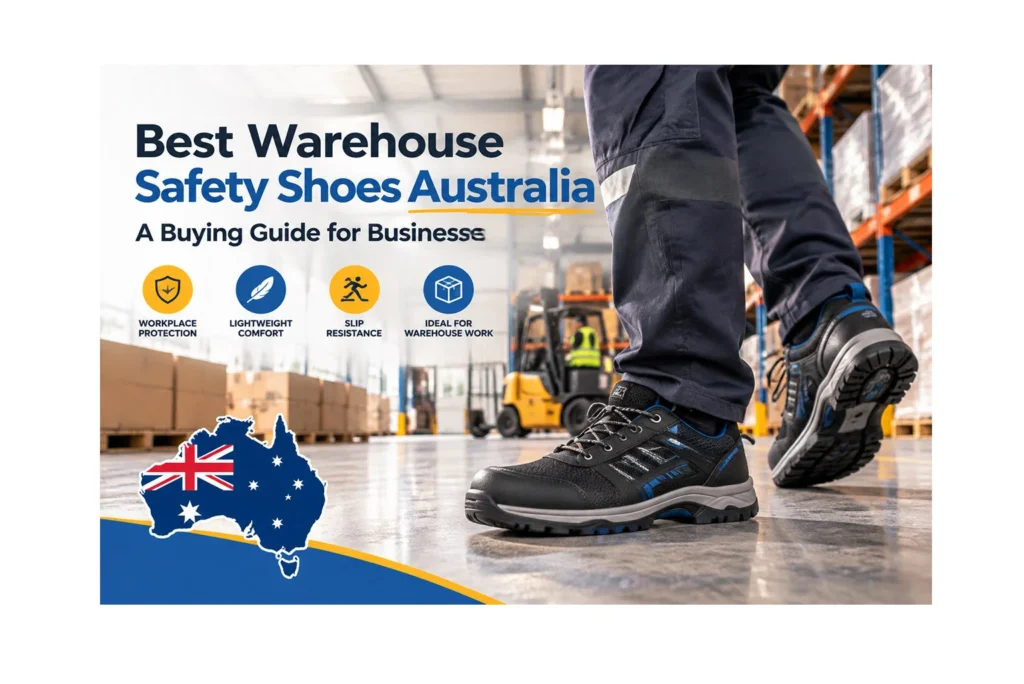
Choosing the right warehouse safety shoes Australia businesses need is an important decision for PPE distributors, workwear wholesalers, logistics companies, and industrial procurement teams. Warehouse employees may spend entire shifts walking across concrete floors, picking stock, operating forklifts, handling cartons, and moving between storage areas and loading docks.
The wrong footwear can contribute to discomfort, fatigue, slipping incidents, and avoidable product replacement costs. For businesses purchasing safety footwear in bulk, the challenge is finding products that balance workplace protection, comfort, durability, and purchasing value.
This guide explains how to evaluate warehouse footwear, compare suppliers, and select suitable products for Australian workplaces. It also covers what B2B buyers should consider when sourcing wholesale safety shoes Australia suppliers can provide for long-term business requirements.
Why Warehouse Operations Need the Right Safety Footwear
Warehouse environments create different risks depending on the type of work being performed. A distribution centre handling lightweight parcels has different requirements from a warehouse storing heavy machinery components or operating in refrigerated conditions.
Common workplace hazards include:
- Falling objects and dropped cartons
- Slippery floors caused by dust, moisture, or spills
- Prolonged standing and repetitive walking
- Sharp debris or objects that could penetrate the sole
- Contact with pallets, trolleys, and material-handling equipment
- Temperature changes between indoor and outdoor work areas
For employers, selecting appropriate footwear begins with a workplace risk assessment. Not every warehouse employee requires the same footwear features.
For distributors and wholesalers, understanding these differences also helps create a more useful product range for customers in logistics, manufacturing, retail distribution, and industrial storage.
What to Look for in Warehouse Safety Shoes Australia
When evaluating warehouse footwear, buyers should prioritise the hazards workers actually face rather than selecting products based on appearance or price alone.
Toe Protection Based on Workplace Risks
Protective toe caps may be necessary where workers face risks from falling objects, heavy cartons, equipment, or other impact hazards.
Common options include:
- Steel toe: A traditional protective option for many industrial applications.
- Composite toe: Uses non-metallic protective materials and may suit buyers seeking metal-free footwear.
- Other certified protective toe designs: Suitability depends on the product’s tested performance and the workplace requirements.
Steel and composite toe footwear should be compared based on verified protection, fit, weight, and intended application.
A composite toe should not automatically be considered safer or more comfortable than a steel toe. Buyers should evaluate the complete footwear design and the documentation supporting its protective performance.
Slip Resistance for Warehouse Floors
Slip resistance is an important consideration for workers moving across smooth concrete floors, loading areas, and frequently cleaned surfaces.
When comparing warehouse work shoes Australia buyers may source, consider:
- Outsole material and tread design
- Grip performance on relevant floor surfaces
- Resistance to wear during repeated walking
- Suitability for areas exposed to water, oils, or other contaminants
- Ease of cleaning and maintaining the outsole
No outsole performs identically on every surface. Buyers should match the footwear’s tested slip-resistance properties to the actual conditions in the workplace.
For example, a dry parcel-picking area may have different needs from a warehouse where workers regularly encounter wet floors.
Lightweight Construction and All-Day Comfort
Warehouse employees can take thousands of steps during a shift. Excessively heavy or poorly fitted footwear may increase discomfort and fatigue.
When evaluating lightweight safety shoes Australia suppliers offer, examine the entire construction rather than focusing on the upper material alone.
Important features include:
- Lightweight but suitable protective components
- Flexible construction where appropriate
- A secure heel fit
- Adequate toe-box space
- Cushioning suitable for prolonged standing
- A stable outsole
Lightweight footwear can be useful for picking, packing, and general distribution work, provided it meets the site’s protection requirements.
Breathability and Moisture Management
Warehouse workers may experience warm conditions, particularly in busy facilities with limited ventilation or high levels of physical activity.
Breathable uppers and moisture-managing linings can improve wearing comfort. However, ventilation should be balanced against environmental exposure.
For example, breathable mesh may be suitable for a dry indoor warehouse, while a loading area exposed to rain may require a more water-resistant design.
Buyers should select materials according to working conditions rather than assuming that one material is suitable for every warehouse.
Fit, Support, and Outsole Durability
A comfortable safety shoe should fit securely without creating excessive pressure around the toes, heel, or instep.
For bulk purchasing, evaluate:
- Size availability
- Width options, where offered
- Heel stability
- Insole comfort
- Outsole wear resistance
- Construction durability
A product that performs well during a brief sample inspection may feel different after several hours of walking. Where possible, conduct a workplace wear trial before approving a large order.
Matching Warehouse Footwear to Different Job Roles
The best warehouse safety shoes are those that match the tasks workers perform. B2B buyers should consider creating different product specifications for different roles rather than purchasing one style for every employee.
Picking and Packing Operations
Picking and packing staff frequently walk between storage locations, shelves, and packing stations.
Their footwear may prioritise:
- Lightweight construction
- Comfortable cushioning
- Breathable uppers
- Suitable toe protection
- Reliable grip on warehouse floors
For these roles, lightweight safety footwear may improve comfort during repetitive movement. Protective features should still be selected according to the workplace risk assessment.
Forklift Operators and Loading Dock Workers
Forklift operators and loading dock personnel may work around heavy goods, pallets, vehicles, and changing floor conditions.
Purchasing teams should evaluate:
- Appropriate toe protection
- Stable footing
- Secure fit during repeated movement
- Outsole durability
- Grip suited to the operating environment
Loading dock employees who move between indoor and outdoor areas may also need footwear that accommodates changing weather and surface conditions.
Cold Storage and Temperature-Controlled Facilities
Cold storage environments require additional consideration.
Depending on the facility, buyers may need footwear with:
- Suitable insulation
- Appropriate outsole performance in cold conditions
- Materials that remain suitable at the operating temperature
- Comfortable fit when worn with work socks
Not every warehouse requires insulated safety shoes. Buyers should match insulation and material specifications to the actual temperature range and exposure time.
Mixed Indoor and Outdoor Warehouse Work
Some employees move between storage areas, vehicle yards, and outdoor loading zones.
For these roles, warehouse safety shoes Australia buyers choose should account for both indoor and outdoor hazards.
Water resistance, outsole durability, suitable grip, and protection from workplace impacts may all influence the selection.
The final specification should reflect the most significant risks encountered during the employee’s normal shift.
How B2B Buyers Should Evaluate Wholesale Safety Shoes Australia
For PPE distributors, importers, and workwear wholesalers, choosing a suitable product is only part of the purchasing decision. The supplier must also be able to support consistent quality and repeat orders.
Review Product Range and Size Availability
A useful wholesale range should address different customer needs without creating unnecessary inventory complexity.
Before selecting a supplier, review:
- Available shoe and boot styles
- Size range
- Colour and material options
- Protective features
- Availability of lightweight models
- Suitability for different warehouse applications
Distributors should identify their main customer groups and select a practical range based on expected demand.
Stocking too many similar products may tie up working capital, while offering too few options may limit opportunities to serve different customers.
Check Quality Assurance and Product Documentation
Before placing bulk orders, request relevant product specifications and supporting documentation.
Depending on the product and procurement requirements, this may include:
- Material specifications
- Toe protection details
- Slip-resistance test information
- Applicable safety standard information
- Inspection procedures
- Product identification and traceability details
Australian buyers should confirm the applicable safety requirements for the intended workplace and verify that the supplied product meets those requirements.
Do not assume that a supplier’s general statement about product quality proves compliance with a specific standard.
Evaluate Samples Before Bulk Purchasing
Samples allow buyers to assess product suitability before committing to larger quantities.
A practical evaluation should examine:
- Fit and comfort.
- Materials and construction.
- Outsole grip and stability.
- Protective features and documentation.
- Packaging and product consistency.
Where possible, ask representative warehouse workers to trial samples under normal working conditions.
Record their feedback and compare products using the same evaluation criteria. This makes supplier comparisons more objective and helps purchasing teams justify their final decision.
Confirm Reorder Consistency and Lead Times
For wholesale safety shoes Australia distributors supply to business customers, reliable replenishment can be as important as the initial product quality.
Before establishing a long-term relationship, confirm:
- Production lead times
- Minimum order quantities
- Repeat-order procedures
- Size availability
- Quality inspection arrangements
- Communication during production
- Procedures for handling quality concerns
A supplier that can support predictable replenishment helps distributors manage stock levels and respond to customer demand.
Lightweight Safety Shoes Australia: When Are They the Right Choice?
Lightweight safety footwear can be a strong option for warehouse operations involving extensive walking, frequent picking, and indoor distribution work.
However, lighter construction should never replace the protection required for the job.
| Workplace requirement | What buyers should evaluate |
|---|---|
| Frequent walking | Weight, cushioning, fit, and flexibility |
| Dropped-object hazards | Verified toe protection |
| Smooth or wet floors | Suitable tested slip resistance |
| Warm indoor conditions | Breathability and moisture management |
| Outdoor loading work | Weather suitability and outsole durability |
| Long shifts | Fit, support, and worker trial feedback |
When comparing the best warehouse safety shoes for a business, buyers should consider the complete combination of protection, comfort, durability, and cost.
A lightweight model that does not suit the workplace hazard is not a suitable purchasing choice, regardless of how comfortable it feels.
Understanding Australian Safety Requirements and Documentation
Australian businesses should select safety footwear according to workplace risks, applicable safety requirements, and their own procurement specifications.
Before ordering, buyers should:
- Identify the hazards workers face.
- Determine the required protective features.
- Confirm the applicable safety standard and edition.
- Request relevant test reports or certification documentation where required.
- Verify that documentation corresponds to the specific product being supplied.
- Maintain purchasing and product records.
Requirements can differ by industry and application. Footwear intended for general warehouse duties may not be suitable for electrical hazards, chemical exposure, or other specialised risks.
For importers and distributors, checking documentation before bulk production or shipment can help avoid costly product-selection and compliance problems.
How to Compare Warehouse Work Shoes Australia by Total Cost
The lowest unit price does not always represent the lowest overall purchasing cost.
For B2B buyers, total cost may include product price, freight, import expenses, inspection, storage, and replacement costs.
Consider the following factors when comparing quotations.
| Cost factor | What to check |
|---|---|
| Unit price | Price at the required order quantity |
| Freight and import expenses | Total landed cost, where applicable |
| Minimum order quantity | Impact on inventory and cash flow |
| Product durability | Expected service life under actual conditions |
| Quality consistency | Potential returns and replacement expenses |
| Lead time | Risk of stock shortages |
| Customisation | Additional development, branding, or packaging costs |
A supplier offering a slightly higher unit price may provide better value if the products are consistent, the lead times are dependable, and quality issues are handled effectively.
Distributors should compare suppliers using the same specifications and quantities to make the results meaningful.
Common Mistakes When Purchasing Warehouse Safety Footwear
Choosing Products Based on Price Alone
Low prices may be attractive, but buyers should also consider protection, durability, documentation, and supplier reliability.
Assuming Every Warehouse Has the Same Requirements
A dry distribution centre and a cold storage facility have different operational conditions. Product selection should reflect the actual working environment.
Ignoring Worker Feedback
Workers can identify problems with fit, pressure points, and comfort that may not be apparent during a short inspection.
Ordering Large Quantities Before Testing Samples
Sample evaluation and a suitable wear trial can help identify problems before a large purchasing commitment.
Failing to Plan Repeat Orders
Distributors should confirm replenishment arrangements and product consistency before relying on a supplier for ongoing customer demand.
Warehouse Safety Shoes Purchasing Checklist
Use this checklist when evaluating suppliers and preparing a bulk order.
- Define the hazards and job roles the footwear must address.
- Confirm the required protective features.
- Evaluate grip, fit, comfort, and durability.
- Check the available size range.
- Request product specifications and relevant documentation.
- Inspect samples and collect worker feedback.
- Compare quotations at equivalent order quantities.
- Confirm MOQ, lead times, and payment terms.
- Clarify quality inspection and issue-resolution procedures.
- Plan inventory and repeat-order requirements.
Completing these checks gives purchasing teams a more consistent basis for comparing products and suppliers.
Frequently Asked Questions
What are the best warehouse safety shoes Australia businesses should buy?
The best option depends on the workplace hazards, floor conditions, shift length, and required protective features. Buyers should compare toe protection, slip resistance, weight, fit, and durability rather than selecting a product based on price alone.
Are lightweight safety shoes suitable for warehouse workers?
They can be suitable for workers who walk frequently or perform picking and packing duties. However, the footwear must still provide the protection required by the workplace risk assessment.
Should warehouse buyers choose steel toe or composite toe shoes?
Both may be suitable when the specific product meets the required protective performance. Buyers should compare verified protection, weight, fit, and any site-specific requirements before deciding.
What should distributors check before ordering wholesale safety shoes Australia?
Distributors should evaluate product specifications, quality documentation, samples, size availability, MOQ, pricing, lead times, and the supplier’s ability to maintain consistent quality across repeat orders.
How can businesses reduce the risk of buying unsuitable warehouse footwear?
Start with a workplace risk assessment, establish clear product specifications, review documentation, and conduct sample evaluations or wear trials before committing to a large order.
Conclusion
Choosing the right warehouse safety shoes Australia businesses need requires a balance between workplace protection, comfort, durability, and purchasing value.
For warehouse operators, the priority is selecting footwear suited to actual tasks and environmental conditions. For distributors, importers, and wholesalers, the additional challenge is finding products and suppliers that can support consistent quality, competitive pricing, and reliable replenishment.
A structured evaluation process helps businesses select suitable footwear, control inventory risks, and build stronger supplier relationships.
Source Warehouse Safety Footwear for Your Business
Ocean Safety Shoes supports B2B customers seeking safety footwear for industrial and workplace applications. For Australian distributors, PPE wholesalers, and procurement teams, a suitable manufacturing partner can help with product selection, bulk sourcing, and private-label development.
Explore Ocean Safety Shoes to review the product range and discuss safety footwear requirements for your target customers.
When preparing a wholesale enquiry, include your target applications, required protective features, estimated order quantity, size range, and any branding requirements. These details help establish a clearer basis for product evaluation and quotation.