
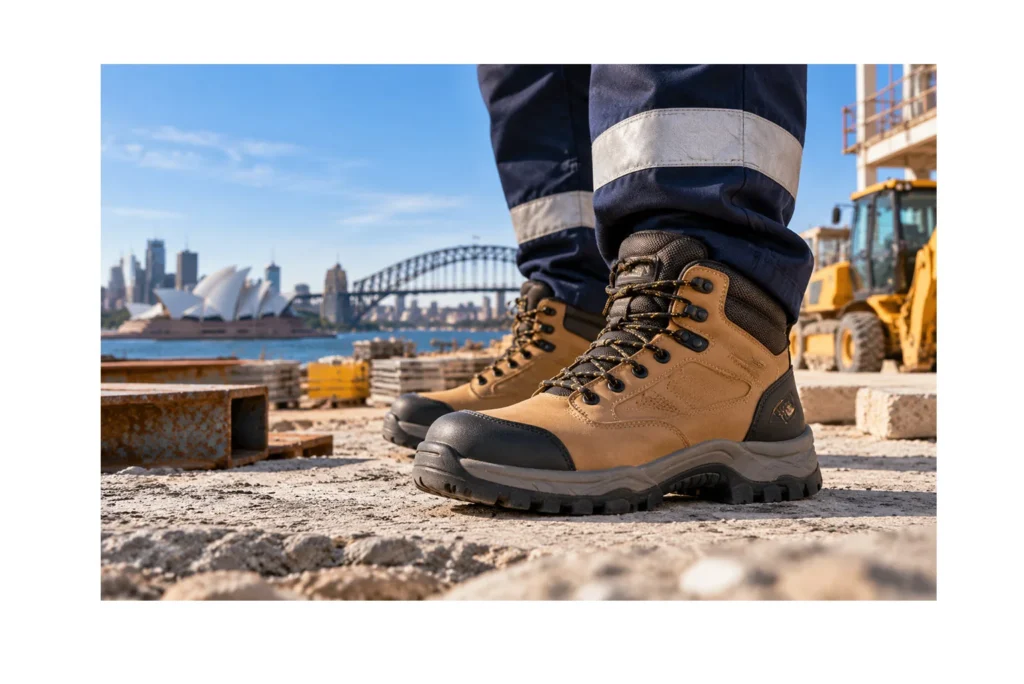
The demand for composite toe boots in Australia is increasing as businesses look for safety footwear solutions that balance workplace requirements, worker comfort, and reliable supply.
For Australian PPE distributors, workwear wholesalers, construction companies, industrial businesses, and safety footwear importers, choosing the right composite toe boots is not only a product selection decision. It is also a supply chain decision that affects purchasing efficiency, inventory management, and long-term business growth.
Professional buyers need to evaluate more than the footwear itself. Important factors include:
- Supplier reliability
- Manufacturing capability
- Product consistency
- Order flexibility
- Delivery performance
- Replacement availability
- OEM development capability
A reliable composite toe safety boots supplier should provide consistent quality, stable production, and long-term cooperation opportunities.
This guide explains how Australian businesses can evaluate composite toe boots, select suitable suppliers, manage wholesale purchasing, and build a reliable safety footwear supply chain.
Why Australian Businesses Are Considering Composite Toe Boots
Australian workplaces are increasingly focusing on safety footwear solutions that support both workplace protection requirements and worker acceptance.
Employees in industries such as construction, logistics, manufacturing, and industrial operations may wear safety boots for many hours every day. Therefore, businesses are considering factors beyond basic product specifications.
Common purchasing considerations include:
| Business Requirement | Purchasing Consideration |
|---|---|
| Worker comfort | Suitable footwear for long working hours |
| Product flexibility | Different styles for different industries |
| Non-metallic preference | Suitable for workplaces requiring metal-free footwear |
| Lightweight solutions | Supports mobility-focused applications |
| Supply reliability | Stable production and repeat ordering |
For B2B buyers, the objective is not simply purchasing a pair of safety boots.
The objective is building a dependable footwear supply system that supports:
- Employee requirements
- Customer expectations
- Repeat purchasing
- Long-term business development
When evaluating composite toe boots, businesses should consider:
- Intended application
- Product quality
- Supplier capability
- Commercial terms
- Future availability
How Australian Businesses Should Compare Composite Toe Boots for Different Applications
Different industries have different footwear requirements.
A construction company, logistics provider, industrial business, and PPE distributor may all purchase composite toe boots, but their priorities can be different.
Before placing a bulk order, buyers should understand:
- Who will use the footwear
- Where it will be used
- How frequently replacement is required
- What supplier support is needed
Composite Toe Boots for Construction Companies
Construction companies often purchase safety footwear for workers operating across multiple projects and changing environments.
Typical requirements include:
- Long working hours
- Outdoor working conditions
- Frequent movement
- Multiple job locations
- Reliable replacement supply
For construction buyers, important evaluation factors include:
| Evaluation Factor | Why It Matters |
|---|---|
| Product durability | Helps reduce replacement frequency |
| Worker comfort | Improves daily acceptance |
| Size availability | Supports different workforce requirements |
| Supply consistency | Prevents project delays |
| Supplier communication | Helps solve urgent requirements |
For contractors managing multiple sites, footwear availability can become as important as the initial product selection.
A supplier that cannot maintain repeat orders may create operational challenges.
Composite Toe Boots for Logistics and Warehousing Businesses
Logistics and warehouse companies often focus on footwear that supports workers who spend long periods standing and walking.
Important purchasing considerations include:
- Daily comfort
- Product availability
- Workplace suitability
- Easy replacement
- Size coverage
For warehouse operators, employee acceptance is an important part of PPE management.
If workers find safety footwear unsuitable for daily tasks, businesses may experience:
- Lower PPE compliance
- Increased replacement requests
- Reduced employee satisfaction
For distributors serving logistics customers, stable inventory and predictable delivery are important commercial advantages.
Composite Toe Boots for Industrial Companies
Industrial businesses may require safety footwear suitable for demanding working environments.
Before purchasing, buyers should evaluate:
- Workplace conditions
- Product durability
- Required protection level
- Supplier documentation
- Long-term availability
Industrial buyers should avoid selecting products based only on price.
A lower-cost product may create additional costs through:
- Frequent replacement
- Quality issues
- Supply interruptions
A professional supplier should understand different industrial applications and provide suitable product solutions.
Composite Toe Boots for PPE Distributors and Workwear Wholesalers
For distributors, composite toe boots are not only safety products but also part of a commercial product portfolio.
Successful distributors usually evaluate:
- Market demand
- Customer segments
- Product positioning
- Price structure
- Repeat purchase opportunities
A reliable supplier can help distributors build stronger product ranges through:
- Stable manufacturing
- Consistent quality
- Flexible cooperation
- Product development support
Composite Toe Boots Buying Checklist for Australian Companies
Before placing a wholesale order, professional buyers should evaluate multiple factors beyond appearance and initial pricing.
A structured purchasing checklist helps reduce supply risks.
| Evaluation Area | Questions Buyers Should Ask |
|---|---|
| Product suitability | Does the footwear match customer requirements? |
| Manufacturing quality | How does the supplier maintain consistency? |
| Size range | Can the supplier support different customer groups? |
| Production capacity | Can future orders be fulfilled? |
| Lead time | Does delivery match business planning? |
| Replacement supply | Are repeat orders available? |
| Communication | Are updates clear and timely? |
| Commercial terms | Are MOQ and pricing suitable? |
A reliable procurement process helps businesses avoid:
- Unexpected delays
- Stock shortages
- Product inconsistencies
- Difficult reorder processes
For B2B buyers, supplier capability is often as important as the footwear itself.
Managing Composite Toe Boot Inventory for Australian Customers
For distributors and large companies, inventory management plays an important role in safety footwear purchasing.
Even a high-quality product can create business problems if inventory planning is poor.
Forecasting Customer Demand
Professional buyers should analyse:
- Previous sales data
- Customer industries
- Popular sizes
- Seasonal demand
- Replacement cycles
Understanding customer demand helps reduce:
- Excess inventory
- Emergency purchasing
- Lost sales opportunities
For example, a distributor supplying construction companies may require different inventory planning compared with a distributor serving warehouse customers.
Maintaining Replacement Stock
Safety footwear is a repeat-purchase product.
Customers may require replacement boots because of:
- Normal wear
- New employee onboarding
- Workforce expansion
- New projects
A reliable supplier should support both:
- Initial bulk orders
- Future replenishment
Before cooperation, buyers should confirm:
- Whether popular models remain available
- Whether common sizes can be reordered
- Whether future production maintains consistent specifications
Balancing Inventory Cost and Product Availability
Maintaining excessive inventory can increase:
- Storage costs
- Capital pressure
- Slow-moving stock
Maintaining insufficient inventory can result in:
- Customer delays
- Lost sales opportunities
- Emergency purchasing
Successful businesses balance product availability with inventory efficiency.
How to Calculate the Real Cost of Wholesale Composite Toe Boots
Many buyers compare suppliers based only on factory quotation prices.
However, the real cost of purchasing composite toe boots includes multiple factors.
| Cost Factor | Description |
|---|---|
| Product price | Manufacturing cost per pair |
| Freight | International shipping expenses |
| Import costs | Customs and handling expenses |
| Inventory | Storage and management costs |
| Returns | Exchange and replacement expenses |
| Supply reliability | Impact on customer satisfaction |
The cheapest quotation does not always provide the best commercial value.
A supplier with slightly higher pricing may provide better overall results through:
- Stable quality
- Reliable delivery
- Better communication
- Consistent repeat orders
Professional buyers should evaluate total purchasing value instead of only unit price.
How to Choose the Right Composite Toe Safety Boots Supplier
Selecting the right composite toe safety boots supplier is one of the most important decisions for Australian importers, wholesalers, and distributors.
A supplier should be evaluated as a long-term manufacturing partner rather than simply a product source.
Evaluating Manufacturing Capability
Buyers should review:
- Factory experience
- Production capacity
- Product range
- Manufacturing processes
- Ability to support repeat orders
Important questions include:
- Does the supplier have experience producing safety footwear?
- Can production capacity support future business growth?
- Can product specifications remain consistent?
A manufacturer with strong production capability provides greater supply confidence.
Reviewing Quality Control Processes
Consistent quality is essential for businesses selling safety footwear.
Buyers should understand:
- How materials are inspected
- How production quality is controlled
- How finished products are checked
- How quality issues are handled
Strong quality control helps reduce:
- Customer complaints
- Returns
- Replacement costs
Checking Export Experience
For Australian buyers working with overseas manufacturers, export experience is an important consideration.
Suppliers should understand:
- International shipping procedures
- Export documentation
- Packaging requirements
- Buyer communication expectations
Experienced exporters can help reduce unnecessary delays.
Building Long-Term Supplier Relationships
The best supplier is not always the cheapest supplier.
A strong manufacturing partner should provide:
- Stable production
- Clear communication
- Consistent specifications
- Flexible cooperation
- Continuous improvement
Long-term relationships help businesses build reliable safety footwear supply chains.
OEM Composite Toe Boots Development for Australian Brands
Australian PPE distributors and private-label brands may consider OEM development to create differentiated product ranges.
Working with a professional composite toe safety footwear manufacturer allows businesses to develop products based on specific customer requirements.
Why Develop Private Label Composite Toe Boots?
OEM programmes can help businesses:
- Build brand recognition
- Create unique product ranges
- Improve market positioning
- Increase customer loyalty
For distributors, private-label products provide opportunities to compete beyond price.
The OEM Product Development Process
Define Target Customers
Before development begins, buyers should identify:
- Target industries
- Customer expectations
- Market positioning
- Expected order volume
Potential customers include:
- Construction suppliers
- Industrial distributors
- Workwear retailers
- Safety equipment businesses
Confirm Product Strategy
Important decisions include:
- Product style
- Materials
- Branding requirements
- Packaging needs
- Target pricing
- Order quantities
Clear product planning helps manufacturers create suitable samples.
Sample Approval
Before mass production, buyers should evaluate:
- Product appearance
- Construction quality
- Comfort
- Customer acceptance
Sample approval helps reduce production risks.
Managing Repeat Production
A professional manufacturer should maintain consistency between:
- Approved samples
- Production orders
- Future shipments
Clear specifications and communication help prevent unexpected changes.
Questions Australian Buyers Should Ask Before Importing Composite Toe Boots
Can the Supplier Support My Order Volume?
Before cooperation, buyers should confirm:
- Minimum order quantity
- Production capacity
- Delivery schedule
- Future expansion capability
Can the Supplier Maintain Product Consistency?
Repeat orders should match approved products.
Buyers should confirm:
- Material consistency
- Production standards
- Product specifications
Can the Supplier Support Private Label Projects?
For brands and distributors, OEM capability may create additional opportunities.
Buyers should understand:
- Development process
- Sample approval
- Branding options
- Production requirements
How Does the Supplier Handle Product Changes?
Any changes involving:
- Materials
- Design
- Manufacturing methods
should be communicated before production.
What Support Is Available After Delivery?
Reliable suppliers should support:
- Product feedback
- Replacement orders
- Quality discussions
- Future purchasing plans
Common Mistakes When Buying Composite Safety Boots Wholesale
Choosing Only Based on Price
The lowest price may create additional costs through:
- Quality problems
- Returns
- Delayed shipments
- Customer complaints
Purchasing decisions should consider total business value.
Selecting Products Without Understanding Customers
Different customers have different expectations.
Construction companies, logistics businesses, and industrial buyers may require different footwear solutions.
Ignoring Future Supply
A successful first order does not guarantee long-term availability.
Buyers should evaluate supplier stability before making purchasing decisions.
Not Testing Samples Before Bulk Orders
Sample evaluation helps confirm:
- Product quality
- Customer acceptance
- Manufacturing capability
before large-scale production.
Working Without Clear Specifications
Clear specifications help prevent misunderstandings regarding:
- Product details
- Packaging
- Delivery
- Repeat orders
Frequently Asked Questions About Composite Toe Boots in Australia
Are Composite Toe Boots Suitable for Australian Workplaces?
Composite toe boots can be suitable for many Australian workplace applications when the footwear matches customer requirements and working conditions.
The correct choice depends on the industry, workplace environment, and purchasing objectives.
Why Do Businesses Choose Composite Toe Boots?
Many businesses consider composite toe boots because they provide non-metallic footwear options and can support comfortable daily use for workers who wear safety footwear for long periods.
Can Companies Buy Composite Toe Boots Wholesale?
Yes. Safety footwear manufacturers supply wholesale orders for:
- PPE distributors
- Contractors
- Industrial companies
- Workwear businesses
What Should Buyers Look for in a Composite Toe Boots Supplier?
Buyers should evaluate:
- Manufacturing experience
- Quality control
- Production capacity
- Delivery reliability
- Repeat order support
Can Manufacturers Produce Private Label Composite Toe Boots?
Yes. OEM manufacturers can develop customised composite toe safety footwear for brands and distributors.
How Should Australian Buyers Select a Supplier?
Professional buyers should compare:
- Product quality
- Commercial terms
- Manufacturing capability
- Communication
- Long-term cooperation potential
Conclusion
Choosing the right composite toe boots Australia buyers require is not only about selecting a safety footwear product.
For Australian importers, distributors, and industrial companies, successful purchasing depends on:
- Reliable suppliers
- Stable product quality
- Efficient inventory planning
- Competitive commercial terms
- Long-term manufacturing support
By evaluating both footwear solutions and supplier capability, businesses can build a stronger and more reliable safety footwear supply chain.
Partner With a Composite Toe Safety Footwear Manufacturer
Ocean Safety Shoes is a professional safety footwear manufacturer supporting global PPE distributors, wholesalers, industrial companies, and private-label brands.
We provide:
- Composite toe safety footwear manufacturing
- OEM and private label development
- Custom branding solutions
- Bulk production support
For Australian businesses looking for a reliable composite toe safety boots supplier, Ocean Safety Shoes can support product development, wholesale purchasing, and long-term supply cooperation.
Contact Ocean Safety Shoes to discuss your composite safety footwear requirements.