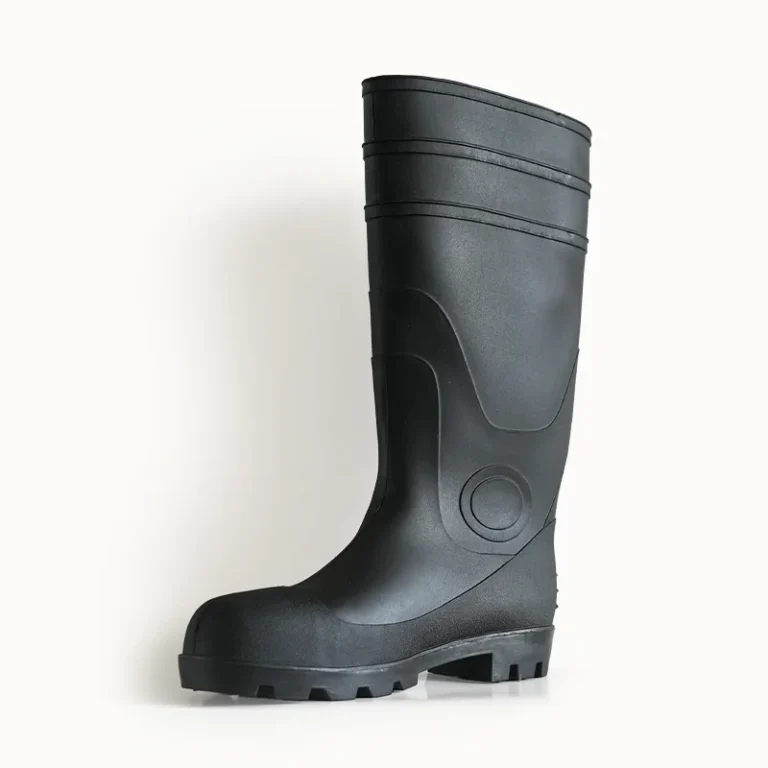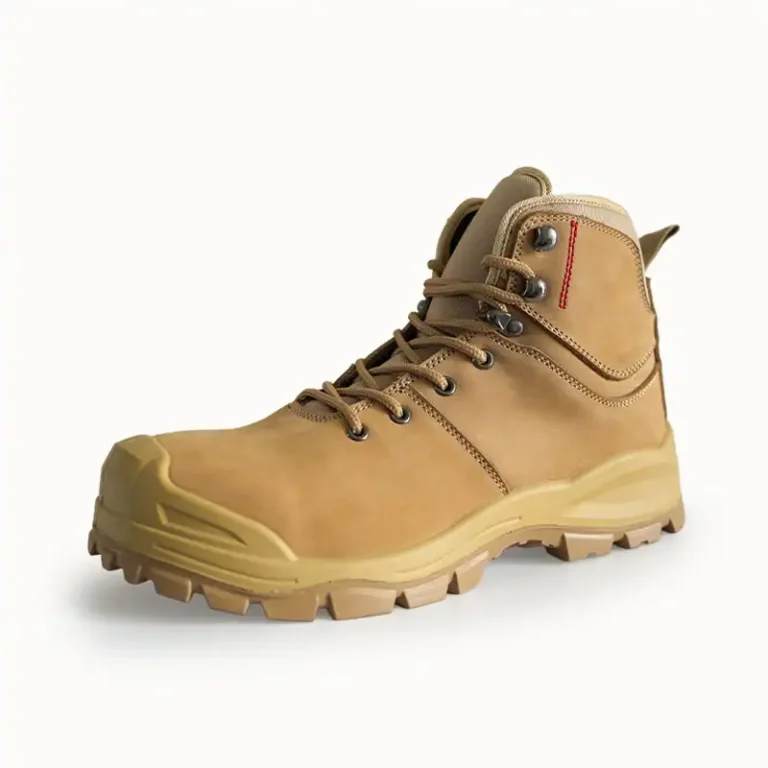
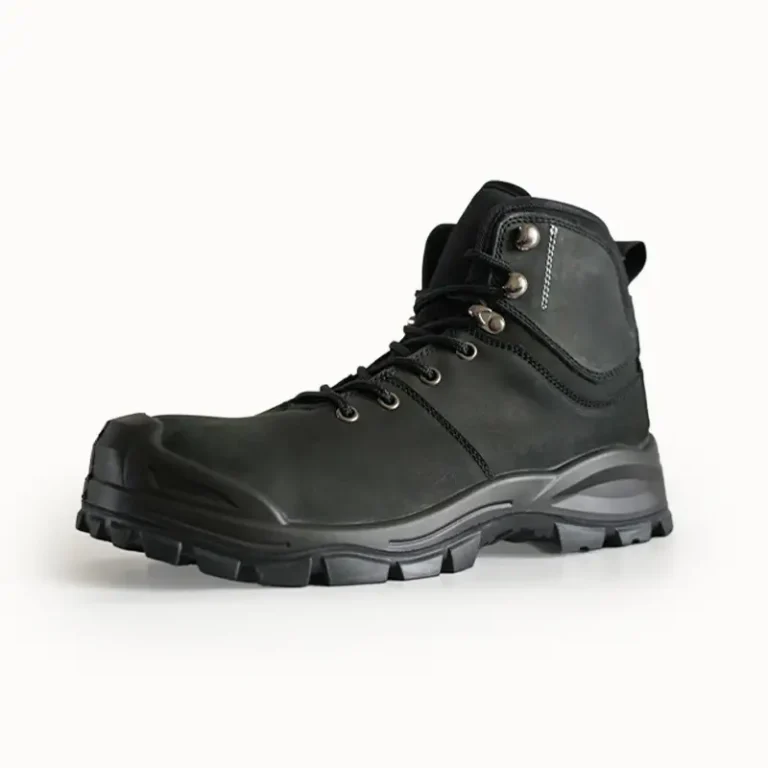
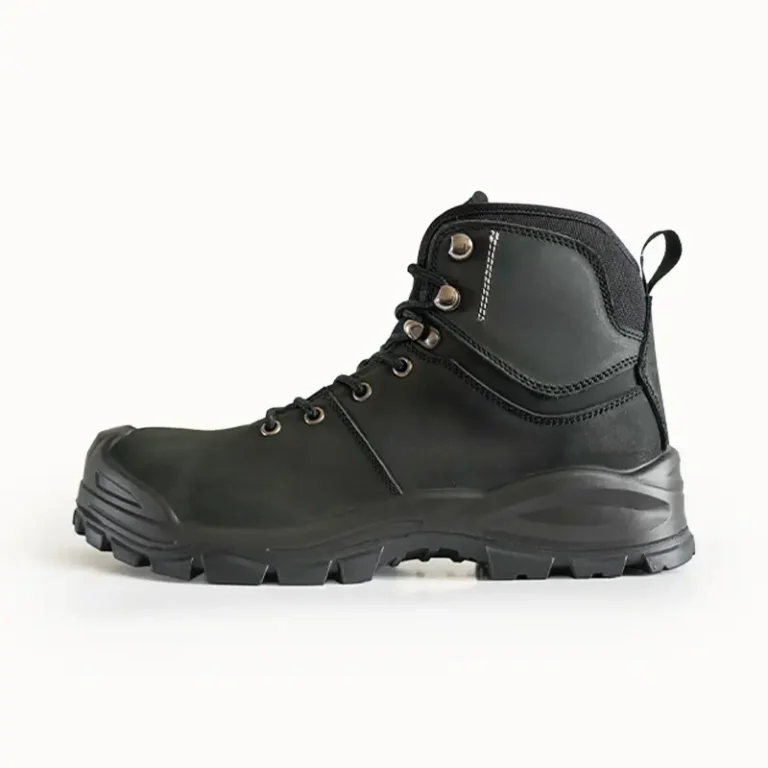
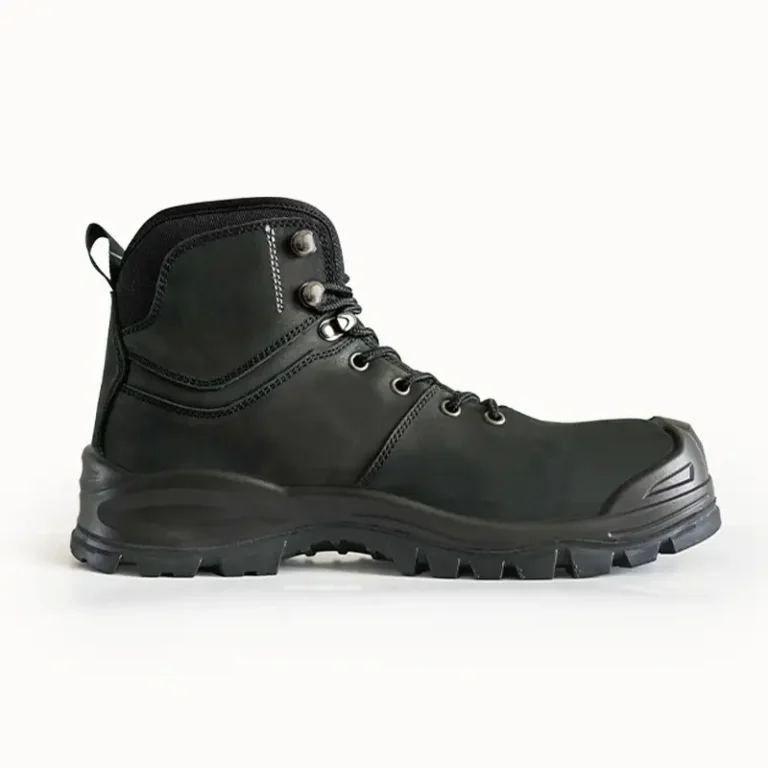
Heavy Duty Black Nubuck Leather S3 Work Boots for Mining Industry
Upper: Black grade A nubuck cow leather
Collar: Padded collar oxford fabric+foam
Lining: Black mesh lining
Footbed: comfortable PU+mesh
Outsole: PU/Rubber outsole
Standard: S3 steel toe+steel plate
Inquiry NowCollar: Padded collar oxford fabric+foam
Lining: Black mesh lining
Footbed: comfortable PU+mesh
Outsole: PU/Rubber outsole
Standard: S3 steel toe+steel plate
Mining footwear works in a very different environment from ordinary work shoes. Loose gravel, steel platforms, ladders, oily surfaces, hot ground and long shifts can all occur during the same working day. Our Heavy Duty Work Boots are developed around these demanding conditions, combining a rugged leather upper with steel protection and a heavy-duty PU/rubber sole system.
The boot features a black Grade A nubuck cow leather upper, padded ankle construction and a deep-lug outsole. Its S3 configuration uses a steel safety toe and steel penetration-resistant plate, while additional performance options such as A, E, SR, FO, LG, HRO and WPA can be specified and verified according to the final certified configuration.
For mining companies, PPE distributors and workwear brands, this creates a practical platform that can be adapted to different industrial markets and workplace hazards.
Grade A Nubuck Leather for Heavy-Duty Work
The upper is made from black Grade A nubuck cow leather, giving the boot a strong structure while maintaining the classic appearance expected from professional mining footwear.
Compared with lightweight textile safety shoes, leather is particularly appropriate when the upper is regularly exposed to dust, rocks, machinery and rough working surfaces. The black colour also gives the boot a practical industrial appearance suitable for mining, engineering, construction and heavy maintenance applications.
Around the ankle, Oxford fabric combined with foam creates a padded collar. A black mesh lining provides a softer interior, while the PU and mesh footbed adds cushioning beneath the foot.
S3 Steel Toe and Steel Plate Protection
Protection begins with the internal construction.
A steel safety toe provides protection against impact and compression hazards around the toes. Beneath the foot, a steel penetration-resistant plate creates a barrier against sharp objects that could otherwise penetrate the sole.
Under EN ISO 20345:2022, metallic penetration-resistant inserts continue to use the P designation, while PL and PS apply to different categories of non-metallic inserts.
For mining applications, this traditional steel-toe-and-steel-plate combination provides a robust solution where durability and mechanical protection take priority over achieving the lowest possible footwear weight.
PU/Rubber Outsole Designed Around Grip and Durability
One of the most important features of this model is its PU/rubber outsole.
As visible in the boot design, the bottom uses a pronounced tread structure with separate heel and forefoot contact zones. The PU component contributes cushioning, while the rubber ground-contact layer provides a durable base suitable for demanding industrial footwear.
For mining customers, however, describing a sole simply as “non-slip” is not enough. The actual tested markings provide much more useful information.
SR – Additional Slip Resistance: Under EN ISO 20345:2022, basic slip resistance is already part of the fundamental footwear requirements. The additional SR marking indicates that the footwear has also passed the additional slip-resistance test on ceramic tile with glycerol. The older SRA/SRB/SRC system should not be mixed with the newer marking system.
LG – Ladder Grip: Mining and industrial workers frequently use access ladders and elevated work platforms. The LG marking relates specifically to outsole performance and geometry for grip on ladder rungs.
HRO – Heat-Resistant Outsole: The HRO marking indicates resistance of the outsole to hot contact. This can be relevant to particular mining, engineering and heavy-industry environments where contact with heated surfaces is part of the identified workplace risk.
FO – Fuel-Oil Resistance: The FO marking identifies outsole resistance to fuel oil/hydrocarbons. Under the 2022 standard, FO is an additional requirement rather than something buyers should automatically assume from an S3 classification.
A, E and WPA – More Than Just an S3 Work Boot
For professional PPE procurement, other markings can also matter.
A identifies antistatic footwear, while E refers to energy absorption in the heel/seat region. For workers spending long periods walking across hard industrial surfaces, the sole and heel construction are therefore important considerations beyond toe protection alone.
WPA relates to water penetration and absorption performance of the upper. It should not be confused with WR, which refers to water resistance of the complete footwear.
This distinction is particularly important when specifying boots for outdoor mining. If the application genuinely requires waterproof footwear, buyers should not treat WPA as equivalent to a waterproof membrane or whole-footwear WR certification.
For this reason, Ocean Safety Shoes recommends confirming the complete required marking—such as S3 + SR + FO + HRO + LG, where applicable—before sample development and certification. Optional markings should only appear on the finished product when supported by the corresponding test results.
Ocean Safety Shoes – A Factory Focused on Mining and Heavy-Duty Work Boots
At Ocean Safety Shoes, mining boots and heavy-duty industrial safety boots are a major part of our manufacturing business.
Our production experience is not limited to assembling a steel toe into a leather boot. A reliable mining boot depends on the relationship between the leather upper, safety components, last, stitching, outsole compound, tread design and production process.
Our experienced workers control leather cutting, stitching, toe-cap positioning, steel-plate assembly, lasting, sole production, bonding, finishing and inspection. During lasting, particular attention is paid to toe space and upper tension. During outsole production and assembly, alignment and bonding need to remain consistent from the approved sample through mass production.
For B2B customers, we can develop mining and industrial boots with different nubuck colours, outsole compounds, tread patterns, safety specifications, logos, labels and packaging. This allows importers, PPE wholesalers and established workwear brands to develop products according to their own markets rather than purchasing a generic one-specification boot.
FAQ
1. Why is the PU/rubber outsole suitable for heavy-duty work?
The PU layer provides cushioning while the rubber contact layer provides a durable ground-facing surface, making the combination well suited to robust mining and industrial footwear.
2. What does SR mean on this mining boot?
SR is the additional slip-resistance marking under EN ISO 20345:2022, based on an additional test using ceramic tile and glycerol.
3. What are the advantages of HRO and FO?
HRO relates to outsole resistance to hot contact, while FO identifies resistance of the outsole to fuel oil; both should be supported by testing when claimed.
4. Why is LG useful for mining and industrial workers?
LG indicates ladder-grip performance, making it relevant where workers regularly climb ladders or use ladder-based access systems.
5. Is WPA the same as a fully waterproof boot?
No. WPA concerns water penetration and absorption of the upper, while WR refers to water resistance of the complete footwear.
Looking for Heavy Duty Work Boots for your brand, mining customers or industrial distribution network?
Contact Ocean Safety Shoes to discuss your required S3 configuration and additional performance requirements such as A, E, SR, FO, LG, HRO and WPA. We support OEM/ODM development, private-label branding, sample development and bulk production for professional safety footwear buyers.