
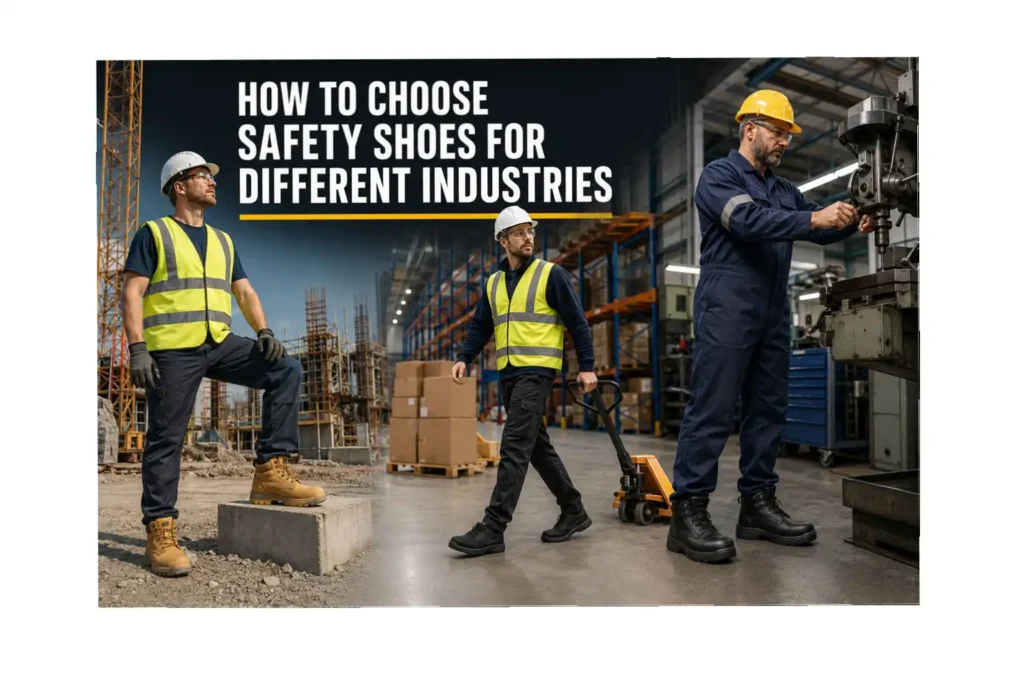
A construction worker crosses a muddy site carrying steel components. A warehouse picker walks more than ten miles during one shift. A food-processing employee works on a floor exposed to water, grease, and cleaning chemicals. All three need safety shoes, but giving them the same footwear would be a serious purchasing mistake.
Foot protection is sometimes treated as a simple uniform requirement. In reality, feet are exposed to falling materials, rolling equipment, sharp objects, slippery surfaces, electricity, chemicals, extreme temperatures, and long hours of standing. The correct safety footwear must address the hazards of a specific job without creating new problems such as fatigue, restricted movement, or heat discomfort.
Ordinary work shoes may look durable, but certified protective work shoes are engineered and tested for defined risks. Choosing the right industrial safety shoes therefore requires more than selecting a steel toe and the lowest available price. Buyers must consider the working surface, climate, movement pattern, protection level, fit, materials, construction, and applicable safety standard.
This guide explains the main safety shoe types, how requirements differ across industries, which materials and technologies matter, common purchasing mistakes, maintenance practices, and practical sourcing advice for businesses.
What Are Safety Shoes and Why Are They Important?
Safety shoes are occupational footwear designed to reduce exposure to workplace foot injuries. Depending on their construction and certification, they may provide:
- Impact protection from falling tools or materials
- Compression protection from rolling loads
- Penetration resistance against nails and sharp debris
- Slip resistance on wet, oily, or smooth floors
- Protection against specified electrical hazards
- Resistance to water, heat, fuel, oil, or chemicals
- Ankle support and underfoot stability
- Cushioning for prolonged standing and walking
Their role within a PPE program is determined by risk assessment. In the United States, for example, OSHA requires protective footwear where workers face hazards from falling or rolling objects, sole penetration, or certain residual electrical risks. OSHA also requires PPE to fit each affected employee correctly. Safety footwear should therefore be selected according to documented hazards—not issued as a one-style-fits-all uniform. (OSHA 29 CFR 1910.136)
In construction, a puncture-resistant midsole may be critical because of nails and metal debris. Manufacturing workers may need toe and metatarsal protection. Logistics employees often need lightweight, flexible workplace safety footwear for constant walking. Oil and gas workers may require high-grip, water-resistant boots with resistance to hydrocarbons.
The right product does not eliminate every workplace risk. It works together with safe procedures, housekeeping, training, engineering controls, and other PPE.
Safety Shoes Versus Ordinary Work Shoes
A rugged appearance is not proof of protection. Ordinary work shoes may have thick leather and a deep tread but lack tested toe caps, penetration-resistant inserts, antistatic properties, or certified outsole performance.
Certified safety footwear is produced to meet defined performance requirements. Testing may cover impact, compression, slip resistance, sole penetration, electrical properties, upper strength, outsole durability, and other characteristics. Buyers should verify the exact marking and supporting documentation instead of relying on phrases such as “industrial style” or “work inspired.”
Different Types of Safety Shoes Explained
Steel Toe Safety Shoes
Steel toe safety shoes use a metal cap to create a protective space around the toes.
Key features:
- Strong impact and compression resistance
- Thin protective structure compared with some non-metallic alternatives
- Proven performance in demanding environments
- Usually cost-effective for large industrial programs
Benefits: Steel caps are durable and suitable for workplaces involving heavy materials, tools, machinery, or moving loads.
Best applications: Construction, mining, heavy manufacturing, engineering, transport maintenance, and material handling.
Steel conducts heat and cold, adds some weight, and can trigger metal detectors. These factors do not make it unsafe, but they may make another toe-cap material more practical for particular jobs.
Composite Toe Safety Shoes
Composite toe caps are commonly made from fiberglass, reinforced polymer, carbon-fiber composites, or similar non-metallic materials.
Key features:
- Lower weight in many designs
- Metal-free construction
- Reduced thermal conductivity
- No activation of conventional metal detectors
Benefits: Composite toe safety shoes can reduce fatigue during high-mileage shifts and are useful in temperature-sensitive or security-controlled workplaces.
Best applications: Warehousing, airports, electronics, logistics, cold storage, utilities, and light manufacturing.
A composite toe is not automatically weaker than steel. Protection depends on whether the complete shoe passes the required standard. Buyers should compare certification, fit, weight, and application—not cap material alone.
Slip Resistant Safety Shoes
Slip resistant safety shoes combine an appropriate outsole compound with a tread pattern designed to release liquids and maintain contact with the floor.
Key features:
- Rubber, PU, TPU, or combined outsole constructions
- Channels that disperse water or other contaminants
- Defined heel and forefoot contact zones
- Compounds selected for the intended surface and temperature
Benefits: Better traction can improve worker confidence and help control slips on contaminated floors.
Best applications: Commercial kitchens, food processing, hospitals, warehouses, cleaning services, workshops, and logistics centres.
No outsole is slip-proof under every condition. Grease, metal dust, detergent, ice, and wet concrete behave differently. Trial footwear on representative surfaces whenever possible and continue to control spills through good housekeeping.
Waterproof Safety Shoes
Waterproof safety shoes normally combine a water-resistant upper with a waterproof internal membrane or bootie. Seam sealing and construction quality are essential because a treated leather upper alone does not make the complete shoe waterproof.
Key features:
- Full-grain or nubuck leather, microfiber, or technical textile upper
- Waterproof membrane or sock construction
- Sealed seams or taped joints
- Gusseted tongue in many boot designs
Benefits: Dry feet are less vulnerable to discomfort, blistering, cold stress, and distraction during long outdoor shifts.
Best applications: Roadwork, utilities, agriculture, landscaping, construction, forestry, and wet industrial environments.
Waterproof footwear should still manage internal moisture. For hot climates or mostly indoor work, a highly breathable non-waterproof design may be more comfortable.
Electrical Hazard Safety Shoes
Electrical hazard footwear is designed and tested for a specific electrical risk under defined conditions. Categories must not be confused:
- Electrical-hazard footwear may provide a secondary source of protection against accidental contact under prescribed test conditions.
- Antistatic footwear helps dissipate accumulated static electricity while maintaining limited resistance.
- Conductive footwear is intended to reduce static accumulation in specialised environments.
- ESD footwear controls electrostatic discharge for sensitive equipment and components.
- Electrically insulating footwear is a specialised product governed by its applicable standard.
Best applications: Electrical maintenance, utilities, electronics assembly, explosive-risk operations, and controlled industrial environments—depending on the precise category.
A generic “non-metallic” claim is not evidence of electrical protection. Buyers must confirm the required marking, test method, workplace conditions, and compatibility with other PPE.
How to Choose Safety Shoes for Different Industries
The most reliable method is to start with the work, not the shoe catalogue.
Construction and Civil Engineering
Construction sites combine multiple risks: dropped tools, rolling materials, exposed nails, uneven ground, mud, water, and abrasion.
Suitable protective work shoes commonly include:
- Certified toe protection
- Penetration-resistant steel or textile midsole
- Deep, self-cleaning tread
- Water-resistant or waterproof construction
- Reinforced scuff toe
- Ankle support for uneven terrain
- Durable leather or abrasion-resistant upper
A high-cut boot can offer useful ankle coverage, but it should still flex naturally and fit correctly. For hot, dry projects, excessive waterproofing may trap heat; a breathable leather or textile design may be preferable.
Practical example: A concrete crew needs better resistance to wet conditions and surface abrasion than an indoor finishing team. Even workers on the same project may require different models.
Manufacturing and Heavy Engineering
Factories may expose workers to heavy components, carts, metal swarf, hot surfaces, oil, and repeated standing at fixed stations.
Priorities may include:
- Steel or composite toe protection
- Metatarsal protection where objects can strike the upper foot
- Penetration-resistant construction
- Fuel- and oil-resistant outsole
- Heat-resistant outsole for hot-floor exposure
- Stable heel and broad contact area
- Shock-absorbing midsole and footbed
Workers standing at machines need cushioning, but very soft foam without adequate stability may increase fatigue. The best comfortable work shoes balance shock absorption with firm support.
In welding or foundry work, general-purpose safety shoes may be insufficient. Footwear should be selected for molten-metal, spark, heat, and flame exposure under the relevant specialised requirements.
Warehousing, Logistics, and Distribution
Warehouse employees often walk long distances, turn rapidly, climb steps, operate pallet equipment, and work on smooth concrete. Heavy boots can become a burden even if they provide excellent protection.
Useful features include:
- Lightweight composite or fiberglass toe
- Flexible penetration-resistant textile midsole where required
- Slip-resistant outsole
- Shock-absorbing heel
- Breathable mesh or technical upper
- Cushioned, removable footbed
- Secure heel fit and sufficient toe room
- ESD properties where electronics are handled
A low-cut safety sneaker may suit general order picking, while a loading-dock employee working outdoors may need a waterproof mid-cut boot. The footwear policy should reflect actual work zones rather than the company’s industry label alone.
Mining and Quarrying
Mining footwear must perform in abrasive, wet, unstable, and physically demanding conditions. Depending on the site, workers may face rock impact, sharp debris, mud, chemicals, or long periods underground.
Common requirements include:
- Robust toe and penetration protection
- Strong leather upper
- High-cut structure and ankle support
- Water-resistant or waterproof construction
- Aggressive outsole tread
- Abrasion-resistant toe and heel reinforcement
- Fuel- and oil-resistant outsole
- Heat resistance where identified by risk assessment
- Metatarsal protection for high-impact tasks
Comfort remains important. An excessively heavy boot can increase fatigue during climbing and walking. Procurement teams should conduct wearer trials across several job roles before approving a site-wide model.
Oil, Gas, and Petrochemical Work
These environments may contain hydrocarbons, wet steel surfaces, ladders, chemicals, ignition risks, and extreme weather.
Selection factors include:
- Outsole resistance to fuel and oil
- Traction on contaminated industrial surfaces
- Antistatic or other specified electrical properties
- Water resistance
- Secure ankle support
- Chemical-resistant materials appropriate to the substances present
- Easy-clean upper design
- Heat or cold insulation where needed
“Chemical resistant” is not a universal property. Material performance varies by chemical, concentration, exposure time, and temperature. Obtain test data relevant to the actual substance.
Food Processing, Commercial Kitchens, and Hospitality
In kitchens and food plants, falling heavy objects may be less common than slips, liquid penetration, grease contamination, and hygiene problems.
Good PPE footwear usually offers:
- High-performance slip-resistant outsole
- Water-resistant, easy-clean upper
- Minimal seams and dirt traps
- Resistance to oils and cleaning agents
- Cushioned support for prolonged standing
- Secure closure or well-fitted slip-on construction
- Toe protection where risk assessment requires it
Dark, non-marking soles and washable microfiber uppers are common choices. Tread must be cleaned frequently; a grease-filled outsole cannot maintain its intended grip.
Electrical, Electronics, and Utility Work
Electrical workers require careful hazard classification. The correct choice may involve electrical-hazard, antistatic, ESD, conductive, or insulating footwear, and these categories are not interchangeable.
Other relevant features may include:
- Composite toe and non-metallic penetration protection
- Slip resistance
- Waterproofing for outdoor utilities
- Lightweight design for ladder work
- Secure fit
- Defined electrical certification
Footwear should be chosen with a qualified safety professional. Electrical protection can be affected by wear, contamination, moisture, damage, and incompatible insoles.
Healthcare, Laboratories, and Cleaning Services
Workers in these sectors spend long hours walking on hard floors and may encounter water, bodily fluids, cleaning products, or dropped instruments.
Priorities include:
- Slip-resistant outsole
- Lightweight construction
- Easy-clean, fluid-resistant upper
- Breathable lining
- Good heel cushioning
- Non-marking sole
- Antistatic or ESD performance where required
A safety toe should be included only when the hazard assessment supports it. Unnecessary weight can reduce comfort without adding meaningful value.
Agriculture, Landscaping, and Outdoor Utilities
Outdoor work brings mud, standing water, uneven ground, tools, machinery, and seasonal temperature changes.
Appropriate footwear may include:
- Waterproof membrane or rubber construction
- Deep, mud-releasing tread
- Protective toe cap
- Penetration-resistant midsole
- Reinforced toe area
- Ankle support
- Insulation for cold conditions
- Chemical resistance for identified agricultural substances
For continuous immersion or frequent wash-down, waterproof leather boots may not be enough; certified protective gumboots can be a better solution.
How to Choose the Right Safety Shoes
1. Complete a Workplace Hazard Assessment
Record the hazards for each role and work zone:
- Falling or rolling objects
- Sharp objects underfoot
- Slippery contaminants
- Electrical exposure
- Water or chemical contact
- Heat or cold
- Uneven terrain
- Climbing, kneeling, driving, or repeated walking
Then convert each hazard into a measurable footwear requirement.
2. Select the Correct Protection Level
Avoid assuming that more protection is always better. A heavy mining boot may be unsuitable for an indoor picker, while a lightweight safety trainer may lack the durability needed on a demolition site.
Specify mandatory and optional features separately. This makes supplier comparisons clearer and prevents attractive but irrelevant features from influencing the decision.
3. Prioritise Comfort and Fit
Good fit affects both protection and compliance. Consider:
- Correct length and width
- Adequate toe space
- Secure heel retention
- Suitable arch and midfoot support
- Breathability
- Footbed cushioning
- Shoe weight
- Flexibility at the forefoot
- Compatibility with work socks and orthotics
Offer multiple widths or models where workforce foot shapes vary. Test footwear late in the day, when feet may be slightly larger, while wearing normal work socks.
4. Evaluate Durability
Inspect material quality and construction:
- Full-grain leather for demanding use
- Abrasion-resistant textiles for lightweight designs
- Reinforced stitching in stress areas
- Strong bonding between upper and sole
- Scuff protection at the toe
- Outsole abrasion and flex performance
- Corrosion-resistant hardware
- Reliable zipper or dial-lacing components
Durability should be judged under actual working conditions. A long-lasting outsole has limited value if the upper fails first.
5. Verify Safety Standards
Requirements depend on the destination market and workplace.
- In the United States, ASTM F2413 covers performance requirements for protective safety-toe footwear, while OSHA determines when employers must provide appropriate foot protection.
- In Europe and many international markets, ISO 20345:2021 specifies basic and optional requirements for general-purpose safety footwear, including mechanical, slip, thermal, and ergonomic performance. An amendment was published in 2024. (ISO 20345:2021)
- In Australia, AS 2210.3:2019 specifies basic and additional requirements for general-purpose safety footwear and is based on ISO 20345:2011 with modifications. (Standards Australia)
Ask for a certificate, test report, model identification, size range, and issuing laboratory details. Confirm that documents apply to the exact construction being purchased, not merely a similar product.
Common Mistakes When Buying Safety Shoes
Choosing Price Over Lifecycle Value
Low purchase prices can be cancelled out by early outsole wear, broken closures, poor comfort, and frequent replacement.
Solution: Compare cost per month of service, return rates, worker feedback, and downtime—not unit price alone.
Ignoring Comfort
Painful footwear may be worn incorrectly, modified without approval, or removed whenever supervision is absent.
Solution: Conduct structured wearer trials covering different sizes, widths, shifts, and job roles.
Buying the Wrong Protection Level
Under-specification leaves workers exposed. Over-specification adds unnecessary weight, heat, and expense.
Solution: Link every required feature to a documented hazard.
Overlooking the Working Environment
A tread that works on rough concrete may perform differently on greasy tile. Waterproof boots may be ideal outdoors but uncomfortable in a hot warehouse.
Solution: Test representative samples on actual surfaces and during normal tasks.
Ignoring Maintenance
Mud, grease, damaged stitching, and worn tread reduce performance.
Solution: Provide care instructions, assign inspection responsibilities, and establish replacement criteria.
Safety Shoe Materials and Technologies
Upper Materials
Full-grain leather offers durability, structure, and good abrasion resistance. With suitable treatment and construction, it performs well in construction, mining, and outdoor work.
Nubuck leather combines durability with a softer appearance and is widely used in premium work boots. It requires suitable cleaning and waterproofing care.
Microfiber and synthetic materials provide consistent quality, low weight, easy cleaning, and flexible colour options. Performance varies by grade.
Mesh and knitted textiles improve ventilation and flexibility in safety sneakers for logistics, assembly, and light industry. High-wear zones should be reinforced.
Sole Technologies
PU outsoles are lightweight and provide good cushioning. Dual-density PU/PU constructions commonly combine a softer midsole with a harder wearing layer.
TPU outsoles offer abrasion resistance, flexibility, and an appearance suitable for premium industrial footwear.
Rubber outsoles can provide strong grip, heat resistance, and durability, although they may add weight.
PU/rubber or EVA/rubber systems combine a cushioned midsole with a hard-wearing traction layer, making them useful for sport-style industrial safety shoes.
Comfort Technologies
Useful features include:
- Breathable mesh linings
- Moisture-managing materials
- Removable PU or EVA footbeds
- Shock-absorbing midsoles
- Padded collars and tongues
- Anatomically shaped lasts
- Wide-fit options
- Lightweight composite components
Comfort should be evaluated as a complete system. Adding a thick insole cannot correct an unsuitable last or unstable sole.
Benefits of Investing in Quality Safety Shoes
Fewer Workplace Injuries
Correctly selected footwear helps control impact, compression, penetration, slip, and environmental risks.
Better Worker Comfort
Supportive, properly fitted shoes can reduce discomfort and fatigue during long shifts.
More Consistent Productivity
Workers can focus on their tasks instead of foot pain, wet socks, unstable footing, or heavy footwear.
Lower Replacement Costs
A durable product with stable quality may deliver a lower total cost than repeatedly replacing cheaper footwear.
Stronger Safety Culture
Supplying suitable PPE shows that management treats risk control as an operational responsibility. Involving workers in trials can also improve acceptance and correct use.
How to Maintain Safety Shoes for a Longer Lifespan
Clean Them Regularly
Remove mud and debris with a soft brush. Use cleaning products suitable for the upper material. Clean outsole channels so the tread can contact the floor effectively.
Dry Them Correctly
Remove the footbeds and loosen the closures. Let footwear dry naturally in a ventilated area. Avoid direct heaters or open flames, which can damage leather, membranes, adhesives, and sole materials.
Store Them Properly
Keep shoes in a dry, ventilated place away from direct sunlight, chemicals, and extreme temperatures.
Use a Simple Inspection Checklist
Check for:
- Smooth or unevenly worn tread
- Cracks, cuts, or sole separation
- Exposed or displaced toe caps
- Penetration damage
- Broken stitching or closures
- Damaged waterproof lining
- Permanent contamination
- Loss of support or fit
Replace Footwear at the Right Time
There is no universal replacement interval. Service life depends on working conditions, wear frequency, worker weight, walking distance, maintenance, and product construction. Replace footwear immediately when damage may compromise protection; do not wait for a calendar date.
Safety Shoes Buying Guide for Businesses
Build a Technical Specification
List the standard, protection category, construction, materials, sizing, colours, branding, packaging, and performance requirements. Separate mandatory requirements from preferences.
Evaluate the Supplier
For importers, distributors, wholesalers, and corporate PPE buyers, review:
- Factory ownership and production capabilities
- Experience with the intended market
- Quality-management procedures
- Certification and test-report traceability
- Product-development capability
- Material controls
- Sample accuracy
- Production capacity and lead time
- Communication and corrective-action process
Approve Samples Before Production
A reference sample should confirm materials, colours, fit, branding, outsole, closures, packaging, and safety components. Keep an approved sample for comparison during final inspection.
Plan Quality Inspections
A practical program may include:
- Incoming-material inspection
- Cutting and stitching checks
- In-process bonding or injection checks
- Size and fitting verification
- Flexing, adhesion, and appearance checks
- Final random inspection
- Packaging and carton verification
Consider Customisation Carefully
OEM and ODM options may include new upper designs, private labels, custom colours, alternative toe caps, different midsoles, outsole selection, branded footbeds, packaging, and market-specific size ranges.
Every material or construction change should be reviewed for its effect on certification. A certified sample does not automatically cover later modifications.
Conduct a Controlled Wear Trial
Issue samples to a representative group and record feedback after several shifts. Ask about heel movement, toe space, pressure points, heat, traction, fatigue, closure security, and task compatibility. A short trial can prevent an expensive bulk-purchasing error.
Frequently Asked Questions About Safety Shoes
1. How long do safety shoes usually last?
Many pairs remain serviceable for approximately six to eighteen months, but actual lifespan varies widely. Abrasive sites, chemicals, long walking distances, poor maintenance, and extreme temperatures can shorten it significantly.
2. Are steel toe safety shoes better than composite toe shoes?
Neither option is universally better. Steel is durable and economical, while composite materials can reduce weight, thermal transfer, and metal content. Choose a certified product suited to the job.
3. What industries require safety shoes?
Construction, manufacturing, mining, logistics, warehousing, utilities, transport, agriculture, oil and gas, food processing, and many maintenance operations commonly require safety footwear. The precise requirement should follow the workplace risk assessment and local regulations.
4. Are safety shoes comfortable for all-day wear?
They can be. Comfortable work shoes should have the correct width and length, stable cushioning, suitable flexibility, breathable materials, and a design matched to the worker’s movement pattern.
5. How do I choose the correct size?
Measure both feet while wearing normal work socks. Fit to the larger foot, check toe clearance and heel retention, and walk, bend, and climb in the shoes before approval.
6. How often should safety shoes be replaced?
Inspect them regularly and replace them when protective components, tread, support, upper structure, or sole attachment are damaged. After a major impact, remove the footwear from service even if damage is not obvious.
7. What safety standards should safety shoes meet?
The answer depends on the market and application. Common references include ASTM F2413 in the United States, ISO 20345 and its regional adoptions in Europe, and AS 2210.3:2019 in Australia. Special hazards may require additional standards.
8. Can safety shoes prevent workplace injuries?
They can reduce the likelihood or severity of several foot injuries when correctly selected, fitted, maintained, and worn. However, PPE is one part of a broader safety system and does not replace hazard elimination or engineering controls.
Conclusion
Safety shoes are essential workplace protection equipment, but the best model is not simply the strongest or most expensive one. Effective selection begins with the hazards, surfaces, climate, tasks, and movement patterns of each industry.
Construction workers may need waterproof, puncture-resistant boots; warehouse teams may benefit from lightweight composite protection; food-processing employees need reliable traction and easy-clean uppers; and electrical workers require precisely classified footwear. Matching these needs with certified safety footwear improves protection, comfort, employee acceptance, and long-term purchasing value.
For businesses, quality industrial safety shoes should be treated as a managed PPE system. Clear specifications, valid documentation, wearer trials, consistent inspections, and planned maintenance are all essential. When protective work shoes fit both the hazard and the person, they become a practical investment in safety, productivity, and workforce confidence.
Looking for Professional Safety Footwear Solutions?
Ocean Safety Shoes manufactures safety footwear for PPE brands, importers, wholesalers, distributors, and industrial buyers. With three production facilities, four PU injection lines, two cemented production lines, OEM and ODM development services, and capacity of up to 5,000 pairs per day, the factory can support both established product ranges and customised projects.
Looking for reliable safety shoes for different industries? Contact Ocean Safety Shoes to discuss workplace hazards, target-market standards, materials, sizing, samples, private-label packaging, and wholesale production. The goal is not simply to supply another work shoe, but to develop protective footwear that offers the right balance of safety, comfort, durability, and commercial value.