
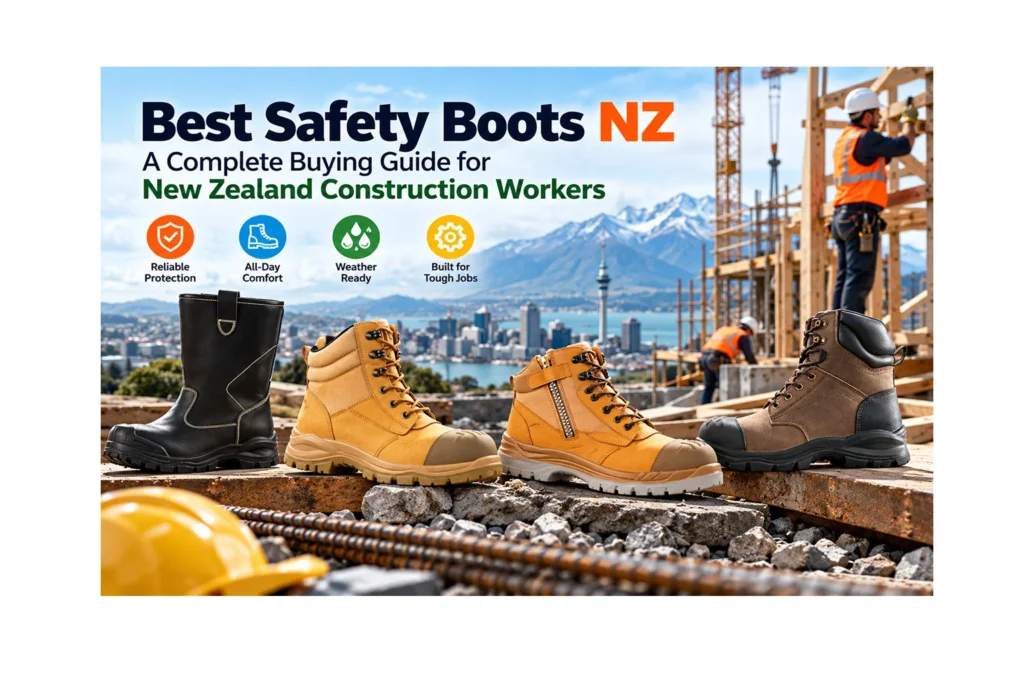
Choosing the best safety boots NZ construction workers can rely on requires more than comparing prices, brands, or product appearance. From residential building projects in Auckland to infrastructure development in Christchurch and outdoor construction work across the South Island, workers need protective footwear suited to their specific working conditions.
New Zealand construction sites present several common hazards, including falling materials, sharp debris, slippery surfaces, uneven ground, and prolonged exposure to wet weather. Inappropriate footwear can increase the risk of injury, discomfort, and premature product failure.
For construction companies, PPE distributors, procurement managers, and industrial buyers, choosing suitable safety boots also involves commercial considerations. Product compliance, durability, size availability, supplier reliability, and replacement costs all influence purchasing decisions.
This guide explains how to compare construction safety boots, understand relevant New Zealand safety requirements, evaluate different protective features, and select suitable footwear for individual workers or bulk purchasing.
What Makes the Best Safety Boots NZ Construction Workers Need?
The most suitable construction footwear combines protection, comfort, and durability according to the hazards identified at a particular workplace.
A boot designed for dry warehouse environments may not be appropriate for a construction worker regularly exposed to muddy ground, sharp materials, or changing weather conditions.
Essential Safety Features
Before comparing different models, construction businesses should establish which protective features are necessary.
| Safety Feature | Main Purpose | Typical Construction Application |
|---|---|---|
| Protective toe cap | Protection against impact and compression | General building and material handling |
| Penetration-resistant midsole | Reduces the risk of sharp objects penetrating the sole | Demolition and debris-filled sites |
| Slip-resistant outsole | Provides tested traction on specified surfaces | Wet or slippery working areas |
| Water-resistant upper | Helps reduce moisture penetration | Outdoor construction |
| Waterproof construction | Provides additional protection against water entry | Prolonged wet-weather work |
| Supportive fit | Improves stability and comfort | Extended standing and walking |
| Durable upper | Helps withstand abrasion and regular use | Demanding construction environments |
Not every worker requires the same combination of features. A site supervisor, concrete worker, roofer, and civil construction employee may encounter different risks during a typical shift.
The footwear specification should therefore reflect the actual job rather than relying on a single standard product for every situation.
Safety Footwear Standards in New Zealand
For businesses purchasing safety footwear NZ, compliance is an essential part of supplier evaluation.
New Zealand construction employers should select PPE based on workplace hazards, relevant safety requirements, and the suitability of the equipment for the intended work.
Understanding AS/NZS 2210
The AS/NZS 2210 series provides an important framework for occupational protective footwear, covering areas such as specifications, testing, selection, care, and use.
For procurement purposes, buyers should verify the applicable standard and edition, rather than assuming that a general statement such as “safety certified” is sufficient.
Important documentation may include:
- Product-specific test reports.
- Applicable safety standard and edition.
- Protective toe-cap specifications.
- Penetration-resistance information.
- Slip-resistance test results.
- Product identification and markings.
- Manufacturer instructions.
A certificate should correspond to the actual footwear model being purchased. Changes to protective components or construction may affect the relevance of existing testing.
What Does WorkSafe New Zealand Require?
New Zealand’s Health and Safety at Work framework requires businesses to manage workplace risks and provide suitable personal protective equipment where necessary.
WorkSafe New Zealand provides guidance on PPE selection, suitability, maintenance, and worker responsibilities.
For construction companies, this means identifying relevant hazards before purchasing footwear and ensuring that selected products provide appropriate protection.
Useful official resources:
- WorkSafe New Zealand
- Standards New Zealand
Protective footwear should complement other workplace risk controls rather than replace them.
Best Types of Safety Boots for New Zealand Construction Workers
Different construction environments require different footwear designs. The following categories provide a practical comparison for workers and purchasing teams.
Steel Toe Safety Boots
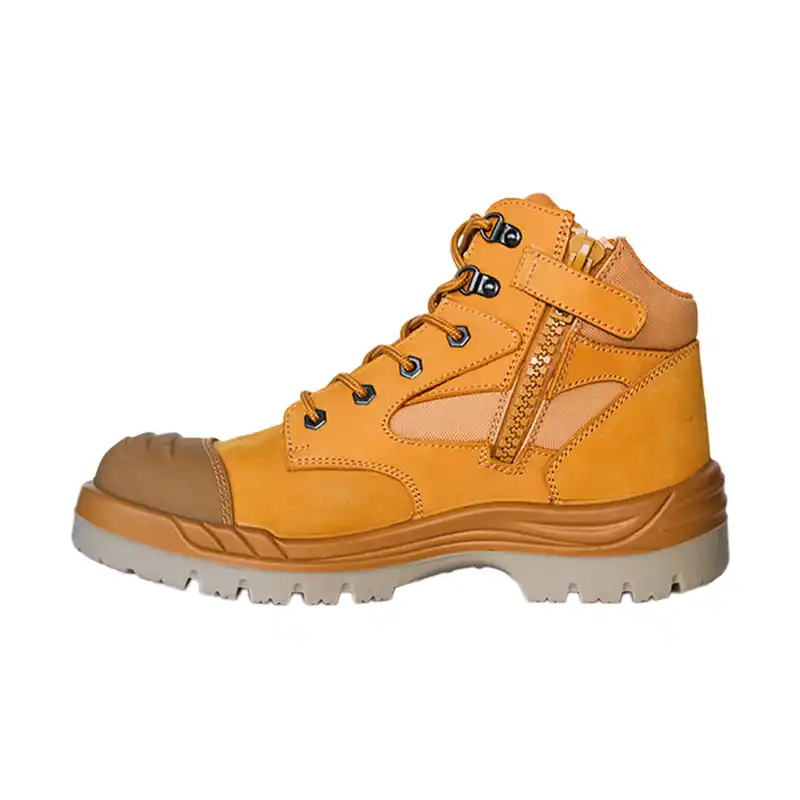
Steel toe boots are commonly used in environments where falling objects and compression hazards are present.
Their protective toe caps are designed to meet specified impact and compression requirements.
Key features:
- Steel protective toe cap.
- Durable leather or synthetic upper options.
- Different outsole constructions.
- Available with additional protective features.
Suitable applications: General construction, material handling, building maintenance, and civil engineering.
Steel toe protection should not be confused with penetration resistance or electrical protection. These are separate performance characteristics that must be verified individually.
Composite Toe Safety Boots
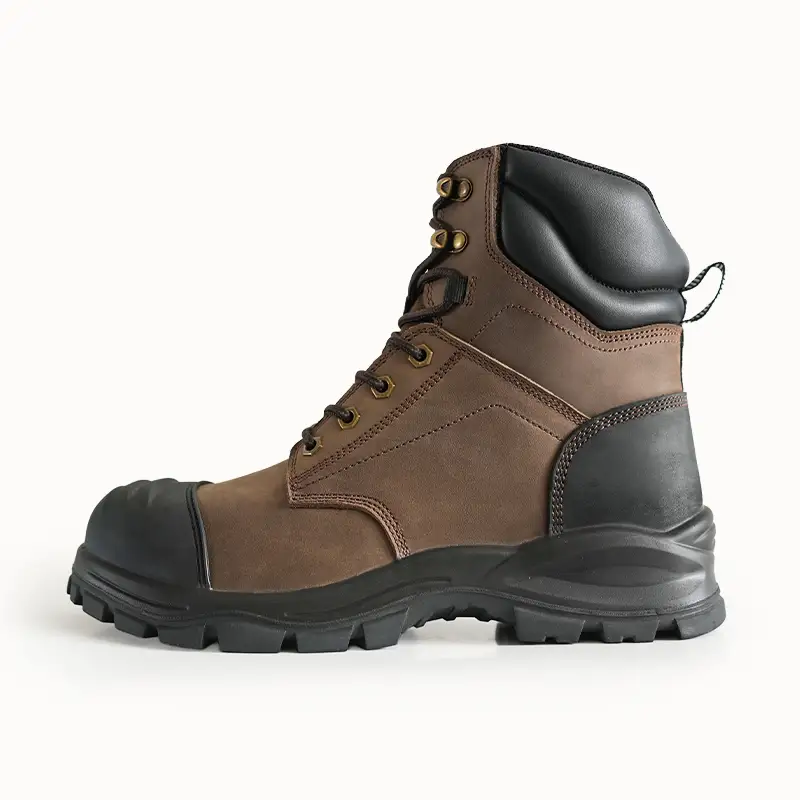
Composite toe footwear uses non-metallic protective materials, such as reinforced polymers or fibre composites.
Depending on construction, these boots may offer weight and thermal-property differences compared with steel toe alternatives.
Key features:
- Non-metallic protective toe cap.
- Potential weight reduction.
- Multiple upper and outsole options.
- Suitable for different industrial applications.
Suitable applications: Construction supervision, general building, infrastructure maintenance, and jobs involving frequent walking.
Composite toe caps must still meet the applicable protective requirements. A non-metallic toe cap does not automatically make the complete boot electrically protective.
Waterproof Safety Boots
Waterproof construction boots can be particularly useful in New Zealand’s changing outdoor conditions.
Workers regularly exposed to rain, wet grass, muddy ground, or prolonged moisture may benefit from waterproof footwear.
Key features:
- Waterproof membranes or construction.
- Water-resistant upper materials.
- Protective toe-cap options.
- Outsoles suitable for the intended environment.
Suitable applications: Outdoor building, landscaping, civil construction, and infrastructure projects.
Buyers should distinguish between water-resistant and waterproof claims. The terms do not represent identical performance levels.
Side-Zip Safety Boots
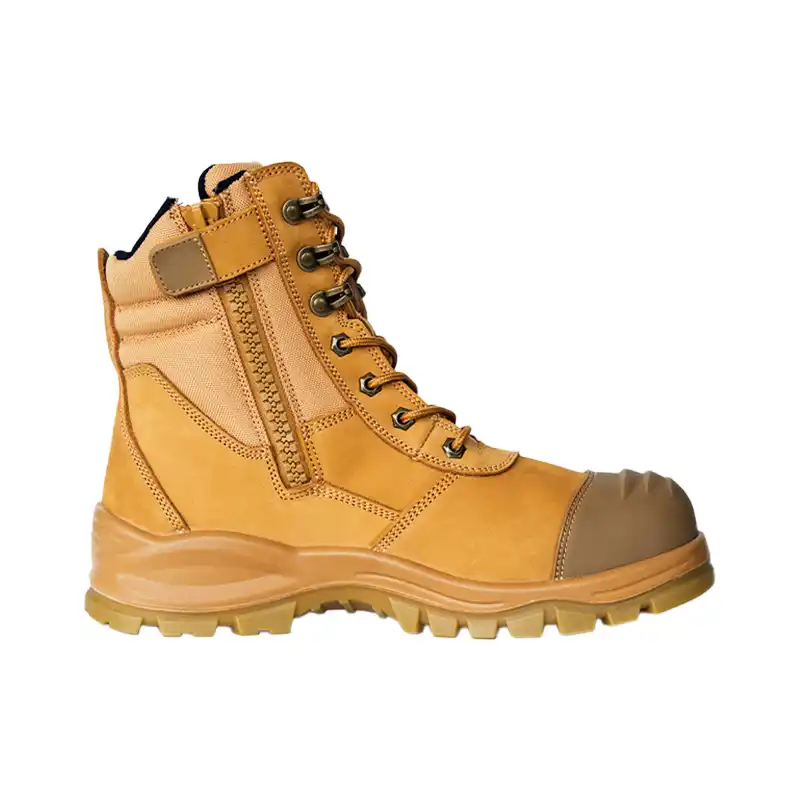
Side-zip safety boots combine traditional laces with a zipper, allowing workers to remove their boots without completely undoing the lacing system.
They can be convenient for workers who frequently enter and leave construction areas.
Key features:
- Lace-up adjustment.
- Side zipper.
- Protective toe-cap options.
- Different ankle-height designs.
Suitable applications: Construction supervisors, building contractors, maintenance teams, and site inspectors.
Zipper durability, ankle fit, and the overall boot specification should be checked before purchasing.
Heavy-Duty Safety Boots
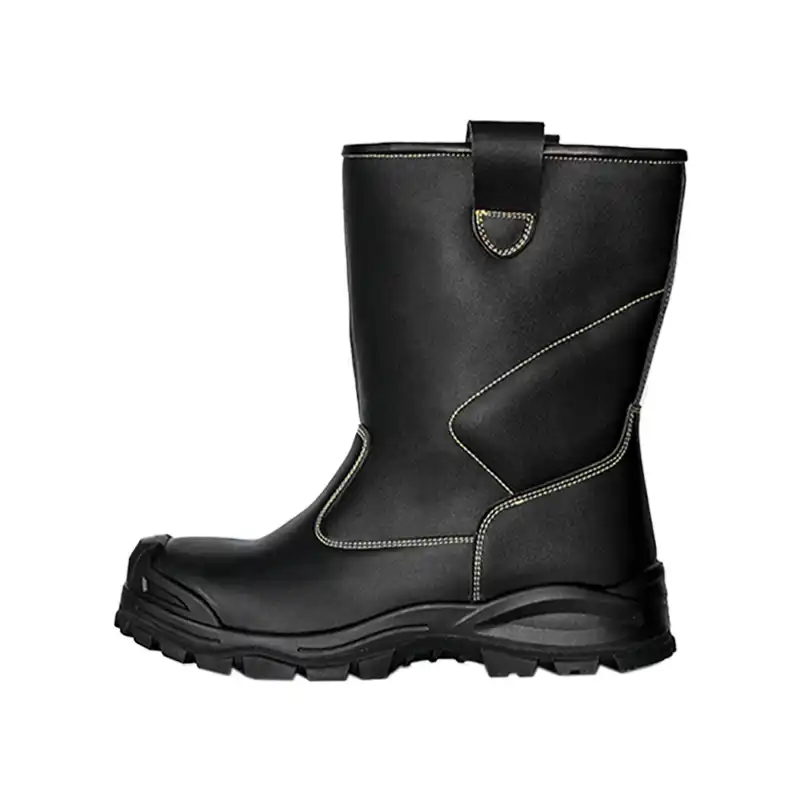
Heavy-duty construction boots are designed for demanding work environments.
Depending on the model, they may feature reinforced uppers, durable outsoles, penetration-resistant midsoles, and additional protective components.
Suitable applications: Demolition, infrastructure development, civil engineering, and heavy construction.
A heavier or more rugged-looking boot is not automatically safer. Buyers should compare verified performance specifications rather than appearance alone.
Best Safety Boots NZ: Comparing Different Construction Applications
The following table summarises which footwear characteristics may be relevant to different construction activities.
| Construction Activity | Suggested Boot Category | Features to Prioritise |
|---|---|---|
| Residential building | Mid-cut safety boots | Toe protection, fit, suitable traction |
| Commercial construction | Steel or composite toe boots | Durability and required protection |
| Civil engineering | Heavy-duty safety boots | Appropriate grip and penetration resistance |
| Outdoor construction | Waterproof safety boots | Moisture protection and durable outsole |
| Site supervision | Lightweight protective boots | Comfort, fit, required safety features |
| Demolition | Heavy-duty protective footwear | Toe and penetration protection |
| Infrastructure maintenance | Supportive safety boots | Durability, traction, weather suitability |
These recommendations are general purchasing guidance. Final footwear selection should follow a workplace-specific risk assessment.
How to Choose the Best Safety Boots NZ for All-Day Comfort
Safety performance is essential, but construction workers also need footwear that remains comfortable throughout demanding shifts.
A boot with suitable protective features may still be inappropriate if it causes excessive pressure, restricts movement, or does not fit correctly.
Choose the Correct Size and Width
Safety footwear should provide sufficient space for the toes without allowing excessive foot movement.
When trying on boots:
- Wear the socks normally used at work.
- Check the fit while standing and walking.
- Ensure the heel does not slip excessively.
- Check that the protective toe cap does not press against the toes.
- Consider width as well as length.
- Allow workers to test different sizes where practical.
A protective toe cap will not stretch to accommodate an incorrectly sized boot.
For employers purchasing footwear for multiple workers, collecting individual sizing information can help reduce returns and improve comfort.
Evaluate Cushioning and Arch Support
Construction workers frequently spend long periods standing or walking on hard surfaces.
Comfort features worth comparing include cushioned insoles, supportive footbeds, suitable midsole construction, and heel stability.
However, cushioning alone does not guarantee appropriate support. Foot shape, individual fit, and the nature of the work should also influence selection.
Consider Breathability and Boot Weight
New Zealand construction workers may experience different temperature and moisture conditions throughout the year.
Breathable linings and appropriate upper materials can improve moisture management, while excessive insulation may be uncomfortable in warmer conditions.
Lightweight footwear may reduce the burden of repeated walking, provided it still offers the required protective features.
Which Safety Boot Materials Are Suitable for New Zealand Conditions?
Material selection influences footwear durability, maintenance, comfort, and weather resistance.
Understanding common construction materials helps businesses compare products beyond their external appearance.
Leather and Synthetic Uppers
Leather remains a common material for industrial work boots because it can provide abrasion resistance and structural durability.
Full-grain leather, nubuck, split leather, microfiber, and synthetic textiles offer different combinations of flexibility, weight, maintenance requirements, and appearance.
For outdoor construction, buyers should evaluate the complete upper construction, including stitching, lining, and moisture protection.
Rubber and PU Outsoles
Rubber and polyurethane (PU) are widely used in industrial footwear.
Rubber compounds can provide useful abrasion resistance and traction characteristics, while PU constructions can offer cushioning and weight advantages.
Dual-density PU and rubber/PU combinations are also available.
The most suitable outsole depends on the complete design and its tested performance, not simply the material name.
Waterproof Membranes and Linings
A waterproof membrane can help prevent external water from entering the footwear while allowing some moisture vapour to escape.
However, waterproofing performance depends on the complete boot construction, including seams, upper materials, and manufacturing quality.
Workers regularly exposed to water should select footwear with documented waterproof performance rather than relying only on a water-resistant leather finish.
Common Mistakes When Buying Safety Boots in New Zealand
Choosing the Cheapest Product Without Comparing Specifications
A low purchase price does not necessarily provide the lowest long-term cost.
Footwear that wears prematurely or does not meet workplace requirements can create additional purchasing and replacement expenses.
Better approach: Compare protective features, materials, product documentation, comfort, and expected operating costs.
Buying the Same Boot for Every Worker
Different construction roles can involve different hazards.
A site inspector and a demolition worker may require different footwear characteristics.
Better approach: Group workers according to their workplace exposure and establish appropriate footwear specifications.
Ignoring Fit and Comfort
Incorrectly fitted footwear can create discomfort during extended working hours.
Better approach: Provide suitable sizing options and allow workers to evaluate fit before finalising bulk orders.
Overlooking Supplier Documentation
Descriptions such as “industrial grade” or “heavy duty” do not independently establish safety performance.
Better approach: Request product-specific test reports, relevant markings, and clear technical specifications.
Wholesale Safety Boots NZ: A Buying Guide for Construction Companies and PPE Distributors
For businesses purchasing protective footwear in larger quantities, procurement involves more than choosing an individual model.
A successful purchasing strategy should consider product consistency, workforce requirements, supplier capability, and future stock availability.
Establish a Clear Purchasing Specification
Before requesting quotations, prepare a technical and commercial brief covering:
- Target workplace and industry.
- Required protective features.
- Applicable standards.
- Preferred upper and outsole materials.
- Size range and quantities.
- Packaging requirements.
- Inspection arrangements.
- Delivery expectations.
This allows suppliers to provide quotations based on comparable requirements.
Evaluate the Safety Boots Supplier NZ Businesses Work With
A professional supplier should be able to explain its products, provide relevant documentation, and support repeat purchasing.
| Supplier Evaluation Factor | What Buyers Should Check |
|---|---|
| Product specifications | Protective features and intended applications |
| Compliance documentation | Relevant reports and product identification |
| Manufacturing capability | Production capacity and consistency |
| Quality control | Inspection procedures and defect handling |
| Size availability | Range suitable for the target workforce |
| MOQ | Minimum quantity per style and colour |
| Customisation | Logo, packaging, and private-label options |
| Delivery | Lead times and replenishment arrangements |
| After-sales support | Returns, defects, and replacement procedures |
Local Distributor vs Factory-Direct Purchasing
New Zealand businesses generally have two main sourcing approaches.
A local distributor may offer stocked products, smaller order quantities, domestic delivery, and convenient replacement arrangements.
A factory-direct manufacturer may provide greater flexibility for custom specifications, private-label development, and scheduled bulk production.
For businesses purchasing wholesale safety boots in NZ, the appropriate sourcing arrangement depends on order volume, inventory capacity, branding requirements, and expected demand.
Importers should also calculate total landed costs, including international freight, applicable import charges, customs clearance, warehousing, and local delivery.
Consider OEM and Private-Label Safety Footwear
PPE distributors developing their own product ranges may benefit from working with a manufacturer offering OEM and ODM services.
Possible customisation options include:
- Custom logos.
- Brand-specific packaging.
- Upper material selection.
- Colour combinations.
- Insole branding.
- Product design adjustments.
Protective footwear modifications should be evaluated carefully because changes to construction or protective components may affect product performance and testing requirements.
How to Maintain Construction Safety Boots for Longer Service Life
Regular maintenance helps preserve footwear condition and allows workers to identify damage before it compromises protection.
Daily Cleaning and Drying
Remove mud, dust, and construction debris after use.
Clean the upper according to the manufacturer’s instructions and allow wet footwear to dry naturally in a ventilated area.
Avoid placing boots directly against heaters or other high-temperature sources, as excessive heat may damage adhesives, leather, and other components.
Regular Inspection
Workers should periodically inspect:
- Upper material and stitching.
- Outsole wear and separation.
- Laces, eyelets, and zippers.
- Protective toe-cap areas.
- Insole condition.
- Signs of water penetration.
Footwear showing significant damage or deterioration should be assessed and replaced when it can no longer provide the required protection.
There is no universal replacement interval. Service life depends on workplace conditions, frequency of use, construction quality, and maintenance.
Frequently Asked Questions About the Best Safety Boots NZ
What Are the Best Safety Boots for Construction Workers in New Zealand?
The most suitable boots depend on workplace hazards, environmental conditions, and individual fit. Important features may include protective toe caps, appropriate slip resistance, penetration protection, durable construction, and weather resistance.
Are Steel Toe Boots Required on New Zealand Construction Sites?
Footwear requirements depend on the workplace risk assessment and applicable site rules. Where toe protection is required, workers should wear footwear providing the appropriate tested protection. Steel and composite toe-cap options may both be suitable, depending on the specification.
Are Composite Toe Boots Suitable for Construction Work?
Yes, provided the complete footwear meets the applicable protection requirements. Composite toe boots can be suitable for construction environments and may offer weight or thermal-property advantages.
Should Construction Workers Choose Waterproof Safety Boots?
Waterproof boots can be useful for workers regularly exposed to rain, mud, and wet conditions. However, footwear should also provide suitable breathability, comfort, and the required protective features.
How Long Do Construction Safety Boots Usually Last?
There is no fixed replacement period. Boots should be inspected regularly and replaced when damage, excessive wear, poor fit, or deterioration compromises their protective function.
What Standards Should Safety Footwear NZ Meet?
The AS/NZS 2210 series is an important reference for occupational protective footwear. Buyers should confirm the relevant standard, edition, product specification, and documentation for their intended application.
Can New Zealand Businesses Buy Safety Boots Directly From China?
Yes. New Zealand businesses can source protective footwear from overseas manufacturers, provided they manage applicable import requirements and verify product suitability for the intended market.
What Should Buyers Check Before Ordering Wholesale Safety Boots NZ?
Buyers should confirm product specifications, relevant test documentation, MOQ, size range, sample approval, quality inspection arrangements, packaging, delivery schedules, and after-sales terms.
Conclusion
Finding the best safety boots NZ construction workers can rely on requires a balanced approach to protection, comfort, durability, and workplace suitability.
Different construction activities create different hazards, so footwear selection should begin with a workplace risk assessment rather than price or appearance alone.
For construction employers, PPE distributors, and industrial procurement teams, product documentation, correct sizing, consistent quality, and reliable supply arrangements are essential purchasing considerations.
Whether sourcing through a local distributor or an overseas manufacturer, businesses should prioritise footwear that meets their technical requirements and provides practical long-term value.
Explore Construction Safety Footwear With Ocean Safety Shoes
Ocean Safety Shoes is a professional safety footwear manufacturer supporting international importers, PPE distributors, wholesalers, and industrial businesses.
We provide factory-direct manufacturing and OEM/ODM solutions for different industrial applications, including construction, manufacturing, warehousing, and outdoor work environments.
For New Zealand businesses looking to develop private-label safety footwear or source protective boots in bulk, we can discuss product specifications, branding requirements, packaging, and manufacturing arrangements.