
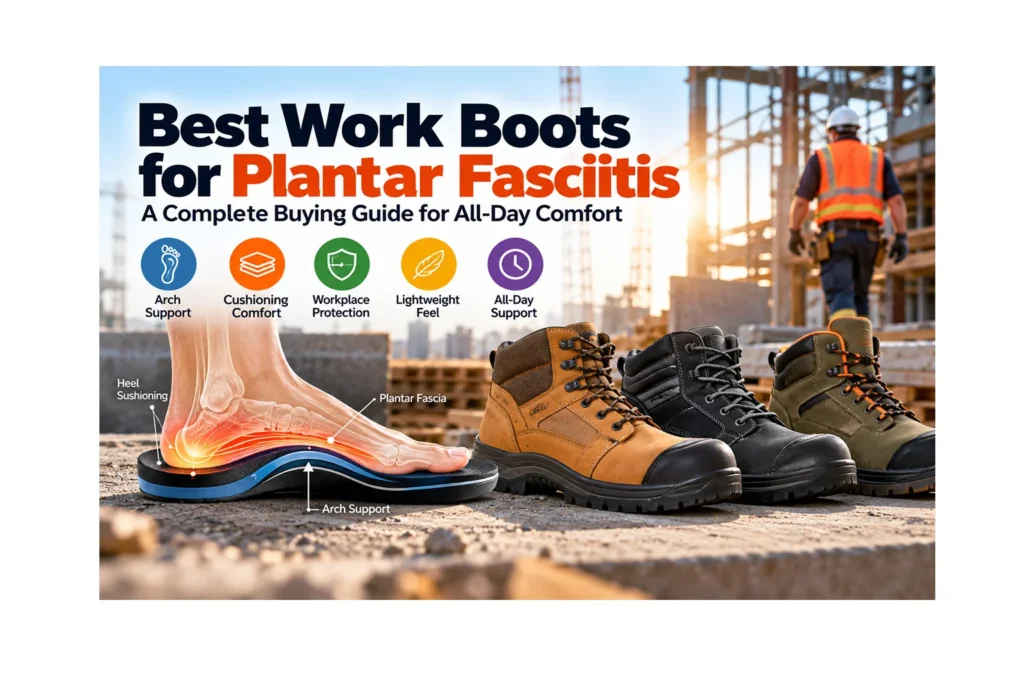
For workers who spend eight, ten, or even twelve hours standing on concrete, climbing ladders, walking through warehouses, or moving around construction sites, foot comfort is more than a convenience. Heel and arch discomfort can make an already demanding shift significantly harder.
This is particularly relevant for people dealing with plantar fasciitis. The plantar fascia is a band of tissue running along the bottom of the foot that supports the arch and helps absorb shock. Plantar fasciitis commonly causes pain around the heel, and long periods of standing or walking can aggravate symptoms for some people. Supportive footwear, arch support, cushioning, and properly fitted shoes can form part of conservative management, although work boots themselves should not be presented as a cure.
That creates an important question for workers and businesses purchasing occupational footwear: what should you look for in work boots for plantar fasciitis?
The answer is not simply “the softest boot.” Effective workplace footwear needs to balance support, cushioning, fit, stability, job-specific protection, and durability.
This guide explains the features worth considering when comparing the best boots for plantar fasciitis, particularly for construction, manufacturing, warehousing, logistics, maintenance, and other jobs where workers spend much of the day on their feet.
Why Work Boots Matter for Workers With Plantar Fasciitis
Work footwear can influence how pressure is distributed across the foot throughout the day.
Mayo Clinic recommends supportive shoes with good arch support, thick soles, and cushioning for people with plantar fasciitis. It also notes that arch supports may help distribute pressure more evenly across the feet.
For an office worker, changing shoes may be relatively straightforward. Industrial workers face a more complicated problem because their footwear may also need to provide:
- Protective toe caps
- Slip resistance
- Penetration protection
- Ankle coverage
- Water resistance
- Durable outsoles
- Workplace-specific PPE performance
The goal is therefore to find plantar fasciitis work boots that satisfy occupational safety requirements without unnecessarily compromising foot support and comfort.
Why Long Shifts Can Be Challenging
Consider a warehouse employee walking repeatedly across hard concrete floors.
Even if the worker’s boots meet the required safety specification, poor cushioning, inadequate support, incorrect sizing, or heavily worn insoles can make the footwear uncomfortable over a long shift.
Similarly, a construction worker may need a rugged protective boot, but an unnecessarily heavy or poorly fitted design can create a different set of comfort problems.
The right boot must work as an integrated system: outsole, midsole, footbed, upper, last, heel structure, and protective components all matter.
Best Work Boots for Plantar Fasciitis: 7 Features to Look For
There is no universal boot that is best for every person with plantar fasciitis. Foot shape, job demands, symptoms, and workplace hazards vary.
However, several footwear characteristics deserve particular attention.
| Feature | Why It Matters | What to Check |
|---|---|---|
| Arch support | Helps support the foot and distribute pressure | Contoured footbed or compatible orthotic |
| Heel cushioning | Helps absorb impact under the heel | Cushioned heel and midsole |
| Stable heel | Helps provide a secure platform | Firm heel counter and secure fit |
| Appropriate sole | Balances cushioning and stability | Supportive construction rather than excessively thin sole |
| Removable insole | Allows alternative inserts where appropriate | Sufficient internal depth |
| Proper toe box | Reduces unnecessary forefoot pressure | Correct width and toe space |
| Correct fit | Prevents excessive movement and pressure points | Proper length, width, and heel hold |
1. Supportive Arch Structure
Arch support is one of the first features people associate with footwear for plantar fasciitis, and there is good reason for that.
Mayo Clinic advises choosing supportive footwear with good arch support, while the American Podiatric Medical Association explains that arch-support inserts can support the foot’s natural arch.
However, more arch support is not automatically better.
An overly aggressive arch profile may be uncomfortable for one worker while another may require a different level of support. This is why individual fit matters.
For B2B footwear buyers, look beyond marketing descriptions such as “ergonomic” and evaluate the actual footbed construction.
2. Effective Heel Cushioning
Heel pain is one of the characteristic symptoms associated with plantar fasciitis.
Work boots with appropriate cushioning can help reduce the impact experienced when walking on hard surfaces. Mayo Clinic recommends footwear with adequate cushioning as part of supportive shoe selection.
For workers regularly walking on concrete, compare:
- Heel cushioning
- Midsole material
- Insole thickness
- Compression characteristics
- Cushioning after extended use
A very soft boot is not necessarily a better boot. Cushioning should work alongside sufficient stability and support.
3. A Stable Heel and Secure Fit
The rear of the foot should feel securely supported rather than moving excessively inside the boot.
Look for a well-constructed heel counter and fastening system that allows the worker to secure the footwear comfortably.
Excessive heel movement can also create friction and make the boot feel unstable.
4. Removable and Replaceable Insoles
For some workers, one of the most useful features is a removable footbed.
It provides flexibility to replace worn insoles or use an appropriate insert recommended for the individual’s needs.
APMA notes that shoe inserts can provide cushioning and arch support, but also distinguishes ordinary inserts from prescription custom orthotics. People experiencing significant or persistent pain should seek professional evaluation rather than assuming an off-the-shelf insert will solve the underlying problem.
When evaluating safety boots with arch support, businesses should therefore consider whether the internal volume of the boot can accommodate an appropriate replacement footbed without creating an excessively tight fit.
5. Enough Room in the Toe Box
Work boots should provide sufficient space around the toes while maintaining a secure overall fit.
Mayo Clinic footwear guidance recommends a toe box large enough to hold the foot comfortably while standing.
This becomes especially important with safety footwear because the protective toe cap does not stretch like a soft footwear upper.
Workers should check both length and width rather than automatically purchasing their usual casual-shoe size.
6. Supportive Midsole and Outsole Construction
A work boot’s underfoot system includes more than the removable insole.
The midsole and outsole influence cushioning, stability, flexibility, traction, and overall walking characteristics.
Common safety footwear constructions include:
- PU midsoles
- Dual-density PU soles
- Rubber outsoles
- PU/rubber combinations
- EVA-containing cushioning systems
No single material is universally preferable for plantar fasciitis.
Buyers should assess how the complete sole performs rather than selecting footwear based only on a material label.
7. Appropriate Weight
Heavy-duty protection sometimes comes with additional weight.
For workers walking thousands of steps during a shift, boot weight can affect perceived fatigue. Lightweight construction may therefore be desirable where the workplace risk assessment permits it.
Composite protective components and modern textile or microfiber uppers can sometimes help manufacturers develop lighter footwear.
However, weight reduction should never come at the expense of required workplace protection.
Work Boots With Arch Support vs Extra-Soft Work Boots
One of the most common misconceptions is that the softest footwear will automatically be the most comfortable for plantar fasciitis.
Support and cushioning perform different functions.
Cushioning helps absorb impact and provides underfoot comfort.
Support helps maintain a more stable platform and can assist with pressure distribution.
Mayo Clinic guidance for plantar fasciitis specifically combines arch support with thick soles and cushioning rather than recommending cushioning alone.
For industrial footwear, a balanced construction is generally more useful than an extremely soft footbed with little structural support.
Which Types of Work Boots May Be Suitable?
The correct category depends on the worker’s job.
Lightweight Safety Boots
Workers in logistics, warehousing, light manufacturing, and maintenance may benefit from relatively lightweight protective footwear where it meets the required safety specification.
Potential benefits include:
- Reduced footwear weight
- Flexible construction
- Athletic-inspired cushioning
- Breathable upper options
These designs may be particularly attractive to workers who walk frequently during a shift.
Supportive Leather Work Boots
Leather work boots remain common in construction, mining, engineering, and heavy industrial applications.
A well-designed leather boot can combine:
- Structured upper support
- Protective toe cap
- Cushioned footbed
- Durable outsole
- Ankle coverage
- Removable insole
The key is avoiding the assumption that every heavy leather boot automatically provides appropriate arch support.
Composite Toe Safety Boots
Composite toe caps can provide an alternative to steel protective components where their tested protection is appropriate for the job.
They may contribute to a lighter overall footwear design, although the total boot weight depends on much more than the toe cap.
Waterproof Safety Boots
Workers with plantar fasciitis do not stop needing protection from rain, mud, or water.
Outdoor construction and maintenance workers may therefore need footwear combining waterproof construction with appropriate underfoot support.
Waterproofing should be evaluated alongside breathability, since workers wearing boots for extended periods also need moisture management.
Choosing Plantar Fasciitis Work Boots by Occupation
Different workplaces place different demands on the feet.
| Occupation | Main Footwear Considerations |
|---|---|
| Construction | Toe protection, traction, cushioning, support, durability |
| Warehouse | Lightweight construction, cushioning, traction, all-day comfort |
| Manufacturing | Required PPE protection, stable fit, shock absorption |
| Logistics | Lower weight, flexibility, supportive footbed |
| Outdoor maintenance | Weather protection, traction, cushioning |
| Heavy industry | Protective specification, durable outsole, stable construction |
Workers should first identify mandatory safety requirements and then compare comfort features among footwear that satisfies those requirements.
How to Check the Fit Before Buying
Even a well-designed work boot with arch support can perform poorly if it does not fit the wearer.
Try Boots Later in the Day
Feet can change in volume during a working day. Trying footwear under conditions closer to actual use can provide a more realistic impression of fit.
Wear Your Normal Work Socks
Thick work socks affect internal volume.
Always evaluate boots with the type of socks normally worn during a shift.
Walk Before Deciding
Do not judge fit only while sitting.
Walk around and check:
- Heel movement
- Toe clearance
- Arch comfort
- Pressure points
- Forefoot width
- Overall stability
APMA similarly recommends trying inserts inside the actual shoes in which they will be used and checking how they feel while walking.
Consider Orthotic Compatibility
Workers already using prescribed orthotics should consider them when selecting work footwear.
The boot needs enough internal space to accommodate the orthotic while maintaining appropriate fit and required protective functionality.
If significant foot pain is present, professional advice from a podiatrist or other qualified healthcare professional is preferable to repeatedly experimenting with footwear.
What Safety Features Should Buyers Not Sacrifice?
Comfort should not replace workplace protection.
For example, a construction worker may require toe protection and penetration resistance. Choosing a comfortable soft-toe boot solely because it feels better would not be appropriate if it fails to address identified hazards.
Depending on the workplace, relevant requirements may include:
- Impact and compression protection
- Penetration resistance
- Slip resistance
- Electrical properties
- Water resistance
- Heat-related outsole performance
- Other industry-specific characteristics
Applicable standards vary by country and market.
Procurement teams should establish mandatory safety requirements before comparing comfort features.
Common Mistakes When Buying Work Boots for Plantar Fasciitis
Choosing Cushioning Without Support
An extremely soft insole can feel comfortable initially but does not necessarily provide the support a worker needs.
Better approach: Consider cushioning, arch structure, heel stability, and overall fit together.
Buying Boots That Are Too Tight
Adding a thicker insole to an already tight boot reduces internal space.
Better approach: Check the complete fit after any replacement insert or orthotic is installed.
Assuming “Orthopedic” Marketing Means the Boot Is Suitable
Marketing terminology alone does not establish medical effectiveness.
Better approach: Evaluate specific footwear features and seek professional advice where symptoms are significant.
Ignoring Worn Insoles and Outsoles
Footwear can gradually lose cushioning and support as components wear.
Mayo Clinic recommends replacing worn-out shoes because older footwear can lose support and cushioning.
Better approach: Include footwear condition in regular PPE inspections.
Ignoring Workplace Safety Requirements
A boot can be comfortable without providing the protection required for the job.
Better approach: Start with the workplace risk assessment and then optimise comfort within the required safety specification.
Buying Work Boots With Arch Support for a Workforce
The purchasing challenge becomes more complex when a company is buying dozens or hundreds of pairs.
One model may not comfortably fit every worker.
Offer an Appropriate Size Range
Procurement teams should consider both length and width.
Where practical, provide workers with an opportunity to try footwear before a large-scale rollout.
Evaluate Wear Trials
For significant purchasing programs, a limited wear trial can provide useful feedback before committing to larger quantities.
Ask participating workers about:
- Fit
- Heel comfort
- Arch support
- Perceived weight
- Breathability
- Traction
- End-of-shift comfort
This does not replace formal safety testing. It provides practical information about wearer acceptance.
Consider Replaceable Footbeds
For distributors and private-label brands, removable insoles can add flexibility to a safety footwear range.
Different customers may prefer different levels of cushioning or use their own inserts.
Avoid Medical Claims Without Evidence
B2B footwear brands should be careful with claims such as “cures plantar fasciitis” or “prevents plantar fasciitis.”
Supportive footwear may be useful as part of managing symptoms, but plantar fasciitis has multiple contributing factors and footwear is not a guaranteed treatment. Mayo Clinic notes that management can include stretching, physical therapy, orthotics, supportive footwear and other approaches depending on the individual. Mayo Clinic
For manufacturers and distributors, feature-based claims such as contoured footbed, removable cushioned insole, or supportive heel construction are more precise when they accurately describe the product.
What Should B2B Buyers Ask a Safety Footwear Manufacturer?
Importers, PPE distributors, and industrial companies sourcing supportive safety footwear should ask technical questions before placing bulk orders.
Useful questions include:
- Is the footbed removable?
- What cushioning material is used?
- What is the heel and arch profile?
- Which widths and sizes are available?
- What is the approximate footwear weight by size?
- Which protective toe options are available?
- Which safety standards has the specific model been tested against?
- Can the footwear accommodate alternative insoles?
- Can samples be supplied for fit evaluation?
- Can the insole or comfort package be customized?
For private-label programs, these discussions should happen during sample development rather than after mass production has begun.
Frequently Asked Questions About Work Boots for Plantar Fasciitis
What Are the Best Work Boots for Plantar Fasciitis?
There is no single best model for everyone. Look for an appropriate combination of arch support, cushioning, heel stability, correct sizing, adequate toe room, and job-specific protection. Individual foot shape and symptoms also matter.
Are Work Boots With Arch Support Better for Plantar Fasciitis?
Arch support may be helpful for plantar fasciitis, and supportive footwear is commonly recommended as part of conservative management. However, the appropriate support varies between individuals.
Are Soft or Firm Boots Better for Plantar Fasciitis?
The choice should not be reduced to soft versus firm. Supportive footwear generally needs an effective balance of cushioning, structural support, stability, and fit.
Are Steel Toe Boots Bad for Plantar Fasciitis?
Not inherently. The toe-cap material does not determine whether the footwear is suitable for plantar fasciitis. Overall fit, cushioning, arch support, weight, sole construction, and workplace requirements are more relevant.
Can I Put Orthotics in Safety Boots?
Many safety boots have removable footbeds that may accommodate alternative inserts, but internal space and fit must be checked. People using prescription orthotics should ensure the footwear works properly with the prescribed device.
Should Work Boots Have Removable Insoles?
Removable insoles can be useful because they allow worn footbeds to be replaced and may provide flexibility for compatible inserts or orthotics.
How Often Should Work Boots Be Replaced?
There is no universal schedule. Replacement depends on usage, workplace conditions, construction quality, and wear. Boots should be inspected regularly for loss of cushioning, outsole wear, structural damage, and deterioration of protective components.
Can Work Boots Cure Plantar Fasciitis?
Work boots should not be considered a cure. Supportive footwear can be part of symptom management, but persistent or significant heel pain should be assessed by a qualified healthcare professional.
Conclusion
Choosing work boots for plantar fasciitis requires more than finding the thickest insole or the softest pair of boots.
Workers should look for a combination of appropriate arch support, heel cushioning, stability, correct sizing, sufficient toe room, and a sole construction suited to long periods of standing and walking.
At the same time, industrial footwear must continue to meet the protection requirements of the job.
For employers, PPE distributors, and procurement teams, this means evaluating comfort and workplace protection together. Sample testing, worker fit trials, replaceable footbeds, and clearly defined technical specifications can all contribute to a better purchasing decision.
Supportive footwear can help with comfort and pressure distribution, but persistent heel pain deserves professional assessment rather than relying on footwear alone.
Supportive Safety Footwear for B2B Buyers
Ocean Safety Shoes develops and manufactures safety footwear for global distributors, importers, wholesalers, and industrial customers.
For B2B buyers looking for safety boots with arch support, removable cushioned insoles, lightweight constructions, or other comfort-focused features, product requirements can be discussed during OEM/ODM and private-label development.
The goal is not simply to make a softer work boot, but to develop safety footwear that balances workplace protection, fit, support, durability, and all-day wearability.