
Introduction
At the start of a night shift, a maintenance technician climbs down from a haul truck onto loose, wet ground. A processing-plant worker crosses a steel platform contaminated with fine mineral dust. Underground, another worker moves through a confined heading where sharp rock, water and heavy equipment create several hazards at once.
Each worker needs safety footwear, but issuing the same boot to all three may create a false sense of protection.
Mining safety boots must perform as part of a wider risk-control system. They may need to protect against falling rock, rolling equipment, sharp objects, slippery surfaces, water, heat, chemicals and ankle injuries. At the same time, they must remain wearable during long shifts in physically demanding conditions.
This creates a difficult purchasing decision. A boot can be highly protective but too heavy, rigid or hot for the job. A lightweight design may feel comfortable but lack the durability or specialised protection needed in a mine. Certification is essential, but a certificate alone cannot confirm that the footwear will suit a particular mine, climate or occupation.
This guide explains how mining companies, workers, distributors and PPE buyers can select safety shoes and mining boots based on real hazards. It covers protective components, comfort, materials, international standards, field trials, maintenance and commercial purchasing controls.
Why Mining Safety Footwear Requires a Specialised Approach
Mining combines hazards that are often assessed separately in other industries. A worker may encounter uneven ground, mobile plant, water, abrasive rock and chemical contamination during the same shift.
Typical foot-related risks include:
- Falling rocks, tools and machine components
- Rolling pipes, cables or heavy materials
- Sharp rock and metal penetrating the sole
- Slips on mud, wet steel, mineral dust or oil
- Trips on uneven ground and loose material
- Ankle injuries during climbing or walking
- Water entering the boot
- Heat from hot surfaces or processes
- Fuel, oil and chemical exposure
- Foot fatigue caused by long shifts
- Abrasion from kneeling or crawling
- Electrical or electrostatic hazards in specialised areas
Protective work shoes are only one part of the control system. Mine design, mechanical handling, ground control, traffic separation, drainage, housekeeping and safe procedures should address hazards before PPE is relied upon.
However, residual hazards remain even in well-managed operations. Correctly selected workplace safety footwear can reduce the severity of an incident and help workers move more safely through demanding areas.
What Are Safety Shoes and Why Are They Important in Mining?
Safety shoes are occupational PPE footwear tested for specified protective properties. Ordinary hiking or outdoor boots may offer grip and ankle coverage, but they are not necessarily tested for toe impact, compression, penetration resistance or other industrial hazards.
Depending on their construction and certification, industrial safety shoes may provide:
- Impact and compression protection
- Resistance to penetration through the sole
- Slip resistance
- Heel energy absorption
- Antistatic performance
- Electrical-hazard protection
- Water resistance
- Outsole resistance to fuel oil
- Contact-heat resistance
- Metatarsal protection
- Ankle protection
- Resistance to selected chemicals
Mining footwear should not be chosen by appearance or product name. Terms such as “heavy duty,” “non-slip” and “mine ready” do not independently establish certified performance.
A risk assessment should determine which properties are necessary for each job group.
Mining Footwear Compliance in Major Markets
Mining businesses operating across countries must avoid treating one regional standard as universal. The mine operator, employer or importer should identify the law, standard and site specification that apply in the destination market.
Australia: WHS Duties and AS 2210.3
In Australia, safety boots are recognised as PPE. Safe Work Australia explains that a person conducting a business or undertaking must select PPE that is right for the work and its hazards, fits properly and is comfortable. Workers should also be consulted during selection. The official Safe Work Australia PPE guidance further requires necessary PPE to be maintained, repaired or replaced so it remains effective.
AS 2210.3:2019 is an important Australian standard for general-purpose safety footwear. It specifies basic and additional performance requirements and is a modified adoption of ISO 20345:2011.
Common classifications encountered in Australia include:
- SB: Basic requirements, including protective toe caps
- S1: SB plus closed heel, antistatic properties and heel energy absorption
- S1P: S1 plus sole penetration resistance
- S2: S1 plus water penetration and absorption resistance in the upper
- S3: S2 plus penetration resistance and a cleated outsole
A mine may impose additional requirements covering boot height, metatarsal protection, outsole type, reflective material, closure systems or specific hazards. Compliance with AS 2210.3 does not remove the need to follow state or territory mining legislation and site rules.
Europe: EN ISO 20345
EN ISO 20345 is the principal European standard for general-purpose safety footwear with toe protection tested against 200-joule impact energy.
The newer classification system includes categories such as:
- S1P: S1 footwear with metallic penetration resistance
- S1PL or S1PS: S1 footwear with non-metallic penetration-resistant inserts tested under different conditions
- S3, S3L or S3S: Water-resistant upper properties, penetration resistance and cleated outsoles
- S6: S2-type protection with whole-footwear water resistance
- S7, S7L or S7S: S3-type protection with whole-footwear water resistance
Additional markings can identify properties such as outsole heat resistance, fuel-oil resistance, scuff-cap abrasion resistance, ladder grip and additional slip performance.
European buyers should verify the EU Declaration of Conformity, applicable certificate, product marking and exact model construction.
United States: MSHA, OSHA and ASTM
The US Mine Safety and Health Administration requires suitable protective footwear where mine or plant hazards could injure workers’ feet. MSHA’s enforcement guidance states that substantial hard-toed shoes or boots are the minimum acceptable protection for most mining applications, while additional protection—such as metatarsal guards—may be necessary in particular situations. See the official MSHA Program Policy Manual for metal and non-metal mines.
For workplaces under OSHA rules, 29 CFR 1910.136 requires protective footwear where workers face falling or rolling objects, objects piercing the sole, or residual electrical hazards. ASTM F2413 is commonly used to specify performance requirements for US protective footwear.
ASTM markings must be read carefully. Impact, compression, metatarsal, puncture-resistance, electrical-hazard, conductive and static-dissipative properties are separate. One marking does not automatically include the others.
Different Mining Environments Need Different Safety Boots
Underground workers may encounter standing water, confined access routes, uneven rock, low visibility and heavy mobile machinery. The environment can be humid, abrasive and physically demanding.
Underground Mining
A suitable underground mining boot may require:
- High-cut construction
- Impact- and compression-resistant toe cap
- Penetration-resistant midsole
- Waterproof construction
- Aggressive outsole tread
- Reinforced toe, heel and ankle areas
- Metatarsal protection where identified
- Secure lace or lace-and-zip closure
- Reflective details where permitted
- Durable, easy-to-clean materials
A waterproof gumboot may be more appropriate in continuously wet workings, while a leather mining boot can offer better support and fit in areas with limited water. The decision should reflect actual exposure rather than a general preference.
Open-Pit and Surface Mining
Surface mines expose workers to loose gravel, dust, heat, rain, long walking distances and frequent interaction with mobile equipment.
Suitable safety footwear often combines:
- Strong toe protection
- Penetration resistance
- Deep, self-cleaning tread
- Durable leather upper
- Heat-appropriate outsole
- Ankle support
- Breathable lining
- Shock absorption
- Abrasion-resistant toe and heel reinforcement
Climate matters. A fully waterproof boot may be useful during a wet season but unnecessarily hot in a dry, high-temperature environment.
Mineral Processing Plants
Processing areas can include smooth floors, steel platforms, stairs, water, fine particles, chemicals and lubricants. Slip performance may be more important here than aggressive off-road tread.
Priorities may include:
- Grip on wet or contaminated industrial surfaces
- Toe protection
- Penetration resistance
- Chemical-compatible upper and outsole materials
- Fuel- and oil-resistant soles
- Secure heel fit
- Easy cleaning
- Antistatic or other electrical properties where required
Deep lugs designed for mud may not deliver the best contact on smooth indoor flooring. Outsole selection should reflect the actual surface.
Maintenance Workshops
Fitters, mechanics and maintenance personnel work around tools, components, welding, oil and machinery.
Their footwear specification may require:
- Steel or composite toe protection
- Penetration-resistant midsole
- Fuel-oil-resistant outsole
- Heat-resistant rubber contact layer
- Metatarsal protection for heavy component handling
- Flame- and spark-conscious upper construction
- Slip resistance
- Reinforced stitching
Workshop footwear should also allow stable kneeling and squatting. A toe cap that presses against the toes during flexion will quickly become a compliance problem.
Mobile Equipment Operators
Haul-truck, loader and excavator operators need protection when outside the cabin, but overly bulky boots may interfere with pedals or access steps.
A wearer trial should assess:
- Pedal control
- Sole width
- Ankle flexibility
- Grip on machine ladders
- Heel security
- Ease of repeated entry and exit
- Comfort during prolonged sitting
The best boot for a ground worker may not be the best one for an operator.
Exploration and Field Crews
Exploration workers may cover long distances over rock, slopes, vegetation and wet ground. They need a balance between occupational protection and trekking performance.
Useful features include:
- Lower overall weight
- Secure ankle fit
- Flexible forefoot
- Durable outsole
- Water resistance
- Breathable lining
- Protective toe cap
- Penetration resistance where sharp hazards exist
Traditional heavy mining boots may create unnecessary fatigue for workers walking continuously, provided the lighter option still meets the risk specification.
Different Types of Safety Shoes for Mining
Steel Toe Safety Shoes
Steel toe caps provide reliable impact and compression protection in a compact structure. They are widely used in heavy industry because their performance, availability and cost are well established.
Advantages:
- Strong protection
- Durable construction
- Relatively thin toe-cap profile
- Suitable for heavy material-handling work
- Cost-effective for large programmes
Considerations:
- Greater weight than some composite alternatives
- Conducts heat and cold
- Unsuitable where metal-free footwear is required
- Does not provide metatarsal protection by itself
Steel toe safety shoes are appropriate for many surface, workshop and processing applications when the complete boot meets all other required properties.
Composite Toe Safety Shoes
Composite toe caps may be manufactured from fibreglass or other non-metallic materials. They can reduce weight and minimise thermal transfer.
Advantages:
- Metal-free toe protection
- Potential weight reduction
- Less heat and cold transfer
- Useful around certain security systems
Considerations:
- The complete footwear may still contain metal
- Toe-cap thickness and internal fit can vary
- Material quality must be controlled
- Certification must cover the finished product
Composite toe safety shoes can suit operators, exploration teams and workers who walk long distances. They are not automatically safer or more comfortable; certified performance and fit remain decisive.
Metatarsal Safety Boots
A toe cap protects the front of the foot, while a metatarsal guard extends protection over the upper foot. External or internal guards may be specified where heavy rocks, pipes or components could strike this area.
They are commonly considered for:
- Underground production work
- Heavy mechanical maintenance
- Drilling operations
- Material handling
- Steel and pipe work
External guards can be robust but may catch on equipment or restrict movement. Internal systems provide a cleaner profile but must be checked carefully for flexibility and pressure points.
Waterproof Safety Boots
Waterproof safety shoes use membranes, sealed bootie constructions or moulded waterproof materials to limit water entry.
They are appropriate for:
- Underground wet areas
- Dewatering operations
- Washdown work
- Exploration in heavy rain
- Muddy surface mines
Water-resistant leather is different from fully waterproof construction. Buyers should define how long the footwear must resist water, at what depth and under what movement.
Slip Resistant Safety Shoes
Slip resistance results from the interaction of outsole compound, tread pattern, surface and contaminant. No outsole is slip-proof in all conditions.
For mining, assess grip on:
- Wet steel stairs
- Mud
- Fine dry dust
- Oil-contaminated workshop floors
- Smooth processing-plant surfaces
- Loose gravel
- Machine access steps
A field trial on representative surfaces provides information that a general “non-slip” claim cannot.
Electrical Hazard Safety Shoes
Electrical-hazard, electrically insulating, conductive, antistatic and ESD footwear serve different purposes. They must not be treated as interchangeable.
Before specifying electrical hazard safety shoes:
- Identify the electrical risk.
- Determine the applicable regulation and standard.
- Confirm the footwear’s exact test category.
- Review how moisture and contamination affect performance.
- Ensure other electrical controls remain in place.
A non-metallic toe cap does not make an entire boot electrically insulating.
Choosing Mining Safety Boots Through a Hazard Matrix
A practical procurement process starts by dividing workers into job groups. Do not write one specification for the entire mine unless the hazards are genuinely the same.
| Work group | Typical hazards | Priority footwear properties |
|---|---|---|
| Underground production | Rock, water, sharp debris, heavy equipment | High-cut waterproof boot, toe and penetration protection, strong tread |
| Surface pit crew | Gravel, heat, dust, machinery | Durable leather, toe protection, ankle stability, heat-suitable outsole |
| Processing worker | Wet steel, dust, chemicals | Surface-specific grip, chemical-compatible materials, secure fit |
| Maintenance fitter | Tools, components, oil, welding | Toe and penetration protection, oil- and heat-resistant outsole |
| Mobile plant operator | Access steps, pedals, long sitting | Grip, controlled sole width, flexibility, lighter construction |
| Exploration worker | Long walking, slopes, weather | Lightweight protection, ankle fit, breathability, durable tread |
This method reduces both under-protection and unnecessary weight.
Comfort Is Part of Mining Safety
A worker may wear boots for 10 or 12 hours, climb repeatedly, carry equipment and walk on uneven ground. Poor fit can contribute to blisters, fatigue, altered movement and reluctance to wear the assigned PPE.
Correct Fit
Fit should be checked with the worker’s normal socks and any prescribed orthoses.
Look for:
- Adequate toe clearance
- No contact with the toe-cap edge
- Secure heel retention
- Correct forefoot width
- No pressure across the instep
- Stable movement on slopes
- Comfortable kneeling and climbing
- No excessive internal movement
Buying a longer boot to solve a width problem is poor practice. It may increase heel movement and reduce stability. Wide-fit lasts or alternative models should be offered.
Cushioning and Stability
Cushioning can reduce impact during walking, but an extremely soft sole may feel unstable on loose ground.
A balanced system may include:
- Energy-absorbing heel construction
- Resilient PU footbed
- Shock-absorbing midsole
- Supportive heel counter
- Stable outsole platform
- Controlled forefoot flexibility
Comfort should be assessed at the end of a real shift, not only during a short fitting.
Weight
Reducing boot weight may help workers who climb or walk continuously. However, removing weight should not compromise outsole durability, upper support or required protection.
The target is appropriate weight—not simply the lightest available product.
Breathability and Moisture Management
Waterproofing and breathability often involve a trade-off. A membrane helps prevent water entry but can retain more heat than an unlined leather boot.
Hot-climate mines may benefit from:
- Moisture-wicking linings
- Breathable leather
- Removable footbeds
- Proper sock selection
- Boot-rotation programmes
- Drying facilities
Safety Shoes Materials and Technologies
Full-Grain and Nubuck Leather
Quality cow leather remains common in mining footwear because it provides structure, abrasion resistance and repairable durability.
Buyers should evaluate:
- Thickness consistency
- Tear strength
- Flex resistance
- Water treatment
- Surface defects
- Stitch-hole strength
- Colour consistency
A thick-looking leather is not necessarily better if it becomes brittle or cracks during flexing.
Rubber Outsoles
Rubber can provide strong abrasion resistance, heat performance and grip, depending on the compound and tread.
It is often suitable for:
- Surface mining
- Workshops
- Hot environments
- Rough ground
- Areas exposed to fuel and oil
Rubber is generally heavier than PU, so the complete sole system must be balanced.
PU Outsoles
Polyurethane can provide cushioning, flexibility and reduced weight. Dual-density PU construction uses a softer midsole layer and a denser contact layer.
It can suit general industrial and dry mining tasks, but storage conditions and hydrolysis resistance should be considered for humid climates and slow-moving inventory.
PU/TPU and PU/Rubber Construction
PU/TPU offers cushioning with an abrasion-resistant contact surface. PU/rubber combines a comfortable PU midsole with the durability and heat performance of rubber.
Neither combination is automatically best. The correct choice depends on temperature, terrain, contaminants, weight targets and service-life expectations.
Toe and Heel Reinforcement
TPU or rubber scuff guards help protect leather in areas exposed to abrasion. They are valuable for workers who kneel, crawl or contact rocks and machinery.
A scuff cap is an abrasion component, not a substitute for a certified protective toe cap.
Common Mistakes When Buying Mining Safety Boots
Choosing Price Over Whole-Life Value
A low-cost boot can become expensive if soles separate, tread wears rapidly or workers require frequent replacements.
Solution: Compare cost per month of service, claim frequency, worker acceptance and operational downtime—not unit price alone.
Using One Boot Across Every Department
The underground crew, laboratory technician and haul-truck operator face different hazards.
Solution: Establish job-specific footwear categories and maintain a controlled approved list.
Buying the Highest Protection Level Without Considering Wearability
More protective features can increase weight, stiffness and heat.
Solution: Specify only the properties justified by the hazard assessment, then test the footwear under real working conditions.
Ignoring Women’s and Wide-Fit Requirements
A limited size range can force workers into unsuitable footwear.
Solution: Include different lasts, widths and size options. Fit is a compliance requirement, not a cosmetic preference.
Relying on a Generic Certificate
A document may apply to another model or a different construction.
Solution: Match the model number, component specification, classification and physical markings.
Treating “Waterproof” as a Permanent Property
Membranes, seams and uppers can be damaged by abrasion, flexing and poor drying.
Solution: Define waterproof performance, inspect regularly and replace boots when leakage indicates system failure.
Failing to Control Product Changes
A supplier may substitute leather, adhesive, outsole material or internal components without obvious visual differences.
Solution: Approve a technical specification and require written authorisation before changes.
Benefits of Investing in Quality Mining Safety Footwear
Suitable safety footwear can support a mining business by:
- Reducing the severity of foot injuries
- Improving worker acceptance of PPE
- Supporting safer movement and climbing
- Reducing fatigue during long shifts
- Lowering premature replacement rates
- Improving consistency across sites
- Reducing product complaints
- Strengthening safety culture
The commercial value extends beyond the purchase price. A durable, correctly fitted boot can reduce time spent handling returns, emergency replacements and worker complaints.
For procurement teams, a stable footwear programme also improves forecasting. Standardised specifications, controlled models and recorded wear data make future purchasing decisions more evidence-based.
How to Maintain Safety Shoes for a Longer Lifespan
Cleaning
Remove mud, mineral dust and contaminants regularly. Use cleaning products suitable for the upper and avoid harsh solvents unless approved by the manufacturer.
Outsole tread should be cleared so it can maintain effective contact with the ground.
Drying
Dry wet boots naturally in a ventilated area. Direct heat can damage leather, adhesives, membranes and moulded components.
Where exposure is frequent, provide workers with a second pair or managed drying facilities.
Storage
Store footwear away from:
- Direct sunlight
- Excessive heat
- Standing water
- Oils and chemicals
- Ozone-generating equipment
- Long-term compression or deformation
Inventory should be rotated so older stock is issued first.
Inspection Checklist
Workers and supervisors should look for:
- Severe upper cuts or abrasion
- Exposed protective components
- Broken stitching
- Sole separation
- Cracked or worn tread
- Embedded sharp objects
- Damaged eyelets, laces or zippers
- Deformed toe areas
- Failed waterproofing
- Chemical saturation
- Loss of heel support
Replacement Timing
Mining safety boots do not have one universal replacement interval. Replace them when their protective function, structural integrity, grip or fit is no longer dependable.
A boot exposed to a significant impact or sole penetration should be removed from service even if external damage appears limited.
Safety Shoes Buying Guide for Mining Companies and Distributors
Define the Specification Before Requesting Prices
A useful specification should include:
- Destination market
- Applicable footwear standard
- Required protection classification
- Toe-cap type
- Penetration-resistant insert
- Metatarsal requirement
- Boot height
- Upper material
- Waterproofing requirement
- Outsole compound and tread
- Slip, heat and fuel-oil requirements
- Electrical properties
- Size and width range
- Branding and packaging
- Expected working conditions
Without this information, suppliers may quote products that look similar but provide different performance.
Conduct Wear Trials
Test samples with a representative group of workers. Include different occupations, sizes and foot shapes.
Collect feedback on:
- Fit at the start and end of the shift
- Pressure from the toe cap
- Heel movement
- Grip on relevant surfaces
- Heat and moisture
- Flexibility
- Climbing performance
- Ease of cleaning
- Visible wear
A trial should run long enough to reveal problems that do not appear during a showroom fitting.
Verify the Manufacturer
Importers, wholesalers and mine procurement teams should assess:
- Manufacturing experience
- Test reports and certificates
- Material traceability
- Incoming inspection
- Production controls
- Sole-bond testing
- Size consistency
- Waterproof testing where applicable
- Batch identification
- Corrective-action procedures
- Production capacity
- Claim handling
Control Customisation
Private-label colours, logos, pull tabs and packaging can help distributors build a recognisable range. Structural changes require greater care.
Changing the following may affect certification:
- Toe cap
- Penetration-resistant midsole
- Outsole
- Upper material
- Waterproof membrane
- Construction method
- Padding or internal dimensions
The production specification should match the tested and approved sample.
Inspect Before Shipment
A pre-shipment inspection should verify:
- Materials and colour
- Size assortment
- Toe-cap position
- Internal finishing
- Stitch quality
- Outsole bonding
- Closure operation
- Product markings
- Labels and barcodes
- Carton strength
- Packaging quantities
- Visual consistency
For technical PPE footwear, inspection should be supported by valid compliance documentation rather than appearance alone.
Frequently Asked Questions About Mining Safety Boots
1. How long do mining safety boots usually last?
Service life depends on terrain, moisture, contaminants, shift length, maintenance and construction quality. Replace footwear when grip, structure, fit or any protective component has deteriorated.
2. Are steel toe safety shoes better than composite toe shoes?
Neither is universally better. Steel offers strong, compact and cost-effective protection, while composite toe caps can reduce weight and thermal transfer. Both must meet the applicable performance requirements.
3. Do all mine workers need the same safety boots?
No. Underground production workers, processing personnel, mechanics, operators and exploration crews encounter different hazards. A task-based footwear matrix is usually more effective than one universal model.
4. Are safety boots comfortable for 12-hour shifts?
Well-designed boots can support long shifts if they fit correctly and offer suitable cushioning, stability, breathability and weight. Comfort should be confirmed through workplace trials.
5. How should a mining safety boot fit?
It should hold the heel securely, provide adequate toe clearance and avoid pressure from the toe cap. Workers should try the boots with their normal work socks and orthoses.
6. Are waterproof safety boots always necessary in mining?
No. They are useful in wet underground workings, heavy rain and washdown areas, but may retain unnecessary heat in dry conditions. Water protection should match actual exposure.
7. What safety standards should mining boots meet?
The answer depends on the market and mine. Common references include AS 2210.3 in Australia, EN ISO 20345 in Europe and ASTM F2413 in the United States, alongside applicable mining laws and site requirements.
8. Can mining safety shoes prevent all foot injuries?
No. They reduce specified residual risks but cannot replace ground control, traffic management, housekeeping, mechanical handling, training and other higher-level controls.
Conclusion
Safety boots for mining must do more than survive a harsh-looking environment. They must address the hazards of a particular role while remaining comfortable enough to wear correctly throughout the shift.
Steel toe safety shoes, composite toe safety shoes, waterproof safety footwear and metatarsal boots each have appropriate applications. The correct choice depends on impact, compression, penetration, slipping, water, heat, chemicals, electrical risks and the worker’s movement pattern.
For mining companies, the strongest footwear programme combines risk assessment, verified compliance, worker consultation, wear trials, controlled purchasing and regular inspection. Quality industrial safety shoes can support injury prevention, employee comfort, productivity and predictable replacement costs—but only when the specification matches the work.
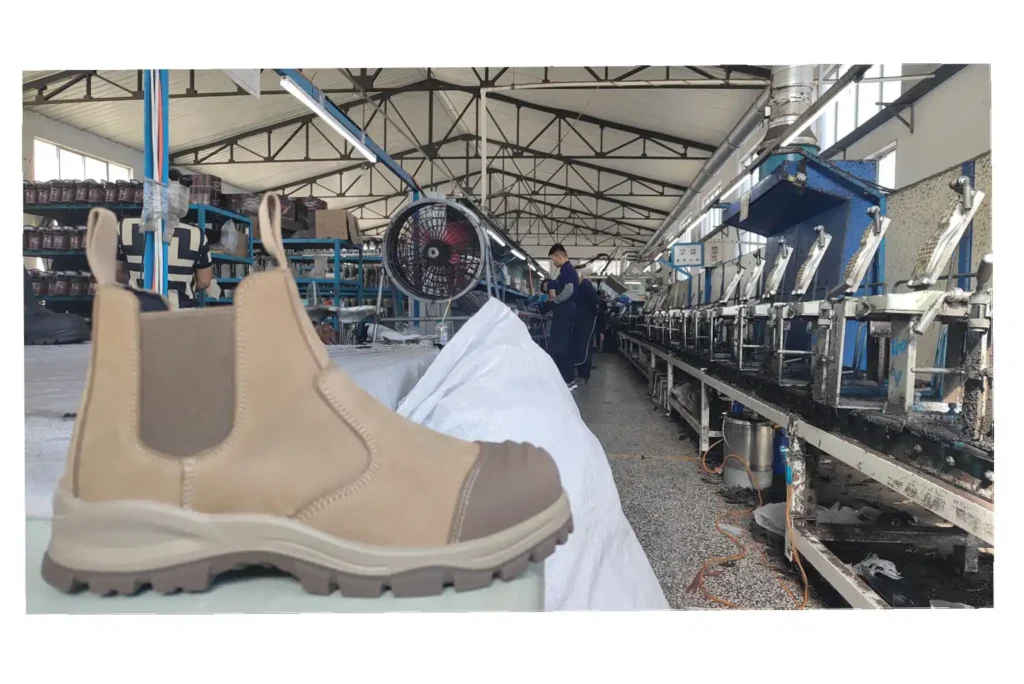
For wholesalers, importers, PPE distributors and mining suppliers developing their own footwear ranges, Ocean Safety Shoes provides OEM and ODM manufacturing support. Our factory can assist with material selection, wide-fit development, protective components, private-label designs, sampling, packaging and bulk production for Australian, European and other international markets.
Looking for reliable mining safety boots for your product range or workforce? Contact Ocean Safety Shoes to discuss professional safety footwear solutions designed around protection, comfort, durability and market-specific compliance.