
Introduction
A warehouse technician arrives at a secure distribution centre, walks through the staff entrance and hears the metal detector alarm. The cause is not a phone, belt or keys—it is the steel toe caps inside the worker’s safety shoes.
So, do steel toe shoes set off metal detectors? The short answer is: they often can, but not in every screening system or under every sensitivity setting.
Steel toe safety shoes contain enough ferrous metal to be detected by many walk-through and handheld metal detectors. Whether they activate an alarm depends on the detector technology, sensitivity, location of the metal, other metallic footwear components and the screening procedure used at the facility.
This does not make steel toe footwear unsafe or unsuitable. Steel caps continue to provide dependable impact and compression protection in construction, manufacturing, mining and heavy logistics. However, repeated alarms can create delays for employees working in airports, correctional institutions, bonded warehouses, pharmaceutical plants and other controlled-access environments.
Composite toe safety shoes may offer a practical alternative, but buyers must confirm that the entire shoe is metal-free. A composite toe cap can still be combined with steel eyelets, a steel penetration-resistant plate, metal zippers, shanks or conductive components.
This guide explains:
- Why steel toe shoes activate metal detectors
- How different screening systems respond
- Whether steel toe boots are permitted at airports
- The difference between composite toe and fully metal-free footwear
- Hidden metal components inside safety shoes
- How to select detector-friendly protective work shoes
- Relevant ASTM, EN ISO and Australian standards
- Procurement and testing advice for businesses
- Care, inspection and replacement considerations
Do Steel Toe Shoes Set Off Metal Detectors?
Yes, steel toe shoes can set off metal detectors because the protective cap is made from metal. A typical steel toe cap is much larger than small footwear components such as eyelets or lace hooks, so many screening systems can detect it.
However, an alarm is not guaranteed every time.
Detection depends on several variables:
- The type of metal detector
- Its sensitivity setting
- The size and shape of the steel cap
- The cap’s position relative to the detection field
- The amount of other metal in the shoe
- The screening procedure
- Environmental electromagnetic interference
- Whether one or both shoes pass through the sensing zone together
- The security threshold selected by the facility
A person might pass through one detector without an alarm and activate another detector at a different site. This does not mean that the steel cap has changed. It means the systems are configured differently.
The safest operating assumption is that certified steel toe shoes may trigger security screening. Employees should follow the facility’s instructions rather than expecting a particular result.
Why Metal Detectors Detect Steel Toe Safety Shoes
Metal detectors generate an electromagnetic field. When a conductive metal object enters that field, it changes the field in a way the system can identify.
Steel is both conductive and ferromagnetic, making it relatively easy for common security detectors to recognise. A toe cap also covers a substantial area at the front of the shoe, creating a more detectable metal mass than a small fastener.
The detector usually does not know that the object is a certified toe cap. It only recognises a response associated with metal. Security staff may then use a secondary screening method to determine the source.
Why Results Differ Between Facilities
Detector sensitivity is selected according to the risks and operating needs of the site.
An airport checkpoint, prison entrance, electronics plant and ordinary office building may use different:
- Detector models
- Detection zones
- Alarm thresholds
- Calibration procedures
- Secondary screening processes
- Policies for footwear and personal items
A highly sensitive detector may identify small eyelets or a metal shank. A less sensitive system may not alarm for the same footwear consistently.
For this reason, a footwear manufacturer should not promise that steel toe safety shoes will “pass all metal detectors.” Such a claim would be unrealistic.
Different Screening Systems and How They Affect Safety Footwear
Not every security machine works in the same way. Understanding the equipment helps employers choose appropriate workplace safety footwear without making unreliable assumptions.
Walk-Through Metal Detectors
A walk-through metal detector creates detection zones around the body. Steel toe caps may activate a lower zone close to the feet.
Modern multi-zone systems can help security staff identify the approximate location of the metal. If the alarm appears around both feet, safety footwear may be an obvious cause, but the worker can still be subject to the facility’s secondary screening procedure.
Walk-through detectors are used at locations such as:
- Airports
- Correctional facilities
- Government buildings
- Secure manufacturing plants
- Stadiums
- Data centres
- Bonded warehouses
- High-value logistics facilities
The likelihood of an alarm depends heavily on calibration and security policy.
Handheld Metal Detectors
Handheld detectors are passed close to the body to locate a metal object. When positioned near a steel toe cap, they will commonly produce a response.
They may be used after a walk-through detector alarms or as the primary screening method in smaller facilities.
Composite footwear may also activate a handheld detector if it contains:
- Metal eyelets
- Lace hooks
- A steel zipper
- A metallic shank
- A steel penetration-resistant plate
- Conductive threads
- Decorative metal components
Millimetre-Wave and Body-Scanning Systems
Some security checkpoints use body-imaging technology rather than relying only on conventional metal detection. These systems may identify unusual objects or areas requiring further review, including footwear.
A shoe being non-metallic does not guarantee that it will never require inspection. Security screening considers more than metal content, and officers may request additional checks based on the system’s result or local procedure.
X-Ray Screening
X-ray machines do not operate like walk-through metal detectors. They create an image showing differences in material density and structure.
If steel toe boots are placed in baggage, their caps may be clearly visible in the image. This does not automatically make the boots prohibited. It may simply mean that screening staff can recognise the dense protective components or decide that further inspection is necessary.
Industrial Metal-Detection Systems
Some food, pharmaceutical and high-security manufacturers use highly controlled detection systems to prevent metal contamination or unauthorised items entering production areas.
Requirements may be stricter than ordinary building access. A workplace can specify completely metal-free PPE footwear even when a steel toe boot meets the necessary impact standard.
In such facilities, a composite toe cap alone may be insufficient. Procurement teams should request a component-level metal declaration and test finished samples using the site’s actual equipment.
Can You Wear Steel Toe Boots Through Airport Security?
Steel toe boots are not automatically prohibited from air travel. The US Transportation Security Administration lists steel toe boots as permitted in both carry-on and checked bags, while noting that final screening decisions rest with security officers.
Airport procedures can change, and rules differ between countries. In the United States, the Department of Homeland Security announced a change to the general shoes-off policy in July 2025, but travellers can still be directed to undergo additional screening where necessary.
Practical advice for travellers includes:
- Check the current rules of the departure airport and security authority.
- Allow extra time if travelling in steel toe footwear.
- Tell the security officer that the boots contain protective steel components if asked.
- Follow instructions about removing or separately screening footwear.
- Do not assume a frequent-traveller programme eliminates all additional screening.
- Consider packing the boots when they are not needed during travel.
- Never replace required workplace PPE solely to avoid an airport inconvenience.
Metal-free safety footwear may make frequent travel more convenient, but convenience should not override the protection required at the destination workplace.
What Are Safety Shoes and Why Does Toe Protection Matter?
Safety shoes are PPE footwear designed and tested to reduce specific occupational risks. Unlike ordinary shoes that simply look robust, certified industrial safety shoes must satisfy defined performance requirements.
Depending on their classification, they may provide:
- Toe impact resistance
- Compression protection
- Sole penetration resistance
- Slip resistance
- Heel energy absorption
- Antistatic performance
- Electrical-hazard protection
- Water resistance
- Resistance to fuel oil
- Outsole heat resistance
- Metatarsal protection
The need for protective footwear is determined by workplace hazards. In the United States, OSHA 29 CFR 1910.136 requires affected employees to use protective footwear where falling or rolling objects, sole-penetration hazards or certain remaining electrical hazards could injure their feet.
Steel toe caps are popular because they provide dependable protection, maintain a relatively compact shape and are cost-effective. Metal detection is an operational consideration—not evidence that steel toe footwear provides inadequate protection.
Steel Toe, Alloy Toe and Composite Toe Safety Shoes
Steel Toe Safety Shoes
Steel toe caps have been used in protective work shoes for decades. They are widely available in low-cut shoes, lace-up boots, pull-on styles and side-zip footwear.
Main Advantages
- Established impact and compression protection
- Strong dimensional stability
- Relatively slim cap construction
- Broad market availability
- Competitive cost
- Suitability for heavy industry
Common Applications
- Construction
- Mining
- Heavy manufacturing
- Metal fabrication
- Machinery maintenance
- Freight handling
- Building-material production
- Industrial warehousing
Metal-Detector Considerations
Steel caps are detectable metal components and may activate screening equipment. Steel plates used for penetration protection increase the total metal content.
Alloy Toe Safety Shoes
Alloy toe caps may use aluminium, titanium or other metal combinations. They can weigh less than traditional steel caps while providing certified protection.
However, alloy toe footwear is still metallic. It should not be described as detector-friendly or metal-free simply because the cap is lighter.
Main Advantages
- Lower weight than some steel alternatives
- Protective performance when properly certified
- Potentially slim toe profile
- Suitable for active industrial work
Metal-Detector Considerations
Alloy is metal and may activate detection systems. The response can vary with alloy composition, cap dimensions and detector settings.
Composite Toe Safety Shoes
Composite toe caps use non-metallic materials such as fibreglass, carbon-fibre composites or reinforced polymers.
Main Advantages
- Non-metallic toe protection
- Reduced heat and cold transfer
- Potential for lighter footwear
- Suitable for many security-controlled workplaces
- Useful in metal-free product development
- Certified protection when tested to the appropriate standard
Common Applications
- Airports
- Secure warehouses
- Logistics centres
- Electronics manufacturing
- Food processing
- Pharmaceutical production
- Cold storage
- Light manufacturing
- Workers passing through frequent access screening
Metal-Detector Considerations
The toe cap itself should not trigger a conventional metal detector if it is genuinely non-metallic. The finished shoe may still contain other detectable components.
Composite Toe Does Not Always Mean Metal-Free
This is one of the most important distinctions for PPE buyers.
A product can have a composite toe cap and still include metal elsewhere. Unless all relevant components are non-metallic, the shoe should not be marketed as fully metal-free.
Hidden Metal Components in Safety Footwear
Potential metal parts include:
- Steel penetration-resistant midsoles
- Metal eyelets
- Lace hooks
- Zipper teeth or sliders
- Steel shanks
- Staples used during construction
- Metal rivets
- Decorative badges
- Conductive fibres
- Reinforcing wires
- Metal fasteners in closure systems
- Foil-containing labels or packaging components
Some of these parts are small, but highly sensitive security equipment may detect them.
Components Used in Fully Metal-Free Safety Shoes
A carefully designed metal-free model may combine:
- Fibreglass or composite toe cap
- Non-metallic textile penetration-resistant midsole
- Plastic or textile eyelets
- Non-metallic shank
- Fabric lace loops
- Plastic zipper components where applicable
- Metal-free labels and decorations
- Non-metallic assembly materials
“Metal-free” should describe the complete finished shoe—not only its toe cap.
Can Composite Toe Shoes Still Set Off a Metal Detector?
Yes, they can if another footwear component is metallic.
For example, an S1PS composite toe shoe may use a fibreglass cap and textile penetration-resistant insert but still include two small metal eyelets. Whether those eyelets activate an alarm depends on detector sensitivity.
Other possible explanations include:
- A metal orthotic or support
- Metallic contamination embedded in the outsole
- Metal objects stored inside the shoe
- A nearby ankle support containing metal
- Foil or conductive components in specialised insoles
- Another object worn close to the lower leg
If reliable passage through workplace detectors is essential, test production samples at the actual facility. A supplier declaration is valuable, but operational testing provides stronger evidence.
Do Steel Toe Shoes Always Trigger Airport Metal Detectors?
No. They may trigger an alarm, but the result is not universal.
One traveller may pass through without an alarm because:
- A different screening technology is being used.
- The sensitivity setting is lower.
- The system is calibrated for a different threat threshold.
- Footwear is being screened separately.
- The checkpoint uses an alternative passenger-screening process.
The same shoes might activate a detector elsewhere.
A lack of alarm does not mean that the toe cap is non-metallic, and an alarm does not mean that the footwear is prohibited.
Are Metal-Free Safety Shoes as Protective as Steel Toe Shoes?
They can be—when tested and certified to the same required protection level.
The toe-cap material alone does not determine whether a product is compliant. A certified composite cap can meet applicable impact and compression tests, while an untested steel cap provides no reliable compliance evidence.
ISO 20345:2021 specifies basic and optional requirements for general-purpose safety footwear, including mechanical risks, slip resistance, thermal risks and ergonomic behaviour. The standard focuses on tested performance rather than requiring all protective toe caps to be steel.
Similarly, ASTM F2413 footwear may use different toe-cap materials as long as the finished footwear meets the specified performance requirements.
Procurement teams should compare:
- Applicable standard
- Product classification
- Impact rating
- Compression rating
- Penetration-resistance requirement
- Electrical properties
- Product fit
- Test documentation
- Intended workplace
A composite cap is not automatically weaker than steel, and a steel cap is not automatically the best option for every environment.
How to Choose Detector-Friendly Safety Footwear
1. Identify the Security Requirement
Ask the facility to define its expectations. “Security-friendly” can mean several different things:
- The toe cap must be non-metallic.
- The footwear should normally pass a standard detector.
- The entire shoe must contain no intentionally added metal.
- The shoe must pass a specific workplace detection system.
- Metal content must remain below a defined threshold.
- The footwear must be suitable for controlled production areas.
These are not equivalent specifications.
2. Complete the Workplace Hazard Assessment
Security convenience must not reduce occupational protection. Identify:
- Falling and rolling objects
- Sole-penetration hazards
- Wet or oily floors
- Electrical risks
- Chemical exposure
- Water exposure
- Heat and cold
- Walking distance
- Shift duration
Then define the required footwear properties.
3. Specify Every Critical Component
A useful metal-free specification should identify:
- Composite toe-cap material
- Non-metallic penetration-resistant insert
- Eyelet material
- Shank material
- Closure system
- Decorative components
- Construction staples or fasteners
- Labelling materials
- Electrical classification
- Relevant safety standard
Avoid writing only “composite toe safety shoes.” That leaves too many components undefined.
4. Request Model-Specific Documentation
Ask the supplier for:
- Test report for the exact model
- Certificate or Declaration of Conformity
- Material and component list
- Written metal-free declaration
- Product specification
- Identification of all internal reinforcement
- Confirmation that mass production matches the approved sample
A certificate for a similar shoe does not prove that the delivered model is metal-free or compliant.
5. Test Finished Samples
Screen complete, correctly sized production samples using the facility’s detector.
Testing only the toe cap is insufficient. The screening result can be affected by the assembled footwear, including both shoes worn together.
Test several sizes because larger footwear may use different quantities or dimensions of particular components.
6. Conduct a Wear Trial
Detector compatibility does not prove workplace suitability. Employees should evaluate:
- Toe clearance
- Heel retention
- Forefoot width
- Weight
- Cushioning
- Breathability
- Flexibility
- Grip
- Pressure during kneeling
- Comfort at the end of a full shift
A shoe that passes security but causes discomfort is not a successful PPE solution.
Choosing the Right Safety Shoes for Different Workplaces
Airports and Aviation Facilities
Airport ground crews, baggage handlers, maintenance workers and cargo personnel may pass through controlled entrances several times per day.
Suitable footwear may include:
- Fully metal-free construction
- Certified composite toe cap
- Textile penetration-resistant insert
- Slip-resistant outsole
- Cushioning for long walking distances
- Water resistance for outdoor ramp work
- High-visibility details where permitted
Airport screening and workplace access rules are separate from aviation foot-protection requirements. Both must be considered.
Secure Warehouses and Logistics Centres
Workers may walk many kilometres on concrete while handling pallets and rolling loads.
Priorities often include:
- Composite toe protection
- Lightweight construction
- Shock-absorbing midsole
- Breathable upper
- Slip-resistant outsole
- Flexible forefoot
- Metal-free components where required
A low-cut safety shoe may be suitable indoors, while loading-yard employees may need water-resistant ankle boots.
Food and Pharmaceutical Manufacturing
Facilities may use metal-detection systems as part of contamination control. Footwear may also need easy-clean surfaces, slip resistance and resistance to cleaning chemicals.
Buyers should check:
- Facility hygiene rules
- Detector sensitivity
- Upper cleanability
- Outsole tread design
- Chemical compatibility
- Metal-free construction
- Antistatic requirements
Textile uppers may be comfortable but difficult to clean in wet production zones. Material selection should reflect the process.
Correctional and Government Facilities
Access requirements can be stricter than ordinary workplaces. Employees, contractors and visitors may undergo repeated screening.
The facility should approve footwear before bulk purchasing. A generic “metal-free” marketing statement may not satisfy local security policy.
Electronics Manufacturing
Electronics plants may need ESD-controlled footwear. Metal-free construction and ESD performance are different properties.
Composite toe footwear should be selected with the correct electrical classification. Do not assume that removing metal automatically provides safe electrostatic behaviour.
Construction and Heavy Industry
Workers in these sectors may not regularly pass through detectors, so the proven durability and value of steel toe footwear can outweigh screening convenience.
Where occasional security access is required, businesses can establish an agreed screening procedure instead of replacing otherwise appropriate PPE.
Electrical Hazard Safety Shoes and Metal Components
A persistent misconception is that steel toe caps make electrical hazard footwear unsafe, or that composite caps automatically provide electrical insulation.
Neither statement is reliable.
Electrical performance depends on the complete footwear construction, including:
- Outsole material
- Insole system
- Moisture content
- Conductive components
- Construction method
- Test category
- Condition of the footwear
Steel toe caps can be incorporated into footwear designed to meet an electrical-hazard requirement when they are properly isolated within the construction. Composite toe caps are non-metallic, but the footwear must still be tested for the relevant electrical property.
Antistatic, ESD, conductive, electrical-hazard and electrically insulating footwear serve different purposes. Buyers should verify the applicable marking instead of selecting according to toe material alone.
Common Mistakes When Buying Metal-Detector-Friendly Safety Shoes
Mistake 1: Assuming Composite Means Fully Metal-Free
The shoe may still contain steel plates, eyelets or shanks.
Solution: Request a complete component declaration and test the finished footwear.
Mistake 2: Promising That a Shoe Will Never Trigger Any Detector
Sensitivity and technology vary.
Solution: Use accurate language such as “constructed without intentionally added metal components,” subject to verification and the facility’s screening system.
Mistake 3: Choosing Security Convenience Over Protection
A lightweight metal-free shoe may lack the required penetration, water or outsole performance.
Solution: Complete the hazard assessment first and solve the security requirement within that specification.
Mistake 4: Relying on a Toe-Cap Certificate
A cap test does not certify the finished footwear.
Solution: Obtain model-specific documents covering the complete shoe.
Mistake 5: Ignoring Fit and Comfort
Poorly fitted PPE footwear can create pressure, blisters and reduced worker acceptance.
Solution: Conduct size trials with representative employees before placing a bulk order.
Mistake 6: Confusing Metal-Free With Electrical Protection
Removing metal does not establish ESD or electrical insulation performance.
Solution: Specify and verify the exact electrical category separately.
Mistake 7: Failing to Control Material Substitutions
A factory could replace plastic eyelets with metal eyelets or a textile midsole with steel during production.
Solution: Lock all critical components in an approved specification and require written approval for changes.
Safety Shoes Materials and Technologies
Upper Materials
Leather offers durability, structure and abrasion resistance. It is suitable for construction, workshops and outdoor work.
Mesh and engineered textiles reduce weight and improve ventilation. They are often used in logistics and indoor industrial safety shoes.
Microfibre and synthetic materials provide consistent appearance, lower water absorption in some constructions and easier cleaning.
Outsole Technologies
PU outsoles are lightweight and flexible, with good cushioning for indoor work.
Rubber outsoles can offer strong abrasion, heat and slip performance, depending on the compound.
PU/TPU outsoles combine cushioning with a hard-wearing contact layer.
EVA/rubber constructions support lightweight, sports-inspired safety shoes for active employees.
Metal-detector compatibility does not determine outsole performance. Grip must still be assessed against the actual floor and contaminant.
Comfort Technologies
Useful features include:
- Breathable linings
- Removable PU footbeds
- Shock-absorbing midsoles
- Padded collars
- Wide-fit lasts
- Stable heel counters
- Flexible forefoot zones
- Moisture-management materials
A composite cap may reduce weight, but comfort depends on the complete shoe design.
Maintaining Detector-Friendly Safety Footwear
Maintenance helps footwear remain protective and reduces unexpected screening issues.
Cleaning
Remove dirt, oil and embedded debris regularly. Small metal fragments can become lodged in outsole tread and may be detected even when the shoe itself is metal-free.
Workers in fabrication or machining areas should pay particular attention to metal swarf.
Drying
Allow wet footwear to dry naturally in a ventilated area. Direct heaters can damage adhesives, leather, membranes and moulded components.
Inspection
Check for:
- Exposed protective components
- Sole separation
- Worn tread
- Damaged closures
- Upper cuts
- Embedded metal fragments
- Permanent deformation
- Failed waterproofing
- Loss of fit or heel support
Replacement
There is no universal replacement interval. Replace safety footwear when its grip, structure, fit or protective performance has deteriorated—or following a significant impact that may have damaged a protective component.
Safety Shoes Buying Guide for Businesses
Distributors, importers and workplace buyers should include the following steps in a detector-friendly footwear project:
- Define occupational hazards.
- Identify the required safety standard.
- Obtain the facility’s metal-control specification.
- List all prohibited metallic components.
- Review test reports and compliance documents.
- Approve component samples.
- Test finished shoes with the actual detector.
- Conduct employee fit and wear trials.
- Lock the bill of materials.
- Inspect bulk production before shipment.
- Verify product labels and packaging.
- Establish worker inspection and replacement procedures.
For private-label orders, colour and logo changes are usually straightforward. Structural changes involving the toe cap, midsole, outsole or upper may affect compliance and require additional testing.
Frequently Asked Questions About Steel Toe Shoes and Metal Detectors
1. Do steel toe shoes set off metal detectors?
They often can because steel toe caps contain a substantial amount of metal. The actual result depends on detector technology, sensitivity and screening procedures.
2. Are steel toe boots allowed through airport security?
Steel toe boots are generally permitted, but they may require additional screening. Travellers must follow the current rules and instructions of the relevant airport security authority.
3. Do composite toe shoes pass metal detectors?
The composite toe cap itself is non-metallic, but the complete shoe may contain metal eyelets, plates, shanks or zippers. Only a fully metal-free construction should be considered detector-friendly.
4. Can metal-free safety shoes provide certified protection?
Yes. Composite toe caps and non-metallic penetration-resistant inserts can meet applicable safety standards when tested as part of the complete footwear.
5. Are alloy toe shoes metal-detector friendly?
No. Aluminium, titanium and other alloys are still metals and may activate detection equipment.
6. Are composite toe safety shoes better than steel toe shoes?
Neither is universally better. Steel offers established protection and value, while composite supports metal-free construction and may reduce weight and temperature transfer.
7. Can metal-free footwear still trigger an alarm?
Yes. Metal fragments may become embedded in the outsole, personal orthoses may contain metal, or a highly sensitive system may respond to an overlooked component.
8. What should businesses request when buying metal-free safety shoes?
Request model-specific certification, a full component list, a written metal-free declaration, production-control details and finished samples for screening and wear trials.
Conclusion
Steel toe shoes can set off metal detectors because their protective caps are made from conductive metal. Whether an alarm occurs depends on the screening system, sensitivity setting, footwear construction and local security procedure.
For construction, mining and heavy manufacturing, steel toe safety shoes remain a practical and dependable form of workplace protection. In airports, secure logistics centres, electronics plants and other controlled facilities, fully metal-free composite toe safety shoes may reduce screening delays.
The key word is fully. A composite toe cap does not guarantee a metal-free shoe. Procurement teams must also inspect the penetration-resistant insert, eyelets, shank, zipper, fasteners and decorative components.
Businesses should choose safety footwear by combining hazard assessment, certified performance, security requirements, worker fit and realistic field testing. Passing a metal detector is useful in the right workplace, but it should never come at the cost of necessary foot protection.
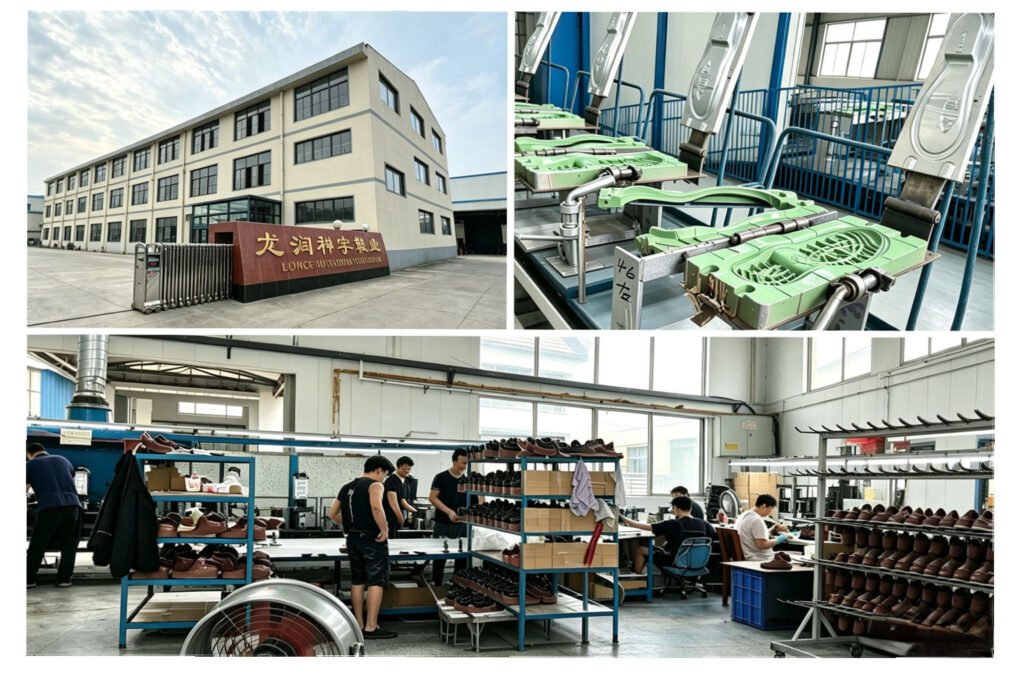
For wholesalers, importers, PPE brands and companies developing detector-friendly protective work shoes, Ocean Safety Shoes provides professional OEM and ODM manufacturing support. Our factory can develop steel toe, composite toe and fully metal-free footwear using different upper materials, non-metallic midsoles, custom outsoles, wide-fit lasts, private-label branding and market-specific packaging.
Looking for reliable safety shoes for a security-controlled workplace or wholesale product range? Contact Ocean Safety Shoes to discuss certified protection, metal-free component selection, custom development and bulk-production requirements.